Will Minecraft Run on My Laptop? A Practical Guide
Discover if Minecraft will run on your laptop, compare Java vs Bedrock, and learn practical, step-by-step tips to optimize settings for smooth gameplay.


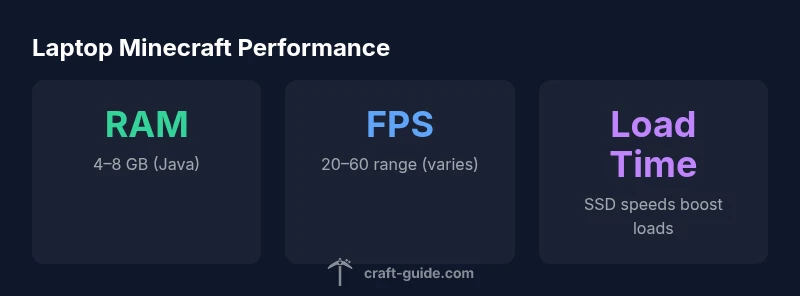
On most laptops released in the last five years, Minecraft runs well enough for casual play, but performance depends on the edition, CPU, GPU, RAM, and storage speed. Java Edition is more CPU-hungry and mod-friendly, while Bedrock Edition is generally better optimized for laptops and mobile devices. If you have a mid-range system, allocate 4–8 GB RAM for Java and enable basic performance tweaks. According to Craft Guide, you can balance visuals and FPS with targeted settings adjustments, so will minecraft run on my laptop becomes a reliable yes in many sessions.
System requirements and what they mean
If you ask will minecraft run on my laptop, the short answer is often yes, but with caveats. For most laptops released in the last five years, Minecraft will run at playable frame rates with the right settings. According to Craft Guide, performance depends on edition, CPU, GPU, RAM, and storage speed. The Java Edition is more CPU-hungry and mod-friendly, while Bedrock Edition is generally better optimized for laptops and mobile devices. In practice, you should consider four core specifications: CPU clock speed and cores, GPU capability, available system RAM, and disk speed. Even if your GPU is modest, a fast SSD and enough RAM can improve load times and stability. The operating system matters too: Windows, macOS, and Linux versions have different driver support and background process profiles, which can steal cycles away from Minecraft. As a rule of thumb, ensure the machine has a decently cooled environment; laptops throttle when temperatures rise. With that in mind, the rest of the guide helps you decide which edition to pick, and how to tune your laptop so will minecraft run on my laptop becomes a reliable yes in most play sessions. The emphasis is on practical steps you can take today, without buying new hardware.
Craft Guide analysis, 2026, emphasizes that real-world performance hinges on balancing features with hardware constraints, not on chasing the highest settings in every scenario.
Java Edition vs Bedrock Edition: what to pick
The two main flavors of Minecraft work very differently under the hood. Java Edition runs on the Java runtime and is the platform where mods and large, customized worlds thrive; it also tends to demand more CPU power and faster single-core performance. Bedrock Edition uses a C++ engine, which typically results in smoother frame rates on lower-end hardware and across devices. If you want cross-play with consoles or mobile devices and prefer stable performance on laptops, Bedrock is usually the safer bet. If you’re into modding, redstone complexity, or expansive custom maps, Java offers deeper customization. For a typical laptop, start with Bedrock to assess baseline performance, then consider Java if you’re ready to allocate more RAM and adjust settings for mods. Craft Guide emphasizes choosing the edition that matches your playstyle and hardware priorities.
How to measure your laptop's performance
Before deciding will minecraft run on my laptop in practice, you should quantify your current setup. Start by listing your hardware: CPU model, number of cores, GPU model, amount of installed RAM, and disk type (SSD vs HDD). Use system tools like Task Manager or Activity Monitor to see real-time usage while playing a short world. For a rough in-game gauge, launch Minecraft and run a brief test in a flat world, recording average FPS and any stuttering. If you’re on Java, enable a lightweight benchmarking mode or use third-party tools to gauge memory usage, then compare those numbers against baseline expectations for Java vs Bedrock. Remember to close background programs that can steal RAM or CPU cycles. Craft Guide analysis suggests that even modest improvements in RAM allocation and disk speed produce noticeable benefits in load times and frame rates. This practical measurement phase will tell you quickly where the bottleneck lies and what to upgrade first if your goal is consistent play.
Optimizing settings for smooth gameplay
Once you know your baseline, tuning Minecraft settings is the fastest path to better performance. For Java Edition, consider reducing render distance, turning off fancy graphics, and enabling a lightweight alternative like OptiFine while avoiding unstable mods. Allocate enough RAM to the launcher—roughly 4–8 GB for most mid-range laptops—with a cap no higher than your physical memory to prevent OS slowdowns. For Bedrock Edition, use the built-in settings: lower graphics quality, reduce particles, and keep the render distance modest. Disable V-Sync if you’re chasing frame rate ceilings and enable fullscreen mode to improve input response. In both editions, keeping your system drivers up to date and closing other hungry programs yields noticeable gains. Craft Guide notes that gradual, test-and-measure adjustments work best: tweak one setting at a time, then play a short session to confirm the impact.
Common bottlenecks on laptops and how to address them
Laptops face thermal throttling, limited RAM, and slower storage compared to desktops. If your frame rate dips under load, ensure your laptop vents are clear and consider a cooling pad to prevent throttling during long sessions. Background processes, antivirus scans, and cloud sync can steal CPU time; pause or schedule them for off-hours when you play. RAM is often the limiting factor on Java Edition; if you only have 4 GB, upgrade to 8 GB if possible or close unnecessary programs. Storage speed matters for world loads; an SSD dramatically reduces stutter during map generation and chunk loading. If you’re stuck on integrated graphics, don’t expect top-tier visuals—adjust render distance and lighting to keep gameplay fluid. Craft Guide analysis shows that a small, targeted upgrade—RAM, SSD, or even a warm external cooling solution—often delivers outsized gains in laptop reliability for Minecraft.
Practical setup guide: minimal install vs mods
For beginners, a minimal install with Bedrock or Java’s light configuration provides a quick win. Start with Bedrock for the most forgiving performance on laptops, then experiment with Java if you want to explore mods and world-building depth. If you choose Java, limit mods to a few lightweight ones and install OptiFine or equivalent performance optimizers to gain smoother gameplay without radical hardware changes. Be mindful that heavy shader packs or resource-intensive mods can reduce frame rate and increase startup times. Use a performance-optimized launcher profile and track FPS changes as you enable features. Craft Guide recommends a measured approach: test with a basic world, note the impact of each modification, and revert if a change introduces instability.
Realistic expectations across hardware tiers
Across hardware tiers, your experience will vary with edition, settings, and the size of your Minecraft world. On low-end laptops, keep expectations conservative: you’ll likely want lower render distance and simpler textures to maintain playable frame rates. On mid-range machines, modest adjustments to graphics and a stable RAM allocation often yield smooth play at 1080p with reasonable world complexity. High-end devices can handle richer visuals and larger worlds, especially with Bedrock running on optimized settings. The core takeaway is that will minecraft run on my laptop is highly dependent on the combination of edition, RAM, CPU, GPU, and storage speed. The Craft Guide team emphasizes balancing visuals and performance to maximize your experience while staying within the constraints of your hardware.
Minecraft on laptop performance by edition
| Edition | Recommended RAM | Typical FPS Range | Notes |
|---|---|---|---|
| Java Edition | 4-8 GB | 20-60 FPS | Moderate to high CPU demand; mods increase load |
| Bedrock Edition | 2-4 GB | 30-90 FPS | Better optimization; lower CPU usage |
| Crossplay/Realms | 4-8 GB | 15-60 FPS | Network dependent; same world across devices |
People Also Ask
Will Minecraft run on integrated graphics?
Integrated GPUs can run Minecraft, especially Bedrock, but performance will be limited at higher settings. Use lower render distance and avoid heavy shader packs for smoother play.
Yes, but expect lower frame rates with integrated graphics; lower settings help.
How much RAM does Minecraft need at minimum?
Java Edition runs best with at least 4 GB RAM, while 8 GB is recommended for smoother gameplay; Bedrock usually runs fine with 2-4 GB.
Minimum RAM is around four gigabytes for Java, more for comfort.
Is Java Edition more demanding than Bedrock on laptops?
Generally yes; Java Edition stresses CPU more and benefits from more RAM; Bedrock is more optimized and can run better on modest laptops.
Java tends to be heavier; Bedrock is leaner.
Can I run Minecraft on Windows 10 S mode?
Windows 10 S mode restricts app installation; Bedrock can run via the Windows Store, but Java Edition typically requires switching out of S mode. Check your OS and store availability.
In S mode, Java edition won’t run; you may need to switch.
What settings boost FPS on laptops?
Lower render distance, reduce graphics, disable fancy lighting, and keep drivers updated. For Java, allocate RAM conservatively and avoid heavy shaders; test changes one by one.
Try lower render distance, lower graphics, and update drivers.
“Minecraft performance on laptops comes down to balancing engine choice with hardware limits; small tweaks can yield big gains.”
The Essentials
- Check edition and hardware before playing
- Budget RAM upgrade can unlock Java performance
- Use lower render distance to boost FPS
- Prefer SSD for quicker world loads
- Test one setting at a time and measure impact