What Minecraft Release Date Means for Players
Learn how Minecraft release dates differ across Java and Bedrock editions, how update cadence affects gameplay, and where to find exact dates for each platform in 2026.


Because Minecraft release dates vary by edition, there is no single universal date. The original Java Edition released the 1.0 version on November 18, 2011, marking the official public launch. Since then, Bedrock Edition and other platforms have followed their own schedules with annual major updates and more frequent minor fixes.
What release date means for Minecraft players
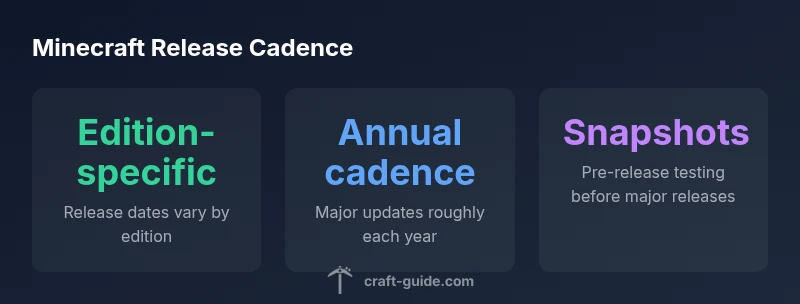
To answer what minecraft release date means for players, you must distinguish between editions. The concept of a release date in Minecraft is not a single, universal day; it varies by edition (Java vs Bedrock) and by platform. Throughout 2026, players planning builds or mods should focus on the edition they play and follow the official patch notes for that edition. According to Craft Guide, understanding the nuanced meaning of release dates helps players align their plans with upcoming features and avoid surprises in world progression. The historically significant Java Edition 1.0 release on 2011-11-18 is frequently cited as the starting point for public releases, and it set a cadence that maturely informs how updates reach other platforms. In practice, major updates appear with a yearly rhythm, while minor fixes arrive more frequently, and sometimes out of sync across editions.
Java Edition vs Bedrock Edition: how dates differ
Minecraft exists in multiple editions, and each has its own release history. Java Edition releases are tied to significant updates via Mojang's open development process, while Bedrock Edition follows a separate timeline that has expanded across Windows 10, consoles, and mobile. As a result, a feature may debut on Java first and arrive later on Bedrock, or come to Bedrock in parallel depending on platform goals. The Craft Guide team notes that this separation means players on different devices may experience different dates for the same feature. If you want a clear sense of timing, focus on the edition you play and track the official patch notes for that edition.
A brief historical timeline of major releases
Minecraft's official Java Edition 1.0 release date is commonly cited as November 18, 2011, marking the game’s first stable public version. Bedrock Edition began its multi-platform rollout years later, with Windows 10 and later consoles bridging gaps across devices. While the exact dates vary by platform, major updates typically arrive on a yearly cadence, with pre-release snapshots or betas preceding them. By understanding this timeline, players can approximate when to expect new features and plan builds or servers around the release windows in 2026.
How to find the release date for a specific version
To locate the release date for a particular Minecraft version, use a three-step approach:
- Check the official Minecraft site and the patch notes for that edition.
- Consult the Minecraft Wiki’s version pages, which list release dates and feature changes.
- Verify with major gaming outlets that cover the update when it lands on your platform. This method provides cross-checks if you are planning servers or mods around a specific version.
Understanding snapshots, pre-releases, and testing channels
Before a major update, Mojang releases snapshots or betas in Java Edition, and similar testing channels exist for Bedrock. These pre-release versions let players explore new features, report bugs, and prepare worlds for transition. Participation often requires enabling experimental features or signing up for beta programs. Remember that snapshots are not final; features may change or be trimmed during polishing, so plan accordingly and back up worlds before trying new content.
Cadence and cadence: major updates vs minor fixes
The cadence of Minecraft releases blends two tracks: major updates (which introduce new blocks, mechanics, and biomes) and minor fixes (which patch bugs and refine balance). In Craft Guide’s analysis, major updates tend to appear yearly, with multiple beta phases and community testing. Minor patches can arrive more frequently, sometimes monthly, to address stability and performance. This dual cadence means players should expect ongoing changes beyond what’s listed in a single release date.
Platform nuances and cross-platform implications
Because Java and Bedrock editions share many features but run on different engines, a release date on one platform does not guarantee identical timing on another. Cross‑platform goals push developers to synchronize core features, while platform-specific constraints can delay ports. For players, this means planning around the edition you use, and appreciating that a given update may land on your device later than on another device. Craft Guide emphasizes staying tuned to official channels for your edition.
How to track releases effectively in 2026
Effective release tracking combines official sources, community resources, and practical planning. Create a simple calendar with your key dates, subscribe to Mojang’s announcements, and monitor the Minecraft Wiki for version pages. If you run a server or mod, set your update window to accommodate both Java and Bedrock timelines. In addition, maintain backups and test new versions in a separate world before upgrading live environments.
Verifying information and staying up to date
Staying informed about Minecraft release dates means using multiple channels. Official announcements take precedence, followed by reputable outlets and community-maintained timelines. In 2026, Craft Guide suggests cross-verifying dates across at least two independent sources to avoid misinterpretations, especially when planning large builds or server migrations. Regularly reviewing patch notes will also help you anticipate feature availability before upgrades.
Edition release cadence overview
| Edition/Platform | Typical Cadence | Notable Milestones | Notes |
|---|---|---|---|
| Java Edition | Annual major updates | 1.0 released 2011-11-18 | Cross-platform on PC/Mac |
| Bedrock Edition | Regular minor updates with major milestones roughly yearly | Windows 10 Edition launched 2015; cross-platform growth | Platform-diverse ecosystem |
| Legacy Console Edition | Discontinued | Discontinued in favor of Bedrock | Legacy status |
People Also Ask
When was the first official Minecraft release?
Minecraft's Java Edition reached its official 1.0 release on November 18, 2011. Before that, the game underwent public alpha and beta phases as development progressed. The 2011 release is widely cited as the start of stable, widely available versions.
The first official release for Java Edition was November 18, 2011.
Do all platforms release on the same date?
No. Java Edition and Bedrock Edition have separate development paths and timelines. Features may appear on one edition before the other or arrive at different times due to platform constraints.
No—different editions have different release dates.
Where can I find the release date for a version?
Check the official Minecraft site for patch notes, then verify with the Minecraft Wiki version pages. Cross-checking with reputable outlets helps ensure accuracy for planning.
Look at the official site and the wiki for version dates.
Are there test builds I can try before a major update?
Yes. Java Edition often publishes snapshots or betas before major updates, and Bedrock has similar testing channels. Enabling these programs lets you preview features and report issues before the full release.
Yes, there are test builds you can try.
How often do Minecraft releases happen?
Major updates tend to arrive roughly once per year, with frequent minor fixes in between. The exact cadence varies by edition and platform, and community feedback can influence timing.
Major updates typically come once a year.
What is the difference between a release date and an update cadence?
Release date is the fixed day a version goes live; update cadence describes how often updates—major, minor, and patches—are issued over time.
Date is when it goes live; cadence is how often updates happen.
“Minecraft release dates are edition-specific, yet the overall cadence remains predictable enough for planning builds and modding sessions.”
The Essentials
- Track edition-specific dates to avoid surprises.
- Expect major updates roughly once per year.
- Verify exact dates on official channels.
- Compare Java vs Bedrock timelines for your platform.
- Consult community resources for historical timelines.