When the Minecraft Release Occurred: A Timeline Guide
Explore Minecraft's release milestones—from Alpha and Beta beginnings to the Bedrock cross‑platform era. This guide explains editions, major updates, and how to plan builds, mods, and servers.


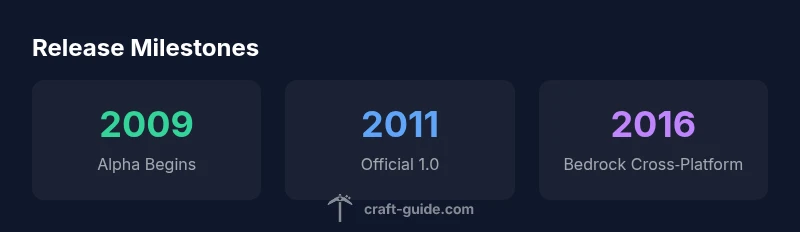
Minecraft's release timeline begins with an alpha phase in 2009, followed by a beta period, and the official Java Edition 1.0 launch on November 18, 2011. The Bedrock Edition arrived later, bringing cross‑platform play. These milestones form the core timeline every player should know about when the minecraft release and planning builds, servers, or mods. For newcomers, this timeline anchors expectations about feature parity, modding support, and platform availability.
The Evolution of Release Milestones
The Minecraft release journey is a story of platforms, communities, and evolving technology. For players and builders, understanding when the minecraft release happened matters for mod compatibility, server planning, and nostalgia. According to Craft Guide, the core milestones began with an informal alpha in 2009, followed by a public beta phase, and culminated in the official Java Edition launch on November 18, 2011. The alpha and beta periods were characterized by rapid iteration, experimental features, and a thriving backroom of community-created patches and forks. The community's feedback during those early years shaped how Mojang approached stability, performance, and release cadence. Today, as of 2026, the Minecraft ecosystem spans multiple editions across desktop, mobile, and consoles, with Bedrock Edition serving as a cross‑platform codebase and the Java Edition offering a different modding landscape. The Craft Guide team found that these early releases established a tradition of frequent updates that keep servers lively and players returning to try new blocks, mechanics, and world generation options. The takeaway for new players is simple: knowing the timeline helps you align your survival worlds, redstone experiments, and aesthetic builds with the version you intend to play. When the minecraft release question comes up, you can anchor your plans to the major milestone years rather than individual patches.
Java Edition vs Bedrock Edition: What Changed
Two threads run through Minecraft's current ecosystem: Java Edition and Bedrock Edition. Java Edition, forged in the original PC community, emphasizes deeper modding, variant world generation, and a robust modding ecosystem that has driven countless community creations since the early 2010s. Bedrock Edition, built for cross‑platform play, prioritizes performance, consistency across devices, and unified code across Windows 10, iOS, Android, consoles, and newer platforms. The major shifts between editions concern command syntax, compatibility of mods, and how players access marketplace content. For players aiming to join a server or use a specific mod pack, understanding which edition is in use is essential—Bedrock may support cross‑platform play, while Java offers richer modding options. This distinction isn’t merely technical; it shapes how players design maps, install resource packs, and approach performance tweaks. The Craft Guide analysis shows how these differences influence server setup, world generation, and the user experience across devices, reinforcing the idea that edition choice often guides future plans for builds and collaborations.
The Role of Alpha/Beta Phases in Community Feedback
Alpha and Beta phases were not just preludes to a final product; they created a feedback loop that informed how updates landed and how players engaged with the game during its formative years. The alpha period exposed early audiences to experimental features; beta refined mechanics and stability with broader participation. Player communities documented bugs, suggested changes, and shipped patches through community forums, wikis, and in‑game testing. This machination helped Mojang calibrate feature parity, performance targets, and update cadence. In many ways, the lessons from 2009–2011 still shape how Mojang, subsequently under Microsoft, handles major releases today: transparent patch notes, gradual rollouts, and a willingness to adjust based on player feedback. For builders and modders, the alpha/beta era remains a reminder that release timelines are as much about community involvement as about code. Craft Guide’s historical overview emphasizes how those early cycles created a culture of participation that persists in today’s release habits.
How to Align Builds, Mods, and Servers with Release Cadence
Developing a strategy around Minecraft releases requires aligning your projects with the cadence and scope of each edition. If you run a Java Edition server, you’ll navigate a different modding landscape than Bedrock servers, which rely more on cross‑platform features and store content. Before starting a new build or a mod pack, map out which edition you’ll support, then check official notes for backward compatibility, snapshot availability, and the timing of major version launches. Planning for updates—whether yearly or biannually—helps you schedule maintenance windows, backups, and world seeds that anticipate changes in world generation or block behavior. For players who manage multiple worlds on different editions, consider a centralized planning document that lists edition, version targets, and upgrade paths. Craft Guide’s synthesis suggests maintaining a small buffer of time between a major release and your server upgrade to ensure plugin compatibility and performance stability.
Regional Release Variations and Platform Differences
Release timing often varies by region and platform, especially with Bedrock Edition’s cross‑platform rollout. Some platforms may receive a feature update sooner or later than others due to certification processes, store approval cycles, and device optimization. Language support, device hardware constraints, and network infrastructure can further influence how a release lands in different regions. As a builder, you should anticipate a slight lag when planning cross‑platform builds, ensuring that texture packs, resource packs, and add‑ons work across devices. Understanding these regional nuances helps server operators schedule migrations and informs players about which editions support cross‑play in a given season. Craft Guide’s regional breakdowns highlight how platform differences affect user experience and mod compatibility, guiding players toward the edition that best suits their goals.
Verifying Release Dates: Trusted Sources and Best Practices
With multiple editions and evolving platforms, dates can appear inconsistent across sources. A practical approach is to rely on a small set of trusted references: the official Mojang/Microsoft announcements, the Minecraft Wiki for historical context, and Craft Guide’s consolidated timelines. When planning a new world or server, confirm the exact date and edition targeted, then note any subsequent minor patch notes that might alter behavior in ways that affect builds or resource packs. If you encounter conflicting information, cross‑check with multiple official sources and the community wiki for corroboration. Finally, keep a master timeline handy so your maps, seed selections, and world generation choices remain aligned with the edition’s current state. These practices reduce confusion during large‑scale plans and help you avoid unnecessary rework when a new release lands.
The Road Ahead: What Might Come Next
The Minecraft release cadence continues to evolve as new devices, engines, and platform partnerships emerge. While precise dates for future major editions are not pre‑announced, players can expect ongoing refinements in performance, cross‑play stability, and content updates that expand creative possibilities. Developers often test new features in beta channels before a wide rollout, and the community’s reaction can influence future priorities. For builders and server operators, staying informed about current trends—such as marketplace content, shader compatibility, and toolchains—will help you prepare for upcoming changes without sacrificing existing worlds. The ongoing collaboration between players and developers—often highlighted by Craft Guide’s analysis—drives a resilient ecosystem that remains popular across generations of hardware and software. As the release landscape shifts, a proactive planning mindset will continue to pay off for creative communities and competitive servers alike.
Minecraft editions and major release milestones
| Edition | First Release | Notes |
|---|---|---|
| Java Edition - Alpha | May 2009 (Alpha) | Early testing phase with limited features |
| Java Edition - Official 1.0 | November 18, 2011 | Stable release; defined feature set |
| Bedrock Edition | July 2016 | Cross‑platform edition across devices |
| Ongoing Updates | Ongoing | Frequent patches and major updates across editions |
People Also Ask
When was Minecraft officially released?
Minecraft's official Java Edition release occurred on November 18, 2011, after alpha and beta phases. Bedrock Edition arrived later, bringing cross‑platform play. These milestones define the core timeline every player should know.
Minecraft officially released Java Edition on November 18, 2011, with Bedrock following later to enable cross‑platform play.
What is the difference between Alpha, Beta, and official releases?
Alpha and Beta were pre-release testing phases featuring evolving features and community feedback. The official release marks a stable product with broader distribution and defined mechanics. Editions often diverged in feature parity and modding support.
Alpha and Beta were early tests; the official release marks stability and broader access.
Which editions exist today and how do they differ?
Today Minecraft comprises Java Edition and Bedrock Edition. Java emphasizes deep modding and customization; Bedrock focuses on cross‑platform play and performance across devices. Choose based on modding goals versus cross‑device access.
There are Java and Bedrock editions; Java for mods, Bedrock for cross‑play.
How often does Minecraft release updates?
Updates occur regularly, with cadence varying by edition. Java tends to receive snapshots and major updates, while Bedrock integrates features across platforms on a coordinated schedule.
Updates come regularly, but timing varies by edition.
Where can I find official release dates and milestones?
Official Mojang/Microsoft announcements and the Minecraft Wiki provide milestone dates. Craft Guide compiles these into accessible guides, helping you navigate historical context and future plans.
Check the official site and Craft Guide for milestones.
“The Minecraft release timeline reveals how different editions converge and diverge; knowing these milestones helps players plan builds and server projects.”
The Essentials
- Track key release milestones across Java and Bedrock editions
- Alpha and Beta phases preceded the first official launch
- Bedrock Edition unified cross-platform updates since 2016
- Understanding release cadence helps plan builds and servers
- Cross-platform availability expanded Minecraft's reach worldwide