What Minecraft Version Are We On in 2026? A Practical Guide
Learn how Minecraft versioning works in 2026, including Java vs Bedrock edition differences, how to check your current version, and strategies to stay up-to-date with Craft Guide.


Short answer: there isn’t a single Minecraft version for all players. Java Edition and Bedrock Edition each have their own current version, and they update on separate cadences. To find the exact numbers right now, check the official Minecraft Status pages or Craft Guide’s version guide. As of 2026, version numbers vary by edition, so verify before planning builds or mods.
what minecraft version are we on
In 2026, players frequently ask what minecraft version are we on, and the answer hinges on edition. Minecraft has two primary tracks in active development: Java Edition and Bedrock Edition. Each track maintains its own version numbers and release cadence. There isn’t a universal version that applies to every player or server. Instead, you’ll find Java Edition numbers advancing on a different schedule than Bedrock edition numbers, which can create a perception that “the game moved on” even if your server hasn’t received a particular Java patch. For builders and modders, this distinction matters: compatibility, world formats, and addon APIs evolve differently across editions. To stay aligned, rely on official sources and Craft Guide’s practical checks as a baseline for what’s current in 2026.
Java Edition vs Bedrock Edition: two parallel tracks
Two parallel version tracks are standard practice in 2026. Java Edition tends to push major updates on a cadence that reflects PC ecosystems and community mods, while Bedrock Edition emphasizes cross‑platform parity across consoles, mobile, and Windows. This separation means that a feature introduced in a Java snapshot may arrive weeks or months later in Bedrock, or it may appear in Bedrock first on some platforms. For builders, this split affects the blocks and items you can rely on, the behavior of command blocks, and the stability of world formats. When planning large builds or seed-based worlds, always confirm which edition you’re targeting and which version your world was created under. Craft Guide’s guidance stresses checking edition-specific notes before heavy investments of time.
How versioning works: snapshots, betas, and releases
Minecraft uses multiple release channels. Java Edition uses snapshots and pre-releases to test new features before a stable public release, while Bedrock Edition uses beta programs to trial changes across devices. Understanding these channels helps you prepare for feature deprecations, API changes, and performance improvements. If you are a modder or builder, subscribing to release notes and the official Mojang changelogs is essential. The general pattern remains: test in a controlled environment, then port to your main world only after confirming compatibility with your setup. Craft Guide recommends maintaining a small test world dedicated to version experiments so you can iterate without risking your main builds.
How to check the current version you are playing
Locating the exact version is straightforward but edition-dependent. On Java Edition, open the Minecraft Launcher and review the News or Versions tab for the latest release notes. On Bedrock, check the in-game settings or the Microsoft Store/Launcher app for the current build. For world-based projects, inspect the world’s save metadata or the resource pack and mod versions you’re using to ensure compatibility. If you run servers, keep a version manifest that records the edition, launcher, and build number for every world. Craft Guide provides a practical checklist you can customize for your launch environment.
Compatibility and modding implications
Version divergence can impact mods, datapacks, and resource packs. Java Edition mods frequently follow a different update rhythm than Bedrock addons, which means you should verify compatibility before updating a critical project. Builders should avoid upgrading a world mid-project unless the update brings essential fixes or new blocks that you actually plan to use. For servers, consider running separate test worlds per edition and version to minimize cross‑edition conflicts. Craft Guide emphasizes documenting your version path, especially when you rely on community-made content, to prevent surprises during a build marathon.
Staying up-to-date: best practices for builders and redstone engineers
To stay current in 2026, establish a versioning protocol that fits your playstyle. Create a version log for each world, note the edition and build number, and track any mod/resource-pack dependencies. Schedule quarterly reviews of release notes and changelogs from Mojang and official partner sites. Subscribe to official channels and Craft Guide’s update notes for a concise monthly digest. When possible, test new updates in a dedicated test world before applying them to a live project, especially for builds that rely on approximations of redstone behavior or block properties that sometimes shift with updates.
Practical scenarios: common questions builders ask in 2026
- If you’re starting a new world, which version should I use? Choose the edition that aligns with your platform and content needs, then stay consistent for the project’s lifetime unless you intentionally port later.
- My world was created on an older version—can I upgrade safely? Upgrading often works, but some blocks or data formats may change; always back up first and test in a copy.
- How do I handle cross‑edition builds? Maintain separate resource packs and ensure your save data is compatible with the version of Minecraft you’re running on each platform.
- Where can I find the latest version numbers? Check Mojang’s official release notes, Minecraft Status pages, and Craft Guide’s version guide for consolidated context.
How Craft Guide helps you navigate versioning
Craft Guide consolidates the latest edition notes, practical upgrade paths, and optimization tips into actionable guidance. This article aims to help you understand what version you’re on, how edition differences affect your builds, and how to plan updates without risking your work. Use our checklist to verify edition compatibility, test updates in a controlled environment, and maintain a clear version log across worlds.
Current version status by edition (2026)
| Edition | Current version | Notes |
|---|---|---|
| Java Edition | To be announced | Independent major releases; updates vary by platform |
| Bedrock Edition | To be announced | Cross-platform releases; parity evolves with releases |
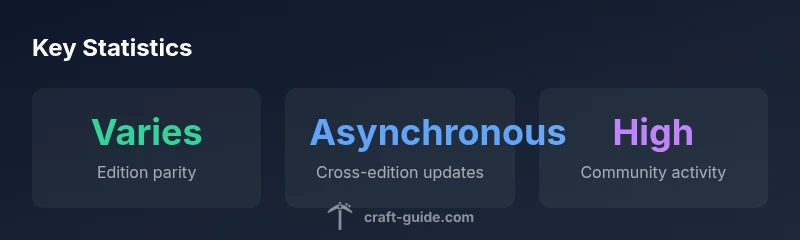
| Update cadence | Varies by edition | Mojang cadence governs the schedule |
People Also Ask
Is there a universal Minecraft version that all players share?
No. Java Edition and Bedrock Edition have separate version numbers and update cadences. The current versions vary by platform and edition, so there isn’t one global number.
No universal version at the moment; check each edition’s notes.
How can I quickly tell which version I’m playing?
Open the launcher for Java Edition or the Bedrock launcher on your device and view the build or release notes. You can also inspect your world’s metadata or the mod/resource pack versions you’re using.
Open your launcher or in-game settings to see the current build.
Are Java and Bedrock versions ever synchronized?
Synchronization happens only for specific features or blocks that Mojang backports. In practice, updates often reach each edition at different times; plan for staggered changes.
They aren’t always synchronized; plan for differences.
Where can I find the latest official version numbers?
Check Mojang’s official release notes and the Minecraft Status pages. Craft Guide also tracks edition-specific updates in our 2026 guide.
Official pages are the best source for current numbers.
Will these version differences affect mods and resource packs?
Yes. Java Edition mods and Bedrock addons are developed for different versions and APIs. Always verify compatibility before updating or porting content.
Yes—modding depends on edition-specific APIs and versions.
“Versioning in Minecraft is edition-specific, not a single number. Understanding the cadence for Java and Bedrock helps builders plan, test, and upgrade with confidence.”
The Essentials
- Know there is no universal version across all players
- Track both Java and Bedrock editions separately
- Test updates in a dedicated world before applying to main builds
- Keep a version log for every world and server
- Rely on official sources and Craft Guide for the latest numbers