Small Minecraft House: Build a Cozy, Efficient Home
Learn to design and build a compact, stylish small minecraft house with smart storage, durable materials, and a tidy layout. This step-by-step guide covers planning, materials, a blueprint, and practical tips for survival and creative play to help you craft a cozy, functional in-game home.


This quick guide shows you how to build a small minecraft house that maximizes space with smart layouts and sturdy walls. You’ll learn a practical design, a material checklist, and a step-by-step building plan you can follow in both survival and creative modes. By the end, you’ll have a cozy, functional home ready for decorators, farms, and redstone experiments.
Why the small minecraft house is a smart starter project
A small minecraft house is a powerful learning project because it forces you to optimize space, resources, and lighting. With a compact footprint, you practice efficient block choices, ceiling height planning, and door/window placement that maximize usability without wasting materials. This approach also reduces the risk of getting overwhelmed in early-game crafting, since every block has a clear purpose. The keyword to guide your decisions is the idea of a well-organized, cozy home where every room serves a purpose, even in a tiny footprint. Craft Guide’s analysis shows that beginners benefit from starting with a simple, scalable layout before expanding. This bite-sized project helps you learn fundamentals of symmetry, balance, and decorative detail, so you gain confidence to tackle larger builds later.
Design principles for a compact home
When space is limited, every inch counts. Use a grid-based layout, with a clear entrance, a single planning axis, and vertical stacking to save floor space. Consider a raised roof for additional storage alcoves and a loft bed that doubles as a storage shelf. Prioritize open sightlines to make the house feel larger, and use glass panes or tinted glass to brighten interiors without sacrificing privacy. Lighting is essential in tiny builds: place torches or lanterns in corners and under stairs to eliminate dark corners that invite hostile mobs. For a small minecraft house, choose materials with a common color family to create a cohesive look and avoid visual clutter that makes the space feel smaller.
Materials and block choices for durability and aesthetics
Choosing the right materials influences both durability and aesthetics. Wood planks are fast and versatile for early builds, paired with oak logs for support accents. Stone bricks or cobblestone add stability and a timeless look, while glass panes brighten the interior. For roofs, consider dark oak stairs or slab-based roofs to create depth without overuse of blocks. Use a mix of warm tones (oak, birch) for a welcoming feel, and reserve contrast blocks (stone, brick) for foundation and trim. Don’t forget doors and windows: a sturdy door improves security, while window placement affects lighting and mood. A compact house thrives on deliberate material zoning—walls, roof, and floor each have a dedicated craft and finish.
Floor plan and elevations: practical blueprint for a small minecraft house
Begin with a simple rectangle or square footprint, something around 6x6 or 7x7 blocks to keep proportions manageable. Plan a small entryway with a single door, a storage alcove along one wall, and a combined living space with a compact dining/working area. Elevations should reflect a balanced silhouette: a peaked roof on the front adds character, while a flat rear side keeps build time low. Windows should align with interior zones to maximize natural light; place a single bed and a chest against a wall to optimize space. The floor plan should be adaptable for different playstyles—survival players may want a hidden chest and defensive window placements, while creative builders can explore decorative nooks and display shelves.
Lighting, ventilation, and interior layout for comfort in tiny spaces
In a small house, lighting is more than ambiance—it improves usability and prevents hostile spawns. Use a mix of ceiling lighting and wall lamps to create even brightness. Ventilation is simulated with open doorways or small air shafts near the roof for a sense of airflow. Interior layout should cluster related tasks together: a crafting corner near the entrance, a compact kitchen area with a smoker and furnace, and a cozy sleeping nook. Storage should be tiered: a ground-level chest for daily items, a wall-mounted shelf for tools, and an under-stair storage bin. Finishing touches like a rug of carpet blocks and framed items add personality without bulk.
Redstone-ready upgrades for a tiny footprint
A small minecraft house can hide clever redstone upgrades that don’t overwhelm space. Plan a hidden item sorter behind a wall panel, a compact lighting switch, or a dropper-based storage mechanism integrated under a staircase. Keep redstone lines short and protected behind walls to minimize block usage and avoid visual clutter. For learners, start with a simple redstone torch lamp to control lighting and a basic pressure plate door upgrade. Incrementally add complexity as you grow more confident, ensuring you can still access essential blocks without disassembling the build.
Survival vs creative: adapting the design for different playstyles
In survival mode, prioritize durability, accessibility, and resource management. Build with cheaper, renewable materials and place extra torches to deter mobs. In creative mode, you can experiment with decorative blocks, alternate materials, and interior themes without worrying about resources. The same floor plan can be layered with different skins—stone accents for a fortress vibe or wood palettes for a cozy cabin look. The key is to maintain function while enjoying the process of iterating designs.
Common mistakes and quick fixes for tiny builds
Common mistakes include overcomplicating the interior, poor lighting, and blocking pathways with furniture. Fixes are simple: swap bulky blocks for lighter ones, add skylights or more windows to increase brightness, and keep doors accessible. If you run into mob trouble at night, add a small perimeter wall or upgrade to a guarded front entrance. Regularly test your design in both day and night cycles to ensure you aren’t leaving any corners under-lit or wasted on decorative elements that don’t serve storage or accessibility.
Craft Guide recap and next steps
A small minecraft house succeeds when it blends practicality with style. The compact footprint makes planning and resource management easier, while a thoughtful layout delivers comfort and personality. Start with a clear floor plan, choose durable materials, and layer in light and storage gradually. Once you’ve mastered the basics, scale up to multi-room designs or add specialized spaces like a farming nook or a tiny enchanting corner. Your next build could be a terrace house, a loft apartment, or a hillside cottage—the same principles apply.
Tools & Materials
- Wood planks(At least 200 blocks for walls and flooring in a 6x6 footprint)
- Oak logs(Structural accents and support beams)
- Glass panes(Natural light for windows; 4-6 panes per side depending on size)
- Door(Wooden door or iron door for security)
- Crafting table(Central workstation for repairs and small builds)
- Furnace(For cooking and smelting upgrades)
- Ladders or stairs(Access to a loft or elevated storage)
- Slabs and stairs(Used to create a pitched roof and comfortable transitions)
Steps
Estimated time: 60-90 minutes
- 1
Plan the space
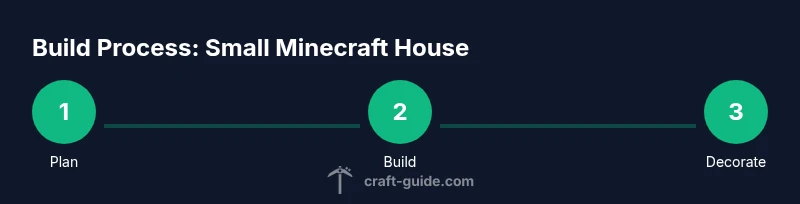
Sketch a simple footprint of 6x6 or 7x7 blocks. Decide where the door goes, where storage lives, and where a bed will sit. Note potential upgrade paths (loft, extra room) for later. This prevents wasted space during build time.
Tip: Draw a quick map on paper or in-game using dirt or labeled blocks to visualize before placing permanent blocks. - 2
Lay the foundation
Place a compact 6x6 foundation using your chosen material. Create a clean edge around the base to delineate interior walls. Check alignment with your planned door and window positions.
Tip: Use a contrasting block for the foundation edge to help you see the boundaries while building. - 3
Build the walls
Erect walls to a height of 4 blocks, leaving spaces for windows and the door. Keep corners clean and consider adding a small interior nook for storage.
Tip: Stagger windows to maximize light without creating wide, empty wall spaces. - 4
Add the roof
Choose a simple roof—slab-based or small pitched roof—using slabs to save blocks. Ensure the roof overhangs provide shade and rain protection for the door.
Tip: Test a few angles quickly; a slightly overhanging roof makes the house look larger from the outside. - 5
Install windows and doors
Place windows on the interior-facing walls to maximize lighting. Install the door with a clear path for easy entry and exit. Add basic interior partitions if needed.
Tip: Keep at least one window on each major room to reduce mob spawns in dim corners. - 6
Finish interiors and lighting
Add a compact crafting corner, a bed, and storage chests. Place torches or lanterns to ensure even brightness and prevent mysteries in the dark.
Tip: Position lighting higher to avoid cluttering the floor space.
People Also Ask
What is the ideal starting size for a small minecraft house?
A 6x6 or 7x7 footprint is a manageable starting size that fits a bed, crafting area, and storage while leaving space for future upgrades.
A 6 by 6 or 7 by 7 footprint is a great starter size, leaving room for essentials and future improvements.
Wood or stone—which is better for durability in a tiny build?
Stone materials tend to be more durable and mob-resistant in survival, while wood is easier and quicker to gather for early builds. A mixed palette often works well.
Stone feels sturdier for survival, but wood is quicker to gather; mix them for balance.
How can I add storage without cluttering the space?
Use vertical chests and under-stair compartments to maximize storage while keeping floor space open.
Utilize vertical spaces and hidden compartments to keep storage neat.
Can this design work in creative mode only?
Yes. In creative mode you can experiment with materials, colors, and decorative blocks without resource constraints.
Absolutely—creative mode lets you test ideas freely.
What common mistakes should I avoid?
Overfilling rooms, poor lighting, and blocking pathways lead to mob spawns and cramped feel. Fix by simplifying layout and adding light sources.
Avoid clutter, light every corner, and keep paths clear.
How can I upgrade this into a larger build later?
Preserve the core rooms and structural integrity, then extend walls, add a second floor, or connect to a path to a larger base.
Keep your core layout intact and gradually expand with additional wings.
Watch Video
The Essentials
- Plan before placing blocks to save materials.
- Maximize storage with stacked shelves and chest placement.
- Keep lighting consistent to deter mobs.
- Use vertical space to extend functionality without expanding footprint.
- Adapt the blueprint for survival or creative play.