Minecraft Home Small: A Practical Tiny House Guide
Learn to design and build a compact minecraft home small with practical layouts, efficient lighting, and smart storage tips—perfect for newbies and seasoned players seeking tidy tiny builds.


Goal: Build a compact, efficient Minecraft home that fits a small footprint while still feeling cozy and functional. You'll learn a practical size, layout concepts, and a 6-step building flow to complete a basic tiny house. Key requirements: 1–2 blocks wide by 3–5 blocks long, reliable lighting, accessible storage, and durable exterior walls.
Why a compact minecraft home small designs shine
Compact designs shine in Minecraft because less footprint often means more focus on function and atmosphere. A minecraft home small can feel surprisingly spacious when you use vertical space, built-in storage, and a cohesive material palette. The Craft Guide team found that small footprints reward you with faster resource gathering and easier maintenance. By focusing on a limited material palette and a cohesive visual language, you can create a cozy base that remains inviting after nights of exploration. A compact design also reduces exposure to hostile mobs, keeps inventory manageable, and makes base-building faster for beginners and veterans alike. The design mindset favors modular, repeatable elements that scale across biomes. In addition, a minecraft home small emphasizes efficient use of vertical space, built-in storage, and a compact yet comfortable interior that supports survival or creative play. According to Craft Guide, even the tiniest cabins can feel expansive with proper lighting and clever line work.
Planning footprint and orientation
Before you place a single block, map out a footprint that fits your goal. For a small home, a 5x6 or 6x6 block rectangle is plenty for a simple living area, a kitchen nook, and a bed corner. Consider daylight: place windows on the side that receives the most sun to maximize natural light during the day, which reduces the need for torches. Think about entrance flow: a single door on one short side keeps the interior compact and easy to navigate. The Craft Guide team recommends avoiding awkward L-shaped layouts in tight spaces, as intersections create wasted corners and extra pathways. Visualize the interior in a 3D plan, then translate it into a simple wall grid using your chosen materials.
Core materials and resource planning
For a minecraft home small, choose a cohesive material set to keep visuals clean and construction straightforward. Wood planks are common for walls; cobblestone or brick forms a sturdy foundation and trim. Glass panes provide light without bulky frames. A single door is sufficient; a second door can be used for a separate room. Chests, a crafting table, and a bed cover daily needs; plan enough space to access items without moving furniture. If you’re playing in survival mode, gather resources methodically: chop trees, mine stone, and craft tools to stay on schedule. Craft Guide analysis shows that a small, consistent material palette accelerates building and enhances the final look.
Interior layout strategies for tiny spaces
Maximize usable floor area by defining zones with partial walls and furniture placement. A compact living zone can double as a crafting area with a chest behind the couch and a hidden crafting table under a stair. Use vertical space for a loft bed or mezzanine if the footprint allows. A small kitchen corner can be built into a counter with a furnace and a crafting table above; keep pathways clear so you don’t feel cramped. Remember to place storage under beds or stairs where you can, freeing precious floor space for movement. Craft Guide notes that consistent rhythm in wall heights and accent blocks helps the space feel larger than its dimensions.
Exterior design for a small house
Keep the exterior simple but charming; a consistent roofline, a compact doorway, and a small porch area go a long way. Consider using a gable or shed roof to minimize block count while shedding rain and snow in certain biomes. Exterior walls in a single material with occasional trim create a clean silhouette. Add details like lanterns on posts, potted plants, or a small fence to define the entrance. A well-placed window with a wooden frame on the façade can dramatically improve curb appeal while letting natural light spill inside. According to Craft Guide, small homes benefit from a coherent color palette for visual harmony.
Lighting, storage, and utilities in a tiny base
Lighting is crucial in a small minecraft home small to prevent mob spawns and ensure comfort. Place torches or lanterns at regular intervals along walls, ceilings, and corners; a single lantern at each doorway is often enough. Storage should be unobtrusive: use stacked chests, under-stair compartments, and hidden shelves behind a headboard or wall panel. Consider a mezzanine or loft if your footprint allows, adding a secondary bed and storage without consuming floor space. Add a crafting nook near the door to minimize wandering; incorporate a furnace or smoker in a nearby alcove. Good lighting and tidy storage make a tiny base feel organized and welcoming.
Example blueprints and templates
A well-documented tiny home uses a clear floor plan: a 5x6 footprint with a single room that combines living/sleeping and a small kitchenette. A second room can be a storage nook or crafting corner with a door separating the spaces. Use a simple color palette: oak planks walls, spruce or stone accents, and glass windows. Draft a baseline layout in Creative or Quick Draft mode before committing to survival builds. Craft Guide recommends creating a printable blueprint with labeled blocks for walls, doors, windows, and storage features.
Variations: starter hut, mezzanine loft, and aesthetic upgrades
Variations allow you to level up a minecraft home small without changing the footprint. A starter hut uses lighter materials and fewer blocks; a mezzanine loft adds vertical space for a bed or storage with a ladder. Aesthetic upgrades include decorative blocks like lanterns, potted plants, and carefully placed stairs to mimic architectural features. You can also upgrade lighting with lanterns on poles to create warm cues at night. Craft Guide analysis shows that these small upgrades can dramatically improve the look and feel of a tiny residence without increasing the footprint.
Common mistakes and fixes
Common mistakes include overcomplicating the roof, creating dead corners with irregular layouts, and neglecting lighting. Fix by simplifying the roof to a single plane, reworking corner areas into multipurpose spaces, and placing lights every few blocks instead of only at entrances. Another pitfall is insufficient storage; solve by adding under-stair chests and wall-mounted shelves. Finally, ensure the door direction aligns with interior flow to minimize awkward movement and improve access.
Quick upgrade ideas and durability tips
To keep your minecraft home small thriving over time, plan future upgrades like adding a loft, extending a wall with a simple extension, or swapping to more durable materials that resist weathering in your chosen biome. Maintain with occasional resets of torches and a small storage system. For creative players, migrating to a second floor with a ladder or staircase is a straightforward upgrade that doesn’t compromise the footprint.
Tools & Materials
- Wooden planks (any type)(Use a consistent wood type for walls; 64–100 blocks for a small footprint.)
- Logs or decorative beams(Optional for corner accents or vertical support.)
- Cobblestone or brick(Foundation and trim for durability.)
- Glass panes(Windows; plan 4–6 panes per window.)
- Door (wood or iron)(One door suffices; add a second later if needed.)
- Torches or lanterns(Light evenly to prevent mob spawns.)
- Chests (2+)(Storage for tools and materials.)
- Crafting table(Essential for tools and recipes.)
- Bed(Optional for nighttime safety.)
- Stairs and slabs(For loft access and interior levels.)
- Fences and gates(Optional decorative/functional entrance.)
Steps
Estimated time: 1-2 hours
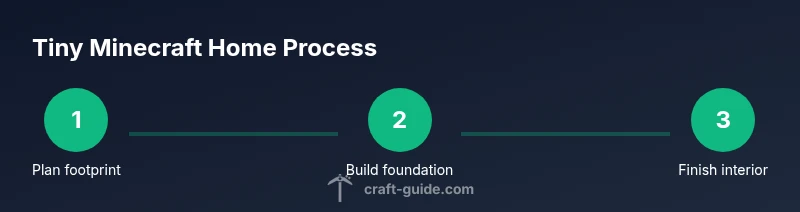
- 1
Prepare footprint and foundation
Mark a 5x6 or 6x6 footprint on flat ground. Level the surface and lay a simple cobblestone or brick foundation to keep the base stable. This step sets the scale and ensures walls align properly.
Tip: Use blocks as markers on the ground to keep corners square. - 2
Build exterior walls
Raise walls to a single height, then decide if you want a loft. Keep openings for a door and 1–2 windows. Choose a consistent wall material to maintain a cohesive look.
Tip: Keep a uniform wall height to avoid awkward transitions. - 3
Install roofing
Fit a simple roof—gable or shed works well for small footprints. Avoid overly complex shapes that raise block count and construction time.
Tip: Use stairs or slabs to create a shallow overhang for visual appeal. - 4
Add interior walls and zones
Create a basic living/sleeping zone and a compact kitchenette or storage nook. Use partial walls to define spaces without blocking light.
Tip: Place a chest and a crafting table near the entry to save walking distance. - 5
Install doors and windows
Place a door for easy entry and windows on the sunlit side. Ensure visibility from the doorway to important areas like storage and bed.
Tip: Keep window placement symmetrical for a cleaner look. - 6
Light the interior
Distribute torches or lanterns evenly to prevent mobs and to create a welcoming ambiance. Balance light levels to avoid large dark spots.
Tip: Place lights at regular intervals along walls, not just at corners. - 7
Add storage and furniture
Install chests under beds or stairs and place a crafting table in a convenient corner. Keep pathways clear for easy movement.
Tip: Combine storage blocks with decorative furniture to maximize space. - 8
Polish exterior and entrance
Finish with exterior detailing like a porch, lanterns, and a neat path. A small landscaping touch improves overall aesthetics.
Tip: Match roof color to walls for a cohesive silhouette.
People Also Ask
What is the smallest viable Minecraft home?
A tiny footprint of about 3x4 blocks with a single room, a bed, a chest, a door, and basic lighting can function as a viable micro-home. It demonstrates that comfort emerges from organization and efficient layout more than size. Start simple and expand later as needed.
A micro-home can be as small as a 3 by 4 footprint with essentials like a bed, a chest, and lighting. Start there and add rooms later as you gather more resources.
What materials are best for a small, sturdy home?
Use a cohesive set—wood for walls, cobblestone or brick for the foundation and trim, and glass panes for windows. This combo looks clean and reads well in-game while keeping resource gathering reasonable for a tiny build.
Wood walls with cobblestone foundation and glass windows create a sturdy, clean look that’s easy to build with limited resources.
How can I light a small house without mobs?
Distribute torches or lanterns evenly around the interior and near entrances. Avoid dark pockets by placing lights every few blocks, especially in corners and storage alcoves.
Light evenly throughout the interior, especially corners and storage areas, to keep hostile mobs at bay.
How can I maximize storage in a tiny base?
Stack chests under stairs or beds, use labeled item frames for quick access, and keep a small crafting nook nearby. Every block should have a storage purpose to minimize clutter.
Put chests under stairs and beds, label items, and keep a compact crafting area to save space.
Is it better to build on flat ground or uneven terrain?
Flat terrain makes it easier to maintain a compact footprint and align walls. If you’re on uneven ground, consider a simple raised platform or terraced approach to preserve the small look while keeping foundations stable.
Flat ground is easiest for a small, tidy base; use a small platform if your land isn’t flat.
Watch Video
The Essentials
- Plan a compact footprint before laying blocks.
- Maintain a cohesive material palette for visual harmony.
- Prioritize lighting and smart storage in small homes.
- Experiment with lofts or mezzanines for extra space.
- Test layouts in creative mode before survival builds.