Minecraft Cost: A Practical Guide for Players 2026
Explore the true cost of Minecraft, from the base game to Realms, servers, and add-ons. This Craft Guide guide offers budgeting tips for 2026.


Minecraft cost includes the base game plus optional ongoing expenses like subscriptions, servers, and add-ons. This definition clarifies how costs accumulate, what matters for different playstyles, and how to budget effectively in 2026. We explain why prices vary by edition and platform, outline predictable annual costs, and propose cost-saving strategies so players can plan without surprises.
Understanding the total cost of Minecraft
According to Craft Guide, understanding the true cost of Minecraft goes beyond the base game. For most players, the initial purchase is only part of the equation. The cost includes optional subscriptions like Realms, server hosting if you want private worlds, and a growing ecosystem of add-ons such as texture packs, mod packs, and marketplace content. This article analyzes the components, how they differ across editions and platforms, and how to set a budget that fits your playstyle. We’ll use ranges rather than fixed numbers to reflect regional prices and frequent sales in 2026. By separating upfront costs from recurring expenses, you can tailor a plan that matches how you play—whether you’re a casual builder, a challenge-seeking explorer, or a survival expert. Remember that timing matters: sales and bundles can noticeably alter what you eventually spend over a year, so consider syncing purchases with seasonal events and store promotions. The goal is transparency: know what you could spend and where you might cut back if needed.
How the base game price varies by edition and sale
Prices for Minecraft’s base game differ by edition and by platform, and they shift with sales, bundles, and regional pricing. The Java Edition and Bedrock Edition are sold through different stores, sometimes with slightly different starter prices, and occasional cross-promotions can blur the line between one-time purchases and bundles. In practice, most players encounter a base purchase that sits within a broad range rather than a fixed figure, and savvy buyers seize discount periods to upgrade or consolidate licenses. If you’re on console, digital storefronts frequently run seasonal promotions that lower the up-front cost temporarily, while PC players may see price reductions during major sale events. In all cases, track the current offer from official stores and reputable retailers, as price changes can swing significantly across platforms and regions.
Extra costs that can surprise new players
Beyond the base game, several costs creep into Minecraft budgets. A private Realms subscription provides an official cloud server with preset limits and guaranteed uptime, but it adds a predictable monthly expense. If you prefer control or larger communities, self-hosted servers require hosting fees, bandwidth, and maintenance time; costs range with player count and provider. Mod packs, texture packs, map packs, and marketplace content offer enhancements but aren’t essential for everyone; many of these have free options, while some curated packs appear as small one-time purchases or recurring subscriptions. Always assess the value of each add-on against your play goals and the time you’re willing to invest to manage them.
Realms vs. self-hosted servers: cost considerations
Choosing between Realms and a self-hosted server hinges on convenience, control, and total cost of ownership. Realms is an all-in-one option with a simple setup and predictable monthly fees, ideal for small groups who want a turnkey experience. Self-hosted servers give you freedom to scale, customize plugins, and host larger communities, but require more hands-on management and typically involve separate hosting costs and domain considerations. In 2026, many players weigh total annual costs: Realms provides stability at a fixed monthly price, while self-hosted options can offer savings if you optimize hosting plans and share the bill among several players. Compare the two paths against your schedule and social circle to determine the best fit.
Modding, texture packs, and add-ons: budgeting tips
The world of Minecraft add-ons is broad, with many free choices and a few paid options. Free mods and texture packs can dramatically expand gameplay without affecting budgets, especially for players comfortable with manual installation. Paid mod packs and curated content exist, but they aren’t required to enjoy the core experience. When budgeting, consider the value of a modded playthrough against the time you’ll spend managing compatibility and updates. If you do invest, start with a small, well-supported package and verify compatibility with your game version before purchase. Build a list of must-have enhancements and revisit it after a few weeks of play.
Practical budgeting strategy for a year of Minecraft
Begin with a clear baseline: subtract any existing licenses you already own and note the current base game price range. Decide if Realms or a self-hosted server will power your world and estimate those monthly costs. Set aside a monthly budget for occasional add-ons and updates, and keep an annual buffer for sales events that reduce upfront costs. Track purchases in a simple ledger or budgeting app, and adjust as your playtime grows or shrinks. If you play with friends, split costs to keep individual spend reasonable. A well-structured plan helps you maximize enjoyment while avoiding surprises across seasons and school breaks.
Cost-saving tips and planning for different playstyles
Casual builders may stay within the base game and a handful of free texture packs, while survival-focused players might invest in server hosting or premium add-ons for enhanced mechanics. PvP or large-scale redstone builds often justify shared server costs and curated mod packs that support group gameplay. Consider seasonal sales, bundles, and community giveaways to stretch your budget. Finally, review your spend every two to three months and reassess what adds real value to your experience, discontinuing options that no longer align with your goals.
Cost components for Minecraft play, by category
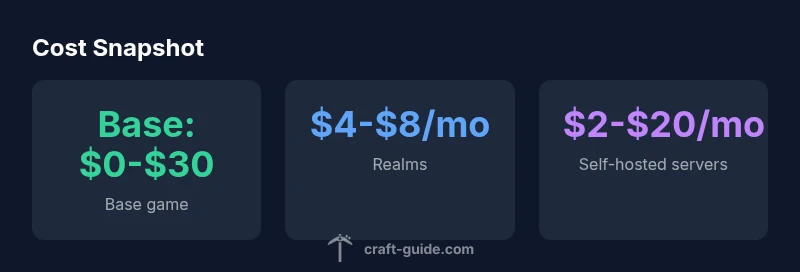
| Cost Category | Typical Range | Notes |
|---|---|---|
| Base game | $0-$30 | Edition and platform vary; watch for sales |
| Realms subscription | $4-$8 per month | Official hosted world option |
| Self-hosted server hosting | $2-$20 per month | Depends on provider and player count |
People Also Ask
What is the base price of Minecraft Java Edition?
The base price varies by edition and platform and can change with sales. Check the official store for current price.
Prices differ by edition and platform; check the store for the current base price.
Do I need Realms to play with friends?
Not required; you can host your own server or play on public servers.
You don't have to use Realms; you can run a server or join others.
Are mods and add-ons worth the cost?
Many mods and add-ons are free; paid packs exist but aren't necessary for the core experience.
Most mods are free; paid packs exist but aren't required.
How much does it cost to run a private Minecraft server?
Costs vary by hosting provider and player count; budget for monthly hosting and possible add-ons.
Hosting can range from a few dollars to more, depending on players.
What is a practical yearly budget for casual players?
Base game plus optional costs can be planned with a flexible annual budget; include monthly hosting or Realms if used.
Plan for base game plus optional costs; budget flexibly.
“Understanding the true cost of Minecraft means planning for both upfront purchase and ongoing expenses, tailored to your playstyle. A thoughtful budget helps you maximize enjoyment without surprises.”
The Essentials
- Define your playstyle to estimate costs.
- Base game price varies by edition and sales.
- Expect ongoing costs for Realms or servers.
- Use sales and bundles to lower upfront costs.
- Budget annually with a flexible plan.