Is Minecraft Too Expensive? A 2026 Cost Guide
Explore why 'minecraft to expensive' is a common concern, what drives the cost, and practical budgeting tips to keep Minecraft affordable without sacrificing creativity in 2026.


Is Minecraft too expensive? The phrase often reflects concerns about the total cost of playing, not just the base game. In 2026, players weigh the upfront price of the base game against optional Realms subscriptions, marketplace add-ons, and community mods. Craft Guide Analysis, 2026, shows that the perceived expense commonly comes from ongoing purchases rather than a single ticket price; smarter budgeting can align cost with how you play.
The Cost Question: why 'minecraft to expensive' rings true in 2026
For many players, the phrase minecraft to expensive captures a growing concern: the total cost of playing extends beyond a single purchase. In 2026, even with a base game price that remains under a typical household budget, the ongoing commitments—Realms subscriptions, optional DLC, companion skins, texture packs, and mod ecosystems—can push the annual spend into a range that feels steep for casual players. Craft Guide Analysis, 2026, notes that while the core game is affordable, the cumulative price of optional purchases varies by platform and region. In practice, the question isn't the sticker price of the base game alone, but the sum of all add-ons a player opts into over time. The Craft Guide team finds that the perception of expense often comes from how players value ongoing access and creative freedom versus upfront cost.
The Cost Breakdown Behind the Frustration
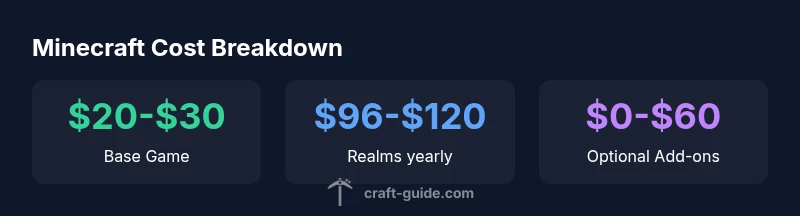
Costs break down into several components that can quietly add up over the year. Start with the base game purchase, which is a one-time cost for most players. Then consider Realms subscriptions for a persistent world or server-style hosting, which adds ongoing annual expense. Marketplace items—skins, texture packs, seed packs, and adventure maps—offer customization options but are usually optional. DLCs and add-on packs provide expanded gameplay or aesthetics but aren’t required to enjoy the core experience. Finally, mods and third-party resource packs can be free or paid, depending on the platform and licensing. Understanding these pieces helps players decide what matters most and where to trim.
How the value proposition shifts with playstyle
Different players derive value from Minecraft in distinct ways. Builders who invest in high-resolution texture packs, cosmetics, and modded toolchains may accept higher costs as a trade-off for speed, aesthetics, and workflow efficiency. Survival players focused on exploration may prioritize world seeds, server access, or community-driven content, which can be inexpensive or free if they use open-source mods. The key is to align spending with how you actually play: a casual hobbyist’s cost ceiling will look different from a hardcore modder’s budget. Craft Guide’s research consistently shows that perceived value improves when expenditures clearly map to meaningful in-game outcomes.
Practical budgeting steps for new players
If you’re just starting, a pragmatic approach helps avoid sticker shock. Step 1: set a monthly budget specifically for Minecraft-related purchases, separate from other games. Step 2: start with the base game and any free features you can access, postponing paid add-ons until you’ve determined their value. Step 3: watch for sales and bundles that combine base game access with discounts on add-ons. Step 4: regularly review your spending—if a month’s purchases don’t enhance your core gameplay, pause or remove them. This disciplined method keeps costs predictable while preserving creative freedom.
Free options and community-driven content to stretch your dollar
Minecraft doesn’t require expensive add-ons to be enjoyable. A wealth of free resources exists: seed collections, community-building maps, and open-source mods provide substantial value at no extra cost. Server options—especially free-to-join servers—offer multiplayer experiences without additional subscription fees. Texture packs and skins often have free alternatives or low-cost options from community creators. By prioritizing free content and evaluating each paid item on its usefulness, players can maintain a healthy balance between creativity and cost.
Real-world scenarios: budgeting for beginners vs veteran builders
New players typically benefit from a cautious approach: buy the base game, test the waters with free content, and scale up price-aware purchases only after identifying clear value. Veteran builders might justify higher costs through time saved in building workflows, access to premium resources, and expanded creative possibilities. The decision to invest more heavily should hinge on whether the added features produce tangible gameplay improvements, improved efficiency, or richer social play. Craft Guide analyses indicate that cost effectiveness rises when purchases correspond to measurable outcomes, rather than impulse buys.
The trade-off: editions, bundles, and timing
Timing can influence perceived expense. Bundles and seasonal promotions often dampen upfront costs while providing a broader feature set. If you can wait for a sale or bundle that matches your playstyle, you’ll typically achieve better value than buying piecemeal. It’s also worth evaluating whether an upgrade or a subscription would better support your ongoing needs. The Craft Guide team notes that careful timing, combined with a clear plan for how you’ll use each feature, leads to lower marginal cost per hour of play.
Minecraft cost components and typical ranges in 2026
| Cost Component | Typical Range (USD) | Notes |
|---|---|---|
| Base Game | 20-30 | One-time purchase; essential to start |
| Realms Subscription (annual) | 96-120 | Persistent world hosting; promotions vary |
| DLCs & Skins (optional) | 0-60 | Personalized content; not required |
| Mods/Resource Packs (one-time) | 0-20 | Depends on platform and licensing |
People Also Ask
What makes 'minecraft to expensive' a common concern?
The perception stems from adding ongoing subscriptions, add-ons, and community content to the base game. While the core price is modest, the total yearly spend can rise quickly if you regularly purchase extras. Understanding each component helps you keep costs in line with your playstyle.
The concern comes from adding extra costs on top of the base game. If you track what you actually use, you can keep spending in check.
Do I need Realms to enjoy Minecraft?
No. Realms is optional for a persistent world experience. Many players use free or self-hosted servers, or play solo, which keeps ongoing costs lower. Realms can be convenient, but it is not a requirement for enjoying the game.
Realms is optional—many players go with free servers or solo play to keep costs down.
Are there free or low-cost ways to enjoy Minecraft content?
Yes. There are many free maps, seeds, and mods from the community, plus occasional promotions on bundles. Starting with free resources helps you test whether paid content is worth it for your style of play.
Absolutely—start with free community content to see what you value before buying.
How can I minimize Minecraft costs for a new player?
Set a monthly budget, prioritize base game access, and wait for sales or bundles for add-ons. Only purchase items that clearly enhance your playtime, and regularly review your spending to cut unused content.
Create a small budget, wait for sales, and only buy what truly adds value to your play.
Do mods or paid texture packs significantly increase total cost?
They can, but many mods and packs are free or low-cost. The big cost driver is frequent, ongoing purchases rather than a single mod or pack. Always evaluate value per hour before buying.
Mods can be free or cheap; the real cost is ongoing subscriptions or frequent purchases.
“Costs should align with how you play—base access unlocks limitless creativity, while optional add-ons are a personal choice.”
The Essentials
- Define a clear Minecraft budget before buying.
- Base game remains affordable; add-ons drive costs.
- Seek bundles and sales to maximize value.
- Consider free alternatives before paying for mods.
- Track yearly spending to avoid surprises.