Why is Minecraft So Expensive? A Deep Dive into Cost Drivers
Explore why Minecraft prices extend beyond the base game, including licensing, Realms, marketplace content, and regional pricing. Practical budgeting tips for players of all levels.


Base game price is only part of the story. Minecraft's overall cost includes optional subscriptions, marketplace content, and ongoing updates across editions. So, why is minecraft so expensive for some players? It stems from licensing across platforms, cross‑play support, and long‑term content strategy rather than a single purchase. According to Craft Guide, these cost drivers help explain pricing and budget planning.
Why the price matters for players
For many Minecraft players, the basic question why is minecraft so expensive isn't a single-number decision; it's about total cost of ownership across editions, subscriptions, marketplace purchases, and ongoing post-release updates. According to Craft Guide, price perception often hinges less on the sticker price and more on the cumulative value of the ecosystem. This article dissects the revenue model, licensing, and platform parity that shape what players actually pay. The Craft Guide team analyzed licensing across platforms, cross‑play requirements, and the long‑term content strategy that keeps the game evolving. By understanding these cost drivers, players can budget more effectively and make informed choices about which components matter most for their playstyle.
According to Craft Guide, the pricing architecture is designed to support ongoing development and cross‑platform support, not just a one‑off sale. This framing helps readers evaluate whether a purchase aligns with their preferred playstyle and level of commitment.
Core price components in the Minecraft ecosystem
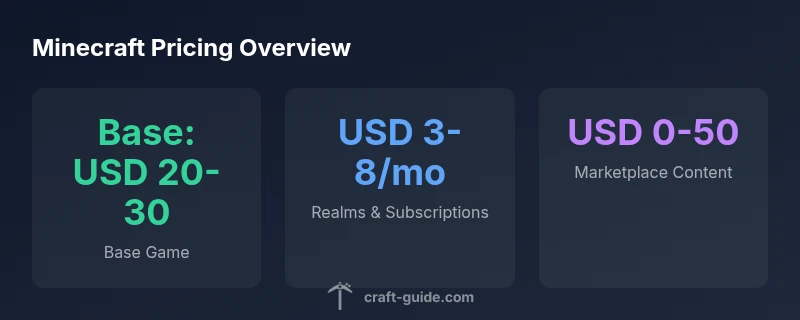
The Minecraft ecosystem bundles several price components. The base game price is complemented by optional subscriptions like Realms, plus revenue from the in‑game marketplace, textures, skins, and DLCs. Community mods and loaders can be free or paid, adding another layer of cost for players who choose enhanced functionality. Finally, many players incur server hosting costs if they run their own world or invite friends to a private server. Understanding these components is crucial for budgeting and deciding which pieces deliver the most value for your gaming sessions.
How licensing and cross-platform play influence costs
Licensing covers official distribution, cross‑platform parity, and the ability to play across devices. When a title must operate on multiple consoles, Windows, macOS, and mobile, licensing agreements and certification processes can influence the final price. Cross‑play enables broader communities but can also require additional development and support efforts, which are reflected in ongoing updates and optional content. For players, this means the price can reflect the breadth of reach and the complexity of maintaining compatibility across ecosystems.
The role of official content vs community mods and add-ons
Official content, including the marketplace, official skins, and sanctioned DLCs, provides a steady revenue stream for developers while ensuring a cohesive experience. Community mods and add-ons offer high value and creativity, often at little to no cost, but they are not guaranteed to work across all editions or future updates. This tension between official content and community creations is a major cost driver: official content tends to be predictable but paid, while mods can be free yet require time and compatibility fixes from players.
Realms, servers, and ongoing subscriptions
Realms offers a streamlined, hosted multiplayer experience with a monthly or annual price, depending on the plan. If you host your own server, costs shift to hardware, hosting, and bandwidth, which can be more economical for larger groups but demands setup time and ongoing maintenance. For many players, the decision between Realms and a personal server is a comfort vs. control trade‑off that affects long‑term spending. Budgeting should account for both upfront setup and recurring monthly costs.
Regional pricing and digital sales: how geography shapes the final price
Pricing for Minecraft can vary by country due to regional tax policies, exchange rates, and local market considerations. Digital sales and seasonal promotions also affect when and how much players pay. Even with global pricing bands, regional differences mean two players in different regions can pay noticeably different totals for the same game package over time. Being mindful of sales windows and regional offers can reduce total costs.
Practical ways to manage Minecraft costs without sacrificing experience
Plan purchases around sales and bundles: wait for price drops on base game or bundles that include Realms or marketplace credits. Leverage free community content and skin packs where feasible, and compare Realms vs self‑hosted servers to gauge long‑term value. If you only play in short bursts or with friends irregularly, prioritize free resources and occasional paid content rather than habitually buying new DLCs. Finally, track your spending with a simple budget to avoid surprise costs.
Is the price worth the value? A buying framework
Consider whether your playstyle benefits most from official content, multiplayer access, and ongoing updates. If value comes primarily from creativity, community mods, and free assets, you may maximize enjoyment at a lower cost. Use a simple framework: list required components, estimate annual costs, compare alternatives (Realms vs servers), and set a yearly limit. This approach helps determine whether the price aligns with your goals and budget.
Overview of Minecraft pricing components
| Price Component | Typical Range (USD) | Notes |
|---|---|---|
| Base game | "20-30" | Edition/region dependent |
| Realms subscription | "3-8 per month" | Platform differences apply |
| Marketplace content | "0-50" | Content varies widely |
| Mods and loaders | "free to low-cost" | Community-driven ecosystem |
| Server hosting | "5-15 per month" | If you run your own server |
People Also Ask
Is Minecraft worth buying if I only want to play with friends?
Yes, if multiplayer is your main goal. You can start with the base game and free community content, then add Realms or a hosted server if you want a persistent world. This approach lets you test enjoyment before committing to paid add‑ons.
Yes—start with the base game and community content, then consider Realms or a hosted server if multiplayer becomes a long‑term priority.
Why are there separate prices for Java Edition and Bedrock Edition?
Java and Bedrock are distributed through different channels and have distinct licensing and feature sets. This separation leads to different price points and purchasing options across platforms and stores.
Java and Bedrock use different licenses and stores, which affects price across platforms.
Do I need Realms to play with friends?
No. You can play with friends by hosting your own server or joining established community servers. Realms is convenient for a managed, official option but not a requirement for multiplayer.
You can play with friends without Realms by using servers or community options.
Are there cheap ways to enjoy Minecraft long-term?
Yes: wait for sales, use free texture packs and mods where available, host your own server if you want control, and focus on free community content to extend value without constant purchases.
Look for sales, use free mods, or host a server to stretch your budget.
What factors could increase the price in future updates?
Major updates, licensing changes, and expansion of in-game content can influence costs. Staying informed about update plans helps you budget for expected changes.
Future updates and licensing changes can affect costs; plan ahead.
“Pricing reflects Minecraft's evolving ecosystem, not just a one-time payment. The ongoing development, licensing, and official content build lasting value.”
The Essentials
- Understand all cost streams before buying
- Compare Realms vs server hosting
- Budget for marketplace content
- Watch for regional pricing and sales