How Much Minecraft: Costs, Time, and Value for Players
Explore how much Minecraft costs, how long to learn, and what you get for your time. This Craft Guide analysis covers price ranges, learning curves, and playtime to help players budget and plan.


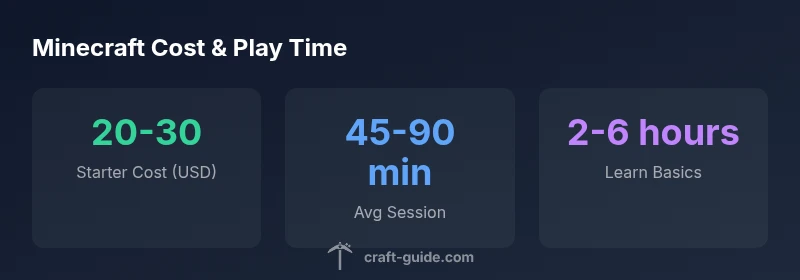
How much Minecraft questions typically cover upfront cost, ongoing expenses, and the time you’ll invest. Core editions usually cost about $20–$30 USD when not on sale, with regional differences and sales shifting the price. Beyond price, players often want to know how long it takes to learn the basics and how long a typical session lasts. Craft Guide analysis provides a practical framework for both price and time commitments.
What 'how much minecraft' means in practice
When readers ask how much Minecraft costs and how much time it requires, they’re weighing two kinds of value: the money spent upfront and the hours you’ll invest playing. The phrase also covers edition differences, cross-platform pricing, and optional add-ons. According to Craft Guide, a pragmatic way to think about 'how much minecraft' is to separate the initial purchase from ongoing costs and to map that against your intended playstyle. For many players, the real question isn’t the sticker price alone but the total value over months and years of exploration, building, and shared experiences. This article breaks down price ranges, learning curves, and time commitments so you can estimate your personal budget and schedule before you buy.
Price overview: cost to start playing
The starting point for 'how much minecraft' is the price of the core game. The Java Edition and Bedrock Edition share the same core experience in principle but are distributed differently across platforms; this leads to slight pricing differences due to platform store policies, regional taxes, and sales. In most regions, you can expect the base game to fall in the low tens to mid-twenties USD at launch. During major sales, prices dip further, sometimes by half. Additional costs include cross-platform skins, texture packs, and optional server access (Realms). This is important for players who want a pristine single-player world or a hosted multiplayer environment. Craft Guide notes that budget-conscious players can minimize upfront costs by waiting for sales, checking bundle offers, and prioritizing essential editions. For families or schools, group licenses or educational bundles can alter the math. This overview keeps those variables in mind while outlining how price interacts with playtime and value.
Time investment: learning curve and playtime estimates
Learning Minecraft begins with the basics: movement, mining, crafting, and survival mechanics. Most new players grasp core controls in a few minutes, but mastering combat, redstone basics, or building complex structures takes longer. If your goal is to explore and build with friends, early sessions (1–2 hours) are enough to establish a foothold; a few more hours unlock basic survival progression, and continued playing expands creativity and world-building freedom. The total time to reach a comfortable level depends on the chosen mode (Creative vs Survival), the extent of exploration, and engagement with community resources like guides and tutorials. Craft Guide’s analysis indicates that most beginners find the first 5–10 hours to be a meaningful stretch of learning, with noticeable improvements by 20–40 hours. Indeed, the time you invest is not wasted; it compounds as you add new materials, biomes, and mechanisms to your world. If you’re curious about long-term commitment, plan for a few weeks of regular play to develop a stable world and routine.
Gameplay value: what you get for your investment
Minecraft offers more than a game; it's a platform for creativity, collaboration, and experimentation. In Creative mode you can build without resource limits, which shortens the learning curve and emphasizes design skills and storytelling. In Survival mode you gain a deeper sense of progression, risk, and resource management. Across editions, additional value comes from multiplayer options, servers, and community-created content such as maps, skins, and texture packs. Realms provides an official hosted world for a monthly fee, enabling cross-device play with friends and family. This section explains how to stack value: start with the free trial or a discounted edition, then add optional features only when your intended playstyle demands them. For creators, modding and texture packs expand possibilities, but they can also complicate compatibility. Craft Guide's perspective emphasizes balancing your budget with your creative goals, focusing on features that will keep you engaged over time rather than chasing every new item.
How to estimate your own cost and time
To personalize cost and time estimates, map your goals: do you want a single-player creative sanctuary or a full-fledged multiplayer world? Start with the base edition and a trial period. Track hours spent each week and the kinds of activities you enjoy—building, exploring, redstone, or farming. Use a simple budgeting method: upfront cost, plus monthly or quarterly additions for optional content. For time, create a rough schedule: 1–2 hours of focused play on weekdays, longer sessions on weekends. If your group is playing, align your expectations with friends so you don’t overspend on servers or licenses. Craft Guide recommends using free resources and starter maps to gauge your interest before making further investments. This approach helps you avoid buyer’s remorse and ensures your year spent in Minecraft is aligned with your desired comfort level and creative ambition.
Common trade-offs and practical tips
Budgeting for Minecraft means balancing price, scope, and time. If you’re price-sensitive, prioritize the base game and free community content over paid add-ons. If you value instant access, consider starter bundles and sales to reduce upfront costs. Time-wise, decide whether you want quick gratification (creative sandbox) or longer-term goals (survival challenges, redstone projects). Community resources—tutorials, seed maps, and creative communities—can accelerate learning without spending more money. Realms is convenient but recurring; hosting a private server with a few friends can sometimes be cheaper long term, depending on usage. Craft Guide’s approach is to help players choose the path that maximizes both satisfaction and value, noting that the best choice varies by age, device, and playstyle.
Platform differences and price dynamics
Platform ecosystems shape both price and accessibility. The Java Edition is the classic desktop option with expansive modding and map support, while Bedrock Edition emphasizes cross‑platform play, performance optimizations, and store-based purchases. Mobile editions add portability, often with price differences due to app store policies. Seasonal sales, bundles, and free trials can dramatically affect cost. If you’re evaluating long-term value, consider the total cost of ownership across devices. The Craft Guide approach recommends starting small, then expanding as your interest grows, rather than over-committing before you’ve tested the waters.
Pricing and time metrics for starting Minecraft
| Aspect | Typical Range | Notes |
|---|---|---|
| Starter cost (USD) | 20-30 | Prices vary by edition and region |
| Ongoing costs (per year) | 0-20 | Optional content (Realms, mods, texture packs) |
| Learning curve (hours) | 2-6 | From basics to comfortable gameplay |
| Average session length (minutes) | 45-120 | Depends on play style and goals |
| Cross-platform play support | Yes across editions | Important for multiplayer planning |
People Also Ask
How much does Minecraft cost?
Minecraft pricing varies by edition and region; typically it sits in the low tens to low thirties USD, with sales lowering the upfront price. Starter costs and optional subscriptions or server access can change the total. Plan for future purchases only if you expect to expand your play.
Prices vary by edition and region; expect a starter price in the low tens to low thirties USD, with sales lowering the price. Start small and expand as you need.
Is there a free version?
Minecraft does not have a fully free edition in official stores. There are limited trials or demos on some platforms, but full access requires purchase. Look for discounts or bundles if you’re budget-conscious.
There are limited trials on some platforms; full access requires purchase.
How long does it take to learn the basics?
Most players grasp the basics within a few hours of focused play. Mastery of advanced features like redstone or complex builds can take many more hours, depending on dedication and resources.
Most players pick up the basics in a few hours.
Can I play offline?
Yes, you can play offline in single-player Creative or Survival modes. Multiplayer features, Realms, and updates require online access.
You can play offline in single-player modes; online features require internet.
Do sales affect the price?
Yes, periodic sales and bundles are common, reducing upfront cost. Check official stores and distribution partners during holidays or events.
Sales can lower price; check stores for deals.
What affects price differences between Java and Bedrock?
Edition licensing, platform store policies, and bundled features typically influence price differences. Java is often cheaper on PC stores, while Bedrock pricing reflects platform ecosystems and cross‑play options.
Edition licensing and platform policies drive price differences.
“Minecraft is a flexible platform where upfront cost and time translate into long-term play value. By planning around edition options and a reasonable learning curve, players can maximize their enjoyment.”
The Essentials
- Evaluate edition pricing by region and current sales.
- Expect a short learning curve for basics.
- Plan for optional ongoing costs (Realms, mods).
- Choose your play style to estimate time commitment.
- Prices vary by platform; budget accordingly.