Minecraft Iron Farm Guide: Build an Efficient Iron Farm
Learn to craft an efficient iron farm in Minecraft with beginner-friendly steps, practical tips, and design options from Craft Guide.


This guide helps you build a scalable iron-producing setup in Minecraft. The core idea is to pair villagers with a zombie to trigger iron golem spawns, while a protected collection system gathers ingots and poppies. Use a compact plan or a larger multi-chunk design depending on your world. Expect practical steps, materials, safety tips, and design options for a reliable minecraft farm iron setup.
What is an iron farm in Minecraft?
An iron farm is a purposeful build designed to maximize iron ingots by leveraging the spawning mechanics of iron golems. In most designs, a cluster of villagers, a zombie (safely contained), and a dedicated spawning platform work together to produce golems whose drops are collected automatically. The keyword here is automation: you provide the villagers with a steady demand for work stations, the zombie supplies a scare trigger, and the collection system captures the loot with minimal manual input. If you're curious about a minecraft farm iron setup, this guide covers how it works and how to tailor it to your world. According to Craft Guide, iron farms remain among the most reliable sources of iron ingots for players who want a sustainable supply without endless mining. By understanding the core mechanics, you can choose a design that fits your space and your version of Minecraft.
In any iron farm, the essential elements are villagers to provide work demand, a zombie to act as a scare mechanism, a spawning platform for golems, and a reliable collection system. Spawning is influenced by light level, village proximity, and chunk loading. When a golem spawns, it typically drops iron ingots and poppies. The iron ingots can be stored in chests connected to hoppers, making metal production largely hands-off. Real-world performance depends on design quality, chunk loading, and whether you play in single-player, a small server, or a large realm; however, even a modest starter farm can generate hundreds of ingots across a few days of play. In the long run, learning the core principles will help you scale your operation and adapt to updates.
We will walk through the mechanics, then present several design options, from compact, single-platform farms to large, multi-chunk systems. Whether you are playing in Java Edition or Bedrock, the same principles apply, though the exact blocks and distances may vary. Craft Guide's approach emphasizes safety and reliability, ensuring you can build an iron-producing system without risking the rest of your base. This article focuses on practical steps and tested configurations that beginners and veterans can replicate.
noteTaggingAudienceUsageIfAny
Tools & Materials
- Villagers (3-5)(Ensure they have beds and workstation blocks to produce work demand)
- Zombie (secured)(Contain in a safe, named, escape-proof chamber to scare villagers without leaving the area)
- Glass panes(For containment walls and visibility into the spawn area)
- Building blocks (any solid)(Use durable material for platform and barriers (stone, dirt, wood, etc.))
- Hoppers and chests(Optional but recommended to automate iron ingot collection)
- Name tags(Helps prevent zombie or villager despawning in some setups)
- Water buckets (optional)(Useful for redirecting items or creating short transport channels)
Steps
Estimated time: Total time: 45-75 minutes
- 1
Plan the layout
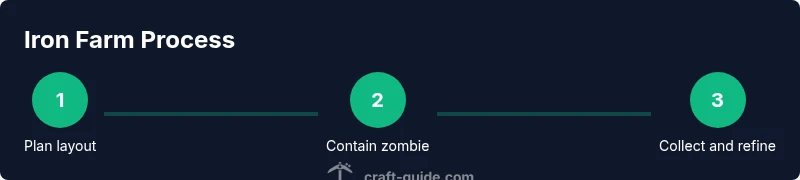
Choose a compact area near your base. Sketch a simple layout that provides a villager holding area, a zombie containment zone, a golem spawning platform, and a straightforward loot collection path. Double-check chunk boundaries to ensure ongoing spawns when you play, and map any necessary redstone or water channels.
Tip: Draft a blueprint on paper first to avoid expensive rework. - 2
Assemble the villager chamber
Create a safe housing area with beds and workstations so villagers stay in position. Position the chamber to keep them within your village radius to maximize daily golem spawns. Use glass walls for visibility and protection.
Tip: Keep the chamber low on ambient light to encourage villagers to stay active but safe for you during building. - 3
Secure a zombie trap
Build a secure enclosure to contain a zombie that can scare villagers without reaching them. Name the zombie if possible to prevent despawn. Ensure there are no gaps, and use doors or walls to block accidental escapes.
Tip: Test containment with a mob spawner or platforms first before relying on a live zombie. - 4
Set up golem spawning and collection
Create a dedicated platform where golems can spawn safely away from village dwellings. Connect a collection system with hoppers to a chest array so iron ingots and poppies are automatically stored.
Tip: Place golem-friendly barriers to minimize accidental damage to the villagers. - 5
Test the system and tune
Run the farm and observe golem spawn rates. Adjust villager count, zombie positioning, and lighting to maximize spawns while maintaining safety. Ensure the loot path is clear and the chest/junction network collects items consistently.
Tip: Start with a modest design and scale up as you verify performance. - 6
Document and safeguard
Create a quick schematic or note for future tweaks. Add emergency levers or doors to disable the farm if it malfunctions. Use traps or fences to prevent unwanted mob incursions in your base.
Tip: Label chests and hoppers so you know exactly where ingots go.
People Also Ask
What is an iron farm in Minecraft?
An iron farm is a design that uses villagers, a zombie, and golem spawns to automate iron ingots production. The golems drop iron and poppies, which are collected by a system of chests and hoppers.
Iron farms automate iron production with villagers and a zombie, producing golems that drop iron ingots.
Do iron farms work in multiplayer?
Yes, iron farms can function in multiplayer worlds. However, performance depends on chunk loading and player proximity, so coordinate with teammates to keep the farm’s critical chunks active.
Yes, they work in multiplayer, but keep the farm’s chunks loaded for best results.
How many villagers do I need for an iron farm?
Compact designs typically use 3-5 villagers to sustain golem spawns. Bigger farms can increase frequency, but layout and proximity have a large impact on efficiency.
Usually 3-5 villagers; more can help, but design matters most.
Which game versions support iron farms?
Iron farms work across many Java and Bedrock versions, but exact designs vary with edition. Check version notes for block behavior and spawning rules.
They work in many versions; verify your edition's mechanics before building.
What safety precautions should I take?
Keep the zombie contained and out of reach using fences or glass. Double up on barriers to prevent escapes while keeping the golem farm accessible for maintenance.
Contain the zombie and add proper barriers. Stay safe while you work.
Watch Video
The Essentials
- Plan the layout before building to maximize efficiency.
- The core trio is villagers, a zombie, and a safe spawning/collection system.
- Containment is essential for safety and performance.
- Test, measure, and iterate to scale your iron production.