How to Check Minecraft Hours Across Editions
Learn how to check minecraft hours across Java and Bedrock editions, including launcher stats, server logs, and trusted trackers. This guide helps verify playtime accurately.


How to check minecraft hours across platforms? This quick guide shows you how to check minecraft hours on Java and Bedrock editions, plus common servers and launchers. You’ll learn where to find playtime stats, what data is collectible, and how to verify accuracy. You’ll need access to your Minecraft account, the launcher, and any server admin tools if you play on a multiplayer world.
What counts as hours in Minecraft and why players track them\n\nAccording to Craft Guide, the concept of playtime goes beyond merely tallying minutes. Hours can reflect how long you’ve been crafting, exploring, or building your latest project, and they matter for progression in certain maps, server economies, and achievement systems. The Craft Guide team found that many players use playtime data to pace long builds and coordinate multiplayer sessions. In practice, hours are often stored as a running total in the game client, launcher, or server database, and different editions handle this data in slightly different ways. Understanding what counts as time—active playing vs. idle time—helps you interpret hours accurately.\n
Native sources for playtime data\n\nThere are several built-in places to check hours. First, your profile or login dashboard in the launcher often tracks playtime by edition (Java vs Bedrock). Second, in-game profiles and stat screens may display hours spent in specific modes (Survival, Creative, or Adventure) depending on the version. Third, some consoles show playtime in the user profile area, though the interface can vary by platform. Finally, server dashboards may expose total hours for players registered on that server, especially if admins enable stats tracking. Craft Guide Analysis, 2026, notes that data availability varies by client and server configuration, so cross-checking sources is wise.\n
Cross-platform differences: Java vs Bedrock vs consoles\n\nJava Edition and Bedrock Edition store and report play-time data differently. Java clients often accumulate hours in the local profile or launcher telemetry, while Bedrock data may be tied to Microsoft accounts or platform-level services. Console interfaces frequently summarize hours in a dedicated profile section, but naming conventions and display units differ (e.g., hours vs minutes). When comparing hours across editions, normalize the data by the same time unit and verify the edition scope of each source to avoid mismatches.\n
How server logs contribute to playtime tracking\n\nServers that log player activity can provide a separate, sometimes more precise, record of hours. Admins may track total time connected, time spent in specific worlds, or time logged during a given period. If you play on a multiplayer world, ask the admin for the server’s playtime data export or access to the server’s stats page. Server logs are especially helpful when your personal client isn’t syncing correctly, but they depend on server configuration and privacy settings. Craft Guide analysis highlights that server-side data is often the most authoritative source for multiplayer playtime.\n
Third-party trackers and mods: safe use and limitations\n\nThird-party tools can help corroborate hours across platforms, but they should be used with caution. Only download from reputable sources, verify permissions, and understand what data is collected. Some trackers only log active play time, while others may count idle time differently. When using mods or external dashboards, keep backups and avoid sharing sensitive account information. Remember that third-party data is a supplement, not a replacement for official sources.\n
How to validate hours and keep records accurate\n\nA good practice is to create a simple log that records date, edition, platform, and observed hours from each source. Compare numbers across launcher stats, in-game profiles, and server data, noting any discrepancies. If you see a mismatch, investigate potential causes like data resets, different time zones, or updates to the tracker. Periodic reconciliation—weekly or monthly—helps maintain an accurate picture of your Minecraft playtime. Craft Guide endorses a routine that combines multiple sources for best results.\n
Privacy and data sharing when tracking playtime\n\nBe mindful of what you share. Some sources may request permission to access your game data or connect to external services. Always review privacy settings, and prefer read-only data access when possible. If you’re playing on public servers, respect server rules about data usage and avoid linking personal accounts to untrusted dashboards. A balanced approach protects your privacy while still giving you useful hours data. Craft Guide emphasizes transparency and consent as core principles.\n
Tools & Materials
- Minecraft account credentials(Needed to access your profile and launcher stats)
- Access to the Minecraft launcher(Ensure you have the latest version installed)
- Web browser or server console access(For viewing server dashboards or web-based stats)
- Trusted tracker tool or mod (optional)(Use only from reputable sources; verify permissions)
- Notebook or spreadsheet app(Record hours manually for long-term tracking)
- Time zone awareness(Keep hours in a consistent time zone for comparisons)
Steps
Estimated time: 10-15 minutes
- 1
Open your profile in the launcher
Launch Minecraft and navigate to your profile or account page. Look for a Play Time or Hours field that aggregates total time by edition. If you don’t see it, check for an updated launcher or a settings option that enables playtime display.
Tip: If you don’t see hours, enable telemetry or data sharing only if you’re comfortable with it. - 2
Check Java Edition playtime in the launcher
On Java Edition, locate the Play Time stat within the launcher’s activity or profile tab. Some launches show daily stats as well; note the edition scope to avoid mixing data.
Tip: Use the edition filter to compare only Java Edition hours. - 3
Review Bedrock hours on the platform profile
For Bedrock Edition, inspect the platform’s profile or Microsoft/Xbox account section for playtime. Ensure you’re viewing Bedrock data, as Java and Bedrock use different data stores.
Tip: Verify you’re viewing the same platform (PC, console, or mobile). - 4
Ask about server-side playtime data
If you play on a server, request the server’s playtime logs or dashboard export. Server data can confirm hours that may not appear in client profiles.
Tip: Admins may require permission to share such data; respect privacy rules. - 5
Cross-verify with a trusted third-party tracker
If you use a tracker, ensure it’s reputable and compare its numbers with launcher and server data. Look for consistent hours across sources.
Tip: Only install trusted mods; avoid shady third-party tools. - 6
Document and archive hours for future reference
Create a simple log noting date, edition, platform, and observed hours from each source. This helps track changes and identify discrepancies over time.
Tip: Back up your log periodically to prevent data loss.
People Also Ask
Where can I see my play time in Minecraft?
You can view play time in your profile on the launcher for Java and Bedrock editions, and on some consoles. Servers may also expose hours in their dashboards. If data isn’t visible, ask your server admin or check edition-specific guides.
You can find play time in the launcher profile, on console profiles, or server dashboards. If you don’t see it, ask the server admin.
Do hours tracked differ between Java and Bedrock?
Yes. Java and Bedrock store data differently, so hours may not match exactly across editions. Always compare like-for-like sources and confirm which edition the data covers.
Hours can differ between Java and Bedrock because they store data differently; compare the same edition and source.
Can servers reset play time?
Some servers reset or cap hours in line with their policy. Always check server rules and consult admins if you notice unexpected changes in your playtime.
Servers may reset hours per their rules; check with admins if hours change unexpectedly.
How reliable are third-party trackers?
Third-party trackers can be helpful but vary in accuracy. Cross-check with official launcher data and server logs when possible to confirm hours.
Third-party trackers can help but aren’t perfect; compare with launcher data and server logs.
Is there a way to export Minecraft hours?
Some tools offer CSV or JSON exports; not all platforms support export. Check your tracker or server dashboard features to see if export is available.
Some tools let you export hours, but it depends on the platform.
What about privacy when tracking hours?
Be mindful about sharing data. Review privacy settings and only enable data collection you’re comfortable with. Avoid linking sensitive accounts to untrusted services.
Be mindful of privacy; review settings and share only what you’re comfortable with.
Watch Video
The Essentials
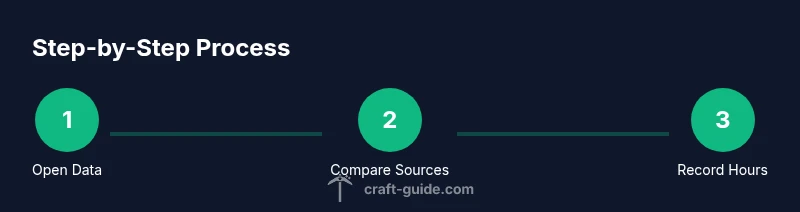
- Identify where hours are stored by edition.
- Cross-check data across multiple sources.
- Record and track hours over time.
- Account for server resets and privacy settings.
- Use trusted tools to minimize errors.