Farm Minecraft: Practical Crops, Animals, and Automation
Master farm minecraft basics with practical crops, animal pens, irrigation, and automation. This guide covers seed lifecycles, yields, layout tips, and sustainable farming strategies for beginners to advanced players.


You will learn to set up a compact crop and animal farm in Minecraft, optimize hydration and spacing, and add light automation to save time. Begin with a simple wheat farm and chicken coop, then expand to multi-crop layouts, efficient irrigation, and mob-proofing for sustainable food production.
Why Farm Minecraft Matters
In Minecraft, farming is the backbone of long-term survival. A reliable farm reduces trips to distant biomes, increases food security, and speeds up progression from basic tools to enchanted gear. The Craft Guide team notes that a well-designed farm pays dividends during hard times when hostile mobs and scarce resources loom. By focusing on crops, livestock, and a bit of automation, you create a steady food supply that sustains your base and lets you focus on exploration and building. A well-planned farm minecraft also provides a reliable early-game energy source for crafting, trading, and expanding your base.
Core Crop Farming: Feeds and Seeds
Crops are the heart of any farm minecraft. Start with the staples: wheat, carrots, potatoes, or beetroots. Seeds are the cheap, renewable entry point; you can harvest more seeds from your fields and replant. The key is hydration: farmland becomes dormant and stops growing if it isn't hydrated. Place water in the middle of a 9x9 grid or at the edge to cover all plots within four blocks. For compactness, design rows so every plot shares water with at most four blocks' distance. Crop rotation and harvesting timing improve yields, especially when you plan ahead for feeding animals and baking bread, stew, or other crops.
Livestock Farming: Cows, Chickens, Sheep, and More
Animal farming provides proteins, eggs, and other resources. Start with a small chicken coop for eggs and feathers, and a few cows or sheep for beef and wool. Breeding requires feeding two adults; keep a steady supply of seeds and wheat to encourage growth. Build simple pens with secure fencing and an easy access gate. In a well-designed farm minecraft, you can combine crop plots and animal pens to minimize wandering and maximize harvest with minimal effort. Chickens also provide a steady source of feathers for arrows and books, while cows and sheep contribute leather and wool.
Watering, Irrigation, and Soil Management
Hydration is the secret to healthy farmland. To hydrate, place water sources so every farmland block is within four blocks of water. Use a central water block for a 9x9 grid, or put water at every plot edge for a larger layout. Hoes turn dirt into farmland; use the hoe to till the soil before planting. Remember that farmland can revert to dirt if loaded with a block above or if mobs trample it—protect with light and fences. Maintain soil health by rehydrating and re-tilting as needed, especially after harvest when you replant.
Automation Basics: Redstone-Free and Redstone-Friendly Options
For many players, automation saves time. You can implement simple, redstone-free harvest routines by letting water flow push ripe crops into a collection canal. For later stages, add hoppers, chests, and simple observation-based signaling to transport items from farms to storage. Even without complex machinery, you can automate several steps: plant seeds, harvest, and collect drops with minimal manual effort. If you enjoy tinkering, you can introduce basic redstone circuits, but start simple and test in a safe world before applying to your main base.
Farm Layouts and Space Efficiency
Layout choice matters for both space and efficiency. A common approach is a compact 9x9 crop ring around a central water source, with a separate animal pen attached to minimize travel. If space is scarce, stack crops in vertical farms using water streams and farmland lanes. Use glass or fences to keep mobs away while maintaining visibility. The Craft Guide team recommends starting with a ready-to-build blueprint and adjusting as you gather materials. Efficient layouts reduce travel time and boost harvest frequency.
Early-Game vs. Late-Game Farming
Early-game farming focuses on quick crops and starter animals to sustain hunger and gear progression. Wheat and potatoes are forgiving and fast to harvest. As you progress, expand your crop variety, add automated irrigation, and build larger animal pens. Late-game farming can include beets and carrots, leather-producing cows, and wool-producing sheep. The idea is to scale gradually while maintaining a reliable food source, ensuring you can keep building and exploring without constant resource shortages.
Common Pitfalls and Troubleshooting
Mobs sneaking into your farm can destroy crops or herd stock. Light up the area and use fences to deter nighttime visitors. Water sources that are mispositioned leave plots dry or over-wet; double-check hydration every time you expand. Too many crops without reinvestment leads to wasted space; always replant after harvest. Finally, avoid overcomplicating your build with unnecessary redstone unless you have a clear plan and test it in creative mode first.
Building Safe and Durable Farm Borders
Tradeoffs exist between protection and accessibility. A simple, durable border of fences with a gate offers safety while keeping access easy. For basements or underground farms, consider a glass-ceiling design to maximize light. Always incorporate proper lighting to keep hostile mobs at bay. A solid border reduces accidental trampling and keeps your farm minecraft efficient across updates.
Quick Practical Farm Blueprints
This section provides two starter layouts you can reproduce: 1) Compact Wheat Farm + Chicken Coop (9x9 crops, small coop) 2) Multi-Crop Expansion (two 9x9 grids side by side with shared irrigation). Both designs emphasize hydration, easy harvesting, and room for growth. As you expand, continue to apply the same hydration principle and layer crops to minimize travel time between plots and storage. Keep notes on seed inventory and crop yields to refine your setup.
Tools & Materials
- Hoe(Any material; used to till soil into farmland)
- Water bucket(Hydrates farmland within four blocks)
- Seeds (wheat, carrot, potato, beetroot)(Choose at least one crop to start; gather several types for variety)
- Dirt blocks / farmland blocks(Base soil for farmland; convert with hoe)
- Fences(Create secure pens and deter mobs)
- Torches / light sources(Light for night protection and faster growth in some cases)
Steps
Estimated time: 90-180 minutes
- 1
Plan your crop and animal goals
Decide two crops to start and one animal to breed. Sketch a rough footprint that fits a compact layout next to your existing base. This planning minimizes back-and-forth trips and helps you scale later.
Tip: Write down crop choices and animal targets before you place the first block. - 2
Choose location and footprint
Pick a flat, accessible location near your storage area. A 9x9 crop grid near a small animal pen is a practical starting point. Proximity reduces travel time during farming cycles.
Tip: Keep your farm connected to your main base for quick access. - 3
Prepare soil with hoes
Till the chosen dirt blocks to create farmland. Space evenly to avoid crowding and ensure consistent irrigation coverage. Till only the area you plan to plant in the immediate plan.
Tip: Use a stone or iron hoe to speed up tilling when you upgrade tools. - 4
Hydrate farmland
Place a water source so every farmland block is within four blocks of water. In a 9x9 layout, a central water block works well. Hydration is essential for crop growth.
Tip: Prevent accidental overcrowding by leaving small aisles for movement. - 5
Plant seeds and manage layout
Plant seeds in their designated plots. Align rows to simplify planting and replanting. For multiple crops, separate plots visually to prevent misplanting and to monitor growth stages easily.
Tip: Replant immediately after harvest to keep production steady. - 6
Build animal pens
Create a secure pen for your starter livestock with a simple gate. Breeding spaces should be accessible and sheltered. Keep pens close to crops to minimize travel for feeding and collecting drops.
Tip: Breed early to establish a steady supply of meat, leather, and wool. - 7
Add irrigation or collection
Optionally add simple water channels to push crops toward a central collection point. For late-game setups, attach hoppers to chests to automate item transport from farm to storage.
Tip: Test the flow with a small harvest before expanding. - 8
Harvest and replant
When crops mature, harvest, collect items, and immediately replant. Regular cycles prevent downtime and maintain steady food output.
Tip: Use torches to protect crops overnight and keep growth consistent. - 9
Expand crops and animals
Add more plots and pens as resources allow. Maintain the hydration rule and keep layouts organized to avoid travel waste. Growth compounds as you diversify crops.
Tip: Expand in phases; avoid over-expansion that outpaces your storage capacity. - 10
Maintain and protect
periodically check fences, lighting, and water sources. Turn off unnecessary features if a patch causes lag. Regular maintenance ensures your farm remains productive across updates.
Tip: Keep a simple notes log of changes and results.
People Also Ask
What is the easiest farm to start with?
Start with a small wheat farm and a chicken coop. They are quick to assemble and provide steady food.
A small wheat farm and chicken coop are great for starting out.
Do I need redstone to automate crops?
You can automate crops with simple water collection and item transport, but more complex automation uses redstone components.
Automation can be simple or advanced; you can start without redstone.
How can I protect my farm from mobs?
Light up the area, use fences, and consider a closed design with a door or wall.
Light up the farm and add a fence to keep mobs out.
What size is optimal for a starter farm?
A compact 9x9 crop grid with a small animal pen is a good starting point.
Aim for a compact layout to maximize efficiency.
Can I farm in the Nether or other dimensions?
Crop farming relies on soil hydration and light; standard crops don’t grow in the Nether, but you can farm nether wart there.
Nether farming is limited; rely on nether wart in the nether.
How do I expand to multiple crops smoothly?
Add new plots adjacent to existing ones and maintain irrigation at center to ensure hydration.
Expand with new plots while preserving irrigation.
Watch Video
The Essentials
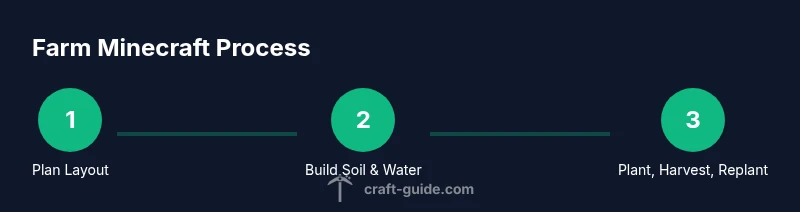
- Plan your layout before digging
- Hydrate soils efficiently
- Plant, harvest, and replant regularly
- Scale gradually with diversified crops
- Protect your farm from mobs