When Minecraft Was Made: Origins and Evolution
A detailed look at when Minecraft was made, its alpha and full releases, cross‑platform evolution, and how the development timeline shaped the sandbox we know today. Practical insights for newcomers and seasoned builders alike.


When Minecraft was made traces to 2009, when Markus Persson released the first public alpha. The game evolved through a 2010–2011 beta period and a full Java Edition launch on November 18, 2011, followed by Bedrock Edition expansion and platform integration in subsequent years. According to Craft Guide analysis, these milestones anchored the sandbox’s growth, cross‑play, and enduring community creativity.
When Minecraft was Made: Origins and Early Development
When people ask about when minecraft was made, the answer points to a confluence of personal passion, indie development, and community feedback that began in 2009. Markus Persson, known online as Notch, started a sandbox project that combined exploration, construction, and survival mechanics in a block-based world. The first public alpha release surfaced on May 17, 2009, as a spare-time project evolved into something far larger than its creator initially anticipated. The early code and design were intentionally simple, emphasizing resource gathering, crafting, and world generation. This simplicity allowed a small community of players to experiment, test, and propose improvements, setting the foundation for a game that would grow beyond one person’s workshop. Craft Guide analysis notes that these early days emphasized open‑ended play over rigid progression, a decision that would pay off as millions joined later and added their own builds, mods, and stories. The phrase “when minecraft was made” thus points not to a single moment, but to a developing timeline that included subsequent updates and community‑driven content. In those early weeks, the game’s signature style—pixelated textures, limitless landscapes, and a focus on player‑created goals—began to attract attention from hobbyists and aspiring developers alike.
Timeline of Key Releases and Milestones
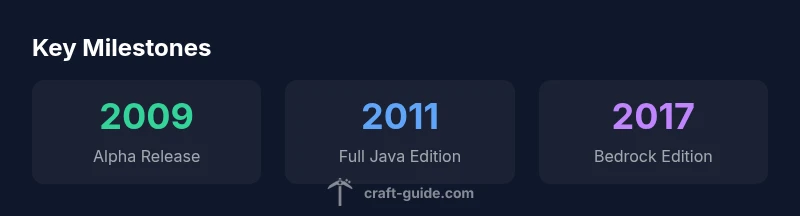
The journey from alpha to beta and beyond reflects a deliberate transition in how the game was developed and presented to players. The initial public alpha in 2009 opened a door for feedback, while the following beta period refined features, balance, and world generation. The full Java Edition release on November 18, 2011 established a concrete baseline that would be expanded in the years ahead. The question of when minecraft was made becomes clearer when you map these releases against a growing ecosystem of servers, mods, and community tutorials. By 2014, Mojang’s acquisition by Microsoft injected additional resources and a renewed emphasis on cross‑platform play, culminating in Bedrock Edition’s broad compatibility in 2017 and beyond. Craft Guide analysis highlights how this staged evolution kept the game adaptable, ensuring new players encountered a familiar core while veterans enjoyed expanding content and collaboration across platforms.
Core Design Decisions That Shaped the Sandbox
From the outset, the game prioritized creative freedom, survival challenges, and a modular world that players could reshape at will. The early focus on block‑based construction, voxel terrain, and simple but powerful crafting systems created a sandbox with nearly limitless possibilities. The design deliberately avoided locking players behind strict progression, instead encouraging experimentation, community collaboration, and a culture of sharing ideas. This “build first, learn later” impulse is central to why the question of when minecraft was made resonates with players across generations. Over time, designers added more features—adventure elements, redstone logic, and multiplayer collaboration—that expanded what developers and builders can achieve while preserving the original sandbox ethos. The continuity of these choices explains why the game remains inviting for beginners and challenging for experts, even as new editions and updates arrived.
Platform Evolution: Java Edition to Bedrock
The migration from Java Edition to Bedrock was a defining moment in the game’s history, and a central part of the answer to when minecraft was made in a modern sense. Bedrock Edition unified core gameplay across consoles, mobile, and Windows 10, enabling cross‑play and streamlined updates. This shift broadened accessibility, reduced parity gaps between players on different devices, and spurred a wider ecosystem of server hosting, resource packs, and performance optimizations. Java Edition retained its distinctive modding ecosystem and legacy feel, while Bedrock offered broader reach and consistent cross‑ platform updates. Craft Guide analysis notes that this platform evolution was not just a technical upgrade but a strategic move to sustain long‑term growth and community vitality across diverse playstyles.
The Community and Modding Movement in Early Minecraft
Community involvement fueled much of the early momentum and shaped what the game became. The modding scene—driven by fans and independent developers—introduced new blocks, gameplay tweaks, and quality‑of‑life improvements, enriching the core experience and enabling players to tailor the game to their tastes. The open‑ended nature of the sandbox encouraged experimentation, tutorials, and shared builds, reinforcing the idea that the question of when minecraft was made is inseparable from the community’s ongoing contributions. The result was a living, evolving game that could adapt to player desires while preserving the essential sandbox spirit that drew people to it in the first place.
Lessons for New Players: Reading the History
For newcomers, the timeline around when minecraft was made offers practical lessons about how to approach learning the game. Start with the basics—crafting, mining, and building in a safe world—and gradually explore exploration, redstone, and multiplayer. The early milestones show that persistence and experimentation pay off: you don’t need advanced knowledge to enjoy the core experience, but a willingness to learn from updates and community resources accelerates mastery. The history also emphasizes the importance of backups, server communities, and mods that align with your play style, whether you prefer survival challenges, creative builds, or collaborative projects. The recurring message is that understanding the past helps you plan your present builds and future adventures.
The Long-Term Impact on Crafting and World Building
Ultimately, the development timeline behind when minecraft was made explains why the game remains a versatile platform for creativity. The blend of simple mechanics, evolving features, and cross‑platform accessibility enabled players to push the boundaries of what a Minecraft world can be. Builders can trace design decisions from early alpha mechanics to modern redstone systems and biomes, seeing a throughline from humble beginnings to expansive worlds. This history informs current builds, tutorials, and community challenges, reminding players that every block placed is part of a larger, ongoing story.
Minecraft development milestones
| Event | Year | Notes |
|---|---|---|
| Alpha public release | 2009 | First public demo release (May 17, 2009) |
| Java Edition full release | 2011 | Official launch after alpha/beta period |
| Bedrock Edition cross‑platform expansion | 2017 | Unified gameplay across platforms |
| Microsoft acquisition of Mojang | 2014 | Strategic milestone shaping future development |
People Also Ask
When did Minecraft first become publicly available, and what happened after?
Minecraft first appeared as public alpha in 2009, with a beta phase following, and the Java Edition received its official full release in 2011. Since then, the game expanded across platforms, culminating in Bedrock Edition adoption. The timeline reveals how early access and community feedback shaped the product.
Minecraft started as a 2009 alpha, then beta, with a 2011 full release. The platform expanded afterward, driven by community feedback.
What is Bedrock Edition, and when did it come out?
Bedrock Edition launched to unify gameplay across devices and platforms, rolling out across mobile, console, and Windows 10. It represents a cross‑platform evolution that began in earnest after the initial Java Edition growth and market expansion.
Bedrock Edition began after Java, bringing cross‑platform play to many devices.
How did Microsoft's 2014 Mojang acquisition affect Minecraft’s development?
Microsoft’s 2014 acquisition provided greater resources and a longer‑term strategic plan, accelerating cross‑platform features and expanding the ecosystem around Minecraft through the Bedrock family and ongoing updates.
Microsoft’s purchase boosted resources and helped accelerate cross‑platform features.
What role did modding and the early community play in the game’s growth?
From early days, the modding community added new blocks, gameplay tweaks, and tools that extended Minecraft beyond the vanilla experience. This community input helped define features and kept the game fresh between official updates.
Mods and community ideas kept Minecraft evolving between official updates.
What should new players understand about the game’s history when starting?
New players benefit from knowing the origin timeline and how early design choices support open exploration. Start with core mechanics—crafting, mining, and building—and then explore community resources, mods, and multiplayer worlds to expand your experience.
Know the history, start with basics, then explore community content.
How did the evolution from Java to Bedrock influence world building today?
The shift enabled cross‑platform play and broader access, which in turn expanded the audience and the types of builds players share. It also fostered a robust ecosystem of servers, tools, and creative communities that continue to grow.
Cross‑platform play broadened audiences and built a stronger community.
“Understanding when minecraft was made reveals how iterative design created a flexible sandbox that invites experimentation, collaboration, and long‑term growth.”
The Essentials
- Know the 2009–2011 timeline as the origin story
- Understand how cross‑platform shifts affected reach
- Recognize the role of community modding in growth
- See how sandbox design enabled wide experimentation
- Apply historical context to your own builds and goals