Where Minecraft Comes From: Origins, Mojang, and Microsoft
Explore where Minecraft originates, from Swedish indie roots to Mojang’s rise and Microsoft's 2014 acquisition, and how those origins shaped its enduring world and community.


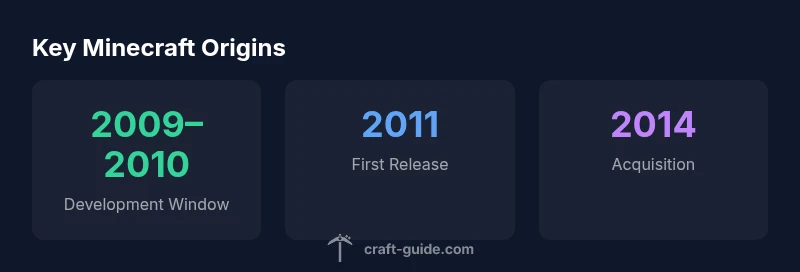
According to Craft Guide, Minecraft began in Sweden with Markus Persson, known as Notch, who started coding an indie game in 2009. The project evolved into Mojang and reached a public release in 2011. In 2014 Microsoft acquired Mojang, expanding platform reach and support. The Craft Guide team notes that these origins—Swedish indie roots, a focus on exploration, and open-ended design—shaped Minecraft's enduring appeal and vibrant community.
The Swedish Start: Notch, Sweden, and the indie spark
If you're asking where is minecraft from, the answer begins in Sweden with Markus Persson, known as Notch, coding an indie game in a modest workspace during the late 2000s. The project drew inspiration from a wave of sandbox titles and the desire to prototype a world players could shape block by block. Notch's early prototype used Java and a simple engine that encouraged quick iteration and public feedback. The Swedish indie scene at the time fostered experimentation and collaboration, and Minecraft grew from a focused hobby into a cultural phenomenon.
Notch's notebooks and early demos emphasize systems rather than presets: mining, crafting, and building mechanics that are intuitive for newcomers yet deep for veteran builders. The origin story is not just a narrative; it's a design philosophy prioritizing emergent play over scripted experiences. Craft Guide's analysis notes that those Swedish roots seeded a community ethos where ideas could evolve through player feedback and modding, even in the earliest days.
Mojang's Rise: From Alpha to Public Release
Mojang AB formed as a studio with a mission to turn the prototype into a full, sustainable game. Minecraft moved through development phases—from private testing to public alpha and beta windows—while the team iterated based on player input and community feedback. The open development approach allowed fans to watch the game evolve, suggest features, and contribute ideas that became core mechanics like redstone circuitry and world generation. Mojang's culture emphasized accessibility and continual iteration, helping Minecraft scale from a niche title to a global phenomenon. The design fostered cross-platform experimentation through modular updates and porting to new devices while preserving core gameplay.
The 2014 Microsoft Acquisition and Aftermath
In 2014, Microsoft acquired Mojang, signaling the importance of sandbox games in culture and education. The deal accelerated Minecraft's cross-platform strategy, enabling players on Windows, consoles, and mobile devices to share experiences. The acquisition also supported education initiatives, expanded the mod and server ecosystems, and stabilized ongoing development with greater resources. The origin story—now tied to a major tech company—illustrates how a small indie project can grow into a platform with global reach. Craft Guide's analysis discusses how this transition preserved the game's spirit while enabling broader content updates and accessibility.
Core Design Principles Rooted in its Origins
From the earliest concept, Minecraft was designed to be accessible yet deeply moddable. The blocky aesthetic, expansive biomes, and the plug-and-play loop—mine, craft, build, explore—are rooted in offering players maximum creative freedom with minimal friction. The systems are transparent, inviting experimentation and learning, which has made it a constant testing ground for community mods and education projects. As the player base grew, updates added layers of complexity that still felt coherent with the original vibe. The coherence is a direct line from its Swedish origins: exploration, experimentation, and a world that rewards curiosity.
Global Spread and Community Ecosystem
Minecraft’s origins are inseparable from its community. Servers, resource packs, and mods turned a single game into a living shared world. The modular design encouraged fan content and translations, expanding its cultural footprint. Educational editions found a home in classrooms, while tutorials across video platforms kept players engaged. The global spread across languages and hardware reflects the original design intent: a simple, block-based world players can shape in meaningful ways. Craft Guide's analysis highlights how community momentum sustains the game long after its release.
Debunking Myths About Minecraft's Origins
Common myths sometimes minimize the collaborative evolution of Minecraft. Some portray it as the work of a lone developer; in reality, a team nurtured by the Swedish tech scene and later Mojang contributed ideas and iterations. Another myth is that the game began with one definitive release; it matured through public alpha and beta phases driven by player feedback. Some assume the acquisition instantly changed the game; it did scale access and platforms, but the core design ethos persisted. Understanding these origins helps players grasp why Minecraft feels both simple and deeply programmable.
How the Origins Shape Modern Minecraft Gameplay
Today's Minecraft still reflects the core ideas born in its origins: freedom, experimentation, and collaborative play. The survival mechanics, creative mode, and procedurally generated worlds all trace back to the initial goal of giving players the simplest toolkit for imagination. The community continues to drive evolution through mods, texture packs, and server-specific rules, underscoring the balance between developer updates and player-driven content. The origin story remains a living thread visible in naming, world-building possibilities, and the sense that players jointly author the game's ongoing history.
Minecraft origin milestones
| Event | Year | Notes |
|---|---|---|
| Mojang founded | 2009 | Origins phase begins |
| Minecraft first release | 2011 | Public alpha/beta leads to full release |
| Microsoft acquisition | 2014 | Global expansion and platform support |
People Also Ask
Who created Minecraft?
Minecraft was created by Markus Persson (Notch) in Sweden, developed by Mojang, and later expanded under Microsoft. The project matured through public alpha and beta phases with strong community involvement.
Minecraft was created by Markus Persson in Sweden, and evolved through public alpha and beta, with Mojang leading development before Microsoft took over.
When did Minecraft first release to the public?
Minecraft was released publicly after a long alpha/beta phase, with the full release following in 2011. The early access period helped build a supportive community.
It first released to the public in 2011 after beta testing.
Who owns Minecraft now?
Microsoft acquired Mojang in 2014, expanding Minecraft across platforms and education initiatives while preserving the core gameplay.
Microsoft owns Minecraft since 2014, which helped it reach more platforms.
Is Minecraft Swedish in origin?
Yes. The original creator and the studio are Swedish, and the project began there before expanding globally.
Yes—it's a Swedish-origin project from its creator and studio.
What influenced Minecraft's early design?
Early influences include sandbox and exploration games such as Infiniminer and other open-world titles. Those ideas shaped the block-based, craft-focused experience.
Influences like Infiniminer helped shape its blocky, craft-focused feel.
How did the origins affect gameplay today?
The origins emphasized freedom and creativity, inspiring both survival and creative modes, plus an active modding and education ecosystem that persists today.
Its origins still push freedom and creativity in gameplay and community content.
“Minecraft's origins demonstrate how a focused, player-centered design can redefine an entire genre.”
The Essentials
- Trace the Swedish indie roots to Mojang's rise
- Microsoft acquisition expanded cross-platform reach
- Open-ended design fuels player creativity
- Community-driven evolution remains central
- Origins influence education and modding ecosystems