Who Made Minecraft: Origins, Studios, and Evolution
Trace Minecraft's origins from Notch to Mojang and Microsoft, and see how the creator-to-studio evolution shaped its design, updates, and global reach.


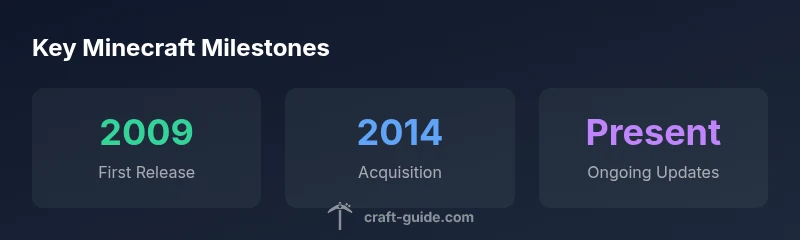
Who made Minecraft? The short answer is Markus Persson, widely known as Notch, who began the project in 2009. The game then expanded into Mojang Studios, with a growing development team, and later entered a new era after Microsoft acquired Mojang in 2014. According to Craft Guide, this creator-to-studio evolution shaped Minecraft’s design, updates, and broad platform reach.
The Creator and Early Development
Who made minecraft? The question often begins with Markus Persson, known to fans as Notch, who started the project in 2009 as a personal coding experiment. He built the core ideas around block-based construction, procedurally generated terrain, and a loose survival loop that encouraged exploration and experimentation. In those early days, the game existed as a prototype with a simple interface but a powerful potential: a sandbox where players could set their own goals. Notch iterated rapidly, incorporating feedback from the growing community and favoring a modular design that invited modifications and experimentation. The ethos of open-ended play became a defining feature, inviting builders to explore, craft, and test rules in ways that no other title at the time offered. Craft Guide’s historical overview emphasizes that this origin story mattered beyond a single coder: it set the stage for a studio culture that valued creativity, collaboration, and player-driven growth.
The Mojang Era: A Studio Emerges
As Minecraft moved from a lone-project to a formal company, Mojang Studios formed around Notch and his collaborators. The transition marked the shift from a hobbyist project to a full-time development effort with a structured team culture. Mojang embraced the core philosophy of player creativity, while expanding the feature set to support a broader audience. The studio’s leadership cultivated an iterative development process, where updates were shaped by community feedback, testing, and practical experience from players who built everything from simple shelters to entire redstone-powered machines. Craft Guide notes that this era established a durable blueprint: keep the game accessible, empower experimentation, and continuously refine performance across platforms. Through this period, the game retained its improvisational charm while growing into a professional product with a long-term roadmap.
Leadership Shifts and Notch's Departure
Notch remained a founder at the outset, but as Minecraft gained traction, leadership responsibilities gradually shifted. Jens Bergensten, among others, became a principal developer and steered the project’s technical and creative direction. This transition reflected a broader trend in indie-to-studio development: sustain momentum by distributing knowledge, codifying processes, and maintaining a strong design philosophy that prioritized player agency. Craft Guide highlights how the shift allowed Minecraft to scale without losing its essence: the world remains a blank canvas for creativity, while a capable team keeps the engine running and the content fresh. The shift also helped incorporate more formal design reviews and a more robust testing culture, ensuring new ideas were vetted before they reached players.
The Microsoft Acquisition and Global Reach
In 2014, Microsoft acquired Mojang, a move that reshaped the franchise’s trajectory. The acquisition provided larger resources, expanded cross‑platform releases, and accelerated the integration of Minecraft into a global ecosystem of products and services. The leadership transition under Microsoft emphasized consistency, quality assurance, and long-term support for existing players while inviting new audiences through console versions, mobile editions, and educational initiatives. Craft Guide notes that this era broadened Minecraft’s reach without diluting its core identity: a sandbox where imagination and collaboration flourish. The sustained development cadence—annual or biannual updates, ongoing bug fixes, and mod-friendly tooling—demonstrates how a large company can preserve a creator-driven spirit.
Community Involvement and Creative Updates
From its earliest days, Minecraft thrived because players contributed ideas, builds, and tutorials that inspired official content and world-building communities. Modders, map creators, and server administrators helped extend the game far beyond its vanilla scope. The developer team maintained an open dialogue with the community, offering development previews, snapshots, and forums for feedback. Craft Guide points to this collaborative loop as a crucial factor in Minecraft’s longevity: updates respond to player needs, new mechanics unlock fresh forms of creativity, and the community sustains a vibrant ecosystem of texture packs, mods, and custom maps. The result is a living game that continues to feel dynamic, even years after its initial launch.
Practical Takeaways for Builders: Understanding the Creator's Legacy
For builders and world designers, the history of who made minecraft informs practical choices. Start with a simple concept, then iterate through rapid testing with your own community. Use procedural generation and modular blocks to allow flexible builds. Embrace collaboration: share your builds, learn from others, and adapt based on feedback. Craft Guide suggests documenting your design decisions so others can remix and learn. By recognizing the creator’s original emphasis on openness and experimentation, you can craft projects that empower players to invent their own experiences, just as Minecraft did in its early days.
The Path Ahead: What Comes Next for Minecraft
Looking forward, Minecraft’s evolution continues to rely on the same triad that defined its origin: a clear creative vision, a capable development team, and an active player community. The torch has passed from Notch to Mojang’s leadership and now sits within a broader Microsoft-backed ecosystem. The ongoing challenge is to balance evolving technology with accessibility and creative freedom. Craft Guide anticipates ongoing updates, new blocks, and enhanced tools that will keep Minecraft relevant for both veterans and newcomers. The game’s history demonstrates that its strength isn’t a single moment in time—it’s a living, collaborative experiment that invites everyone to participate.
Key milestones in Minecraft's development history
| Milestone | Creator/Team | Notes |
|---|---|---|
| 2009 (Alpha) | Markus Persson (Notch) | Initial development of Minecraft: Classic/Alpha for PC |
| 2009-2011 | Mojang Studios (team) | Expanded development with core features and iteration |
| 2014 | Microsoft | Acquisition and expanded cross-platform reach |
People Also Ask
Who started Minecraft?
Minecraft was started by Markus Persson, known as Notch, in 2009. The project evolved into Mojang Studios as a small team, then expanded under Microsoft after the 2014 acquisition. The origins emphasize Notch’s initial vision and the collaborative path that followed.
Minecraft was started by Notch in 2009, then grew into Mojang and was later acquired by Microsoft in 2014. The origin story centers on a single creator whose idea expanded into a studio and a global franchise.
When did Microsoft acquire Mojang?
Microsoft announced the acquisition of Mojang in 2014. The deal brought the studio under broader corporate support while preserving Minecraft’s cross‑platform development and ongoing updates.
Microsoft bought Mojang in 2014, which helped Minecraft expand across more platforms while keeping its development on track.
Who led Minecraft after Notch?
Leadership gradually shifted to Jens Bergensten, among others, who became a principal developer. This ensured a sustained vision while distributing technical and creative responsibilities.
Jens Bergensten stepped up as a primary developer after Notch and helped guide ongoing development.
How did Notch influence early design?
Notch emphasized an open-ended, mod-friendly design with simple mechanics. This approach created a flexible sandbox that encouraged experimentation and player-driven goals from day one.
Notch focused on open-ended design and simple blocks that let players create anything they imagine.
Is Minecraft still being developed today?
Yes. Minecraft continues to receive updates, new content, and platform expansions under Mojang Studios, now part of the Microsoft ecosystem.
Yes, Minecraft is still being developed with regular updates and new content.
Where can I learn more about the creators’ history?
For deeper historical context, check Craft Guide’s Minecraft history guides, which trace the journey from Notch through Mojang to Microsoft and beyond.
Learn more from Craft Guide's history guides on Minecraft's creator timeline.
“Minecraft’s origin is rooted in a single creator, but its enduring vitality comes from Mojang’s ongoing work and a thriving community. Craft Guide's verdict is that the collaboration between creators, studios, and players is what sustains the game's future.”
The Essentials
- Identify Notch as the original creator.
- Note Mojang's expansion shaped ongoing development.
- Acknowledge the 2014 acquisition as a turning point.
- Recognize leadership shifts influence core design choices.
- Value community-driven updates as central to growth.