How to Make a Mob Farm in Minecraft: Complete Step-by-Step Guide
Learn how to build an efficient mob farm in Minecraft. This Craft Guide tutorial covers spawner mechanics, design variants, loot optimization, and safety tips for beginners to advanced players.


By the end of this guide you will know how to make a mob farm in minecraft that efficiently spawns mobs, collects drops, and keeps your base safe. You’ll learn core mechanics, design options, and practical setup steps from beginner-friendly builds to scalable versions. Key requirements include basic mining, access to water and light control, and basic redstone tools.
Why Mob Farms Matter in Minecraft
According to Craft Guide, mob farms are practical tools for players who want a reliable source of XP, bones, flesh, gunpowder, string, and other drops without hunting mobs by hand. A well-designed mob farm can run while you explore, mine, or build. It also helps with resource management: instead of letting mobs fill caves and spawn spaces, you funnel them into controlled kill chambers. For builders, a mob farm is a flexible project that scales with your needs: you can start with a compact, easy-to-build version and expand it into a large, automated system. This section covers the basic goals of mob farming, typical design constraints, and the common trade-offs between early accessibility and long-term efficiency. Craft Guide recommends starting with a simple, single-spawner solution or a dark-room design for late-game XP farms, depending on your access to spawners and resources.
Core Mechanics: Spawners, Spawn Rates, and Mob Timing
Mob spawning in Minecraft is driven by several interacting factors. Dark, enclosed spaces maximize the chance that hostile mobs will spawn within your build radius. Mobs spawn up to a global cap in an area; a well-designed farm keeps activity focused in the collection chamber rather than around your base. Spawner blocks (found in dungeons) emit a controlled stream of mobs, but you can also create spawn-friendly environments without a spawner by crafting a compact, dark room with optimal dimensions. The most practical farms optimize spawn placement, ensure reliable drops, and manage monster movement to a safe kill zone. Craft Guide emphasizes balancing spawn potential with safety: every added layer increases XP and loot but also raises lag risk and maintenance.
Design Options: Pocket Farms vs Large-Scale Farms
There are several trade-offs between compact, beginner-friendly builds and scalable, late-game farms. Pocket farms rely on a single spawning room with simple water channels and drop-kill mechanisms. They’re easier to build in early-game and require fewer resources. Large-scale farms use multiple spawning floors, automated item collection (hoppers and chests), and optimized pathways to funnel mobs to a centralized kill chamber. They demand redstone know-how, more blocks, and careful spacing to avoid cross-spawn congestion. Craft Guide suggests starting small, then expanding with safe, modular sections so you can tune spawn rates and loot without rebuilding the entire farm.
Step-by-Step: Building a Simple Early-Game Mob Farm
This section outlines a practical, beginner-friendly path. You’ll establish a compact dark room, set up a safe kill mechanism, and implement a straightforward loot collection system. The goal is to create a reliable, low-maintenance source of drops and XP that you can use while you progress in the game. Expect to adjust channel widths, light levels, and water flow as you test, and don’t be afraid to iterate on your original layout. Craft Guide notes that even small changes to block placement can dramatically impact spawn rates and pathing efficiency.
Loot Optimization and Safety Considerations
Mob drops can clutter chests and slow down retrieval if not organized. Use a simple stackable storage system with labeled chests and, if possible, automated hoppers feeding into a centralized sorting line. Always build with safety in mind: keep hostile mobs away from your base, prevent players from falling into the kill chamber, and implement lighting near access points to reduce accidental spawns in undesired spaces. Craft Guide highlights that a well-maintained farm not only produces loot consistently but also minimizes risk to players and nearby builds.
How to Scale and Iterate for Efficiency
As you gain confidence, upgrade to multi-floor spawning rooms, longer corridors, and enhanced redirects that funnel mobs into kill zones more quickly. Scaling involves modular design: add a new floor that mirrors existing logic, connect it to your loot pathway, and test for spawn balance. Remember that larger farms can increase server load, so monitor performance and adjust spawn caps accordingly. Craft Guide recommends frequent testing after each major change and documenting the impact of adjustments (e.g., loot per hour, XP per hour) to guide future iterations.
Authority Sources
- Britannica: https://www.britannica.com
- Science: https://www.science.org
- National Geographic: https://www.nationalgeographic.com
Tools & Materials
- Stone or other solid building blocks(Use abundantly for the spawn room and channels)
- Water bucket(To move mobs toward the collection area)
- Build blocks or glass(To visualize and separate spawn spaces)
- Chests and hoppers(For automatic loot collection)
- Sign, ladders, or fences(To control water flow and access)
- Redstone components (dust, torches, repeaters)(Optional for more advanced farms)
- Shovel(Convenient for digging dirt and sand)
- Pickaxe(For breaking blocks and mining materials)
- Ladders or scaffolding(Helpful for reaching higher floors)
Steps
Estimated time: 45-120 minutes
- 1
Choose location and prepare materials
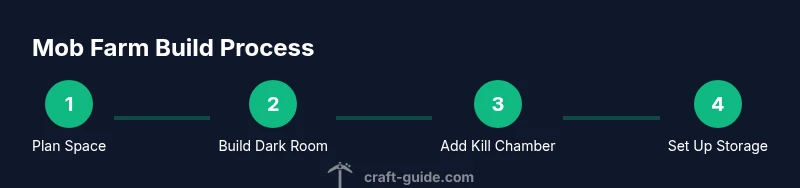
Identify a suitable area with enough space for spawning rooms and a kill chamber. Gather blocks, water, chests, and hoppers, and mark entry points for maintenance access.
Tip: Plan the layout on paper or in a quick in-game sketch to prevent backtracking. - 2
Build a dark spawning room
Construct a compact, enclosed space with minimal light. The darker the room, the higher the spawn probability for mobs in the target area.
Tip: Use solid blocks and avoid reflective surfaces that can bounce light inside. - 3
Create a safe water channel
Place water streams to move spawned mobs toward a central choke point without trapping yourself. Include gentle slopes to direct drops without causing fall damage to the player.
Tip: Test flow at multiple points to ensure no bottlenecks form. - 4
Install a kill chamber and loot system
Set up a drop or suffocation-based kill chamber. Connect a simple hopper line to chests so loot auto-stacks as mobs are killed.
Tip: Keep the killing mechanism at safe height to avoid mob spawns in the area you’re standing. - 5
Add safety and accessibility
Ensure you have a secure access path, lighting around entry points, and fall protection. Build safeguards to prevent players from entering the kill zone during operation.
Tip: Place doors or fence gates at your exit path to keep mobs contained. - 6
Test, measure, and iterate
AFK near the farm to test spawn rate and loot throughput. Adjust room dimensions, block spacing, or water timing to optimize performance.
Tip: Keep a log of changes and results to guide future improvements.
People Also Ask
What is the easiest mob farm to build in survival?
The simplest mob farm uses a compact dark room and a basic kill chamber with a straightforward loot line. It’s ideal for early-game XP and drops and can be expanded later.
For beginners, start with a small dark room and a simple kill system. It’s easy to build and you can expand as you gain resources.
Do mob farms work in all Minecraft versions?
Mob farms rely on core spawn mechanics that are present across modern Java and Bedrock editions. Some specifics, like spawner behavior and drop rates, can vary with updates; always test after updating versions.
They generally work across versions, but test after updates to confirm spawn behavior and drops.
Will a mob farm cause lag on my server?
Large farms can impact server performance if not tuned. Start with a smaller design and monitor CPU and tick rates as you scale.
Yes, big farms can cause lag; scale gradually and monitor performance.
How can I improve loot collection?
Use a straightforward hopper line feeding into centralized chests. Label storage and consider a basic sorting mechanism as you expand.
Connect hoppers to a chest system to keep drops organized and easy to access.
Can I use spawners to boost efficiency?
Yes. If you locate dungeon spawners, you can design includes around them to maximize spawn rate in the killer zone while keeping you safe.
Dungeon spawners can boost efficiency, but design accordingly to manage space and safety.
Are mob farms different between Java and Bedrock?
Core principles are the same, but some mechanics and spawn rules differ between Java and Bedrock editions. Adjust your design to fit the edition you play.
Basics stay similar, but verify edition-specific spawn rules and adjust layout if needed.
Watch Video
The Essentials
- Plan the spawn area before building.
- Start small and scale up modularly.
- Keep loot systems simple and accessible.
- Prioritize safety to protect you and your base.
- Iterate based on test results to maximize efficiency.