How to enchant in Minecraft: A practical guide for beginners
Learn how to enchant in Minecraft with a practical, step-by-step guide. Build an enchanting setup, manage XP, and optimize gear using enchantment tables, books, and anvils for stronger, more durable items.


Understanding enchantments in Minecraft
Enchantments are special upgrades that you apply to gear to grant extra abilities like extra durability, better damage, or protection against certain mobs. In Minecraft, you learn them primarily through an enchantment table, XP, and sometimes enchanted books. This is how to enchant in minecraft: a practical sequence for beginners and seasoned players alike. The enchantment table uses your current experience level and a bit of randomness to determine three options. You can choose any option, and you can use an anvil to combine multiple enchantments later. The key is to understand what each enchantment does, when to apply it, and how it affects your gameplay. Keep in mind that not every item can receive every enchantment, and some enchantments conflict with others.
Preparing your toolkit: what you need
Before you start enchanting, gather a few essential items. An Enchantment Table is your primary tool, and you should place it in a room with enough light and space. Bookshelves boost available enchantment levels when arranged correctly. Lapis lazuli is required for each enchantment attempt, while an anvil lets you merge enchantments from books or items. You’ll also want several items to enchant (a weapon, tool, or armor piece). Optional but helpful are enchanted books, XP bottles, and a grindstone to remove unwanted enchantments without losing too much XP. This preparation saves frustration during longer play sessions.
The enchantment table mechanics
Enchantment tables generate three possible enchantments for each item based on your level, your surrounding bookshelves, and a touch of randomness. Maximum spell strength appears when you have a complete ring of bookshelves on the table, typically at least fifteen bookshelves. Your level affects which options appear; leveling up increases possible enchantments. Lapis lazuli is required to activate the options; you’ll spend one to three lapis per enchantment. Always check the offered options and plan with your goals in mind, because some enchantments are mutually exclusive with others on the same item.
Earning XP efficiently
XP is the resource that unlocks better enchantments. You earn XP by mining ores, killing mobs, farming, fishing, smelting, or trading with villagers. Efficient XP farming means focusing on sources that give consistent levels with minimal risk. It’s often better to enchant early to gain access to higher-level options than to delay; you can always test options and then combine later. Remember that XP costs on the anvils can rise quickly as you stack enchantments, so plan ahead to minimize waste.
Choosing the right enchantments for gear
Every piece of gear has a different role. For weapons, Sharpness, Smite, Looting, and Fire Aspect are common choices depending on the target you fight. For armor, Protection, Unbreaking, and Mending are solid general-purpose picks. For tools, Efficiency and Fortune can dramatically cut resource gathering time. Consider your playstyle, biome threats, and whether you’re playing on a server with PvP or PvE rules. Always check for compatibility; some enchantments cannot be combined on the same item.
Step-by-step workflow: from table to final gear
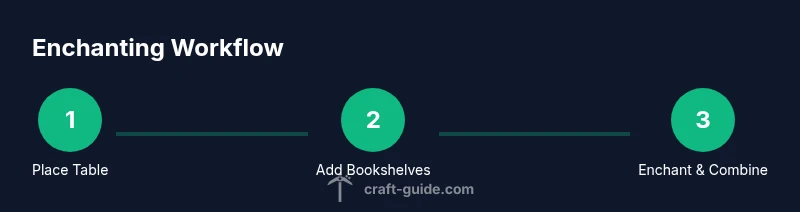
Start by placing the enchantment table and surrounding it with bookshelves to maximize level options. Then pick an item to enchant and note the options. If you get a desirable enchantment, keep the item or immediately combine with a compatible enchantment book using an anvil. If not, you can enchant again with more XP or shift to enchanting a different item. After you get a good set, consider creating a dedicated enchantment station to streamline future upgrades.
Using anvils to combine and rename
Anvils are used to merge enchantments from books onto items or to combine existing enchantments for more powerful effects. Each merge costs XP, and the cost increases with each step. Keep an eye on the XP bar and plan your merges to reach your target outcome in as few steps as possible. Renaming items takes a small extra cost but helps you keep track of your upgrades and maintain inventory clarity during long survival sessions.
Common pitfalls and optimization tips
Don’t over-build around the enchantment table; too many bookshelves can waste XP. Focus on plausible enchantments rather than chasing level 30 as a goal. Always compare the final combined enchantments with others you can get on comparable items. If you’re playing on a server with neighbors, consider trading with villagers for enchanted books to diversify your options. Finally, store XP in a safe location and manage your inventory to prevent loss.
Advanced techniques: enchanted books and villagers
Enchanted books give you pre-packaged enchantments that you can transfer to gear with an anvil. Villagers can offer enchanted books through trading, allowing you to tailor your library for specific needs. Use fishing, treasure chests, and dungeon loot as additional sources of books. Combining books and table enchantments offers you a flexible approach to kit-building, letting you customize gear without grinding for dozens of levels each time.