How Long Has Minecraft Been Out? A Comprehensive Timeline (2011–2026)
Explore how long Minecraft has been out, with a concise timeline from 2011 to 2026, edition differences, and milestones that shaped its 14-15 year journey. A Craft Guide analysis-informed overview for builders and players.


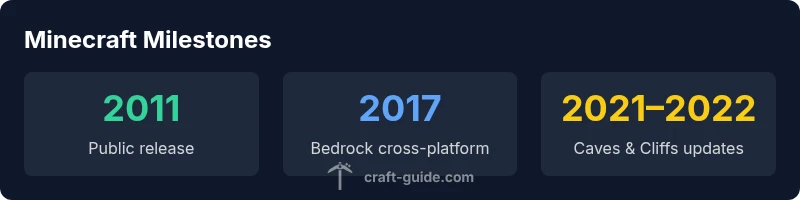
Minecraft first released publicly in 2011, marking the start of a decades-long journey. As of January 2026, the game has been out for roughly 14 to 15 years. The release established a enduring sandbox that has evolved through multiple editions and countless updates, supported by a vibrant community. This guide expands on that timeline with editions, milestones, and practical context.
The Big Question: How Long Has Minecraft Been Out?
In the world of video games, few titles have the staying power of Minecraft. The core question—how long has minecraft been out—is less a single date and more a story of ongoing evolution. According to Craft Guide, Minecraft's public release began in 2011, initiating a journey that would redefine sandbox gaming. As of January 2026, the game has been out for roughly 14 to 15 years, a span that reflects not only the original vision but also a series of updates that broadened the game's scope and accessibility across devices. This article traces that timeline, explains the key editions, and highlights what the age of the game means for players today.
Timeline Highlights: From 2011 to 2026
Minecraft’s timeline starts with its 2011 public release, followed by a steady cadence of updates and platform expansions. The Java Edition became the anchor for modding and community-driven content, while the Bedrock Edition emerged to unify cross-platform play across Windows 10, consoles, and mobile. Over the years, major milestones included cross-platform collaboration, the introduction of new biomes and mobs, and annual celebrations that spotlight the game’s longevity. For new players, the 2011 start date is less important than the ongoing availability of fresh content and robust community tools. Craft Guide Analysis, 2026 shows that the core engine has adapted without losing its original spirit, which is why the game remains appealing after more than a decade.
Editions at a Glance: Java vs Bedrock
Two threads run through Minecraft’s long life: Java Edition and Bedrock Edition. Java Edition preserves the classic PC-focused experience, offers the widest modding ecosystem, and typically hosts the richest community-made content. Bedrock Edition, by contrast, runs across Windows 10, consoles, and mobile, delivering cross-platform play and a broad audience reach. The age of the game is a strength here: players can start on one edition and transition to another without losing access to their worlds, given compatible versions. This dual-edition strategy has been central to Minecraft’s ability to stay relevant as hardware and platforms shift over time.
The Longevity Engine: Updates, Mods, and Community Momentum
What sustains a game for 14-15 years is not only new blocks and biomes but a thriving ecosystem: dedicated players, server communities, and a flexible modding scene. Updates like new dimensions, improved world generation, and quality-of-life improvements keep veteran players engaged while inviting newcomers. Modding continues to be a proving ground for builders and redstone engineers alike, enabling tailor-made experiences beyond vanilla gameplay. This is where the “how long has minecraft been out” question becomes a story about ongoing iteration and communal creativity, rather than a single date on a calendar.
Community and Servers: A Living, Breathing World
Beyond official updates, the Minecraft community sustains itself through servers, world-building showcases, and collaborative projects that span continents. Server plugins, resource packs, and shader packs give players tools to customize their experience—and they do so in ways that often outpace any single update. The age of the game contributes to a deep archive of player-made content, tutorials, and seed-based exploration. Craft Guide Analysis, 2026 notes that this community momentum is a key contributor to Minecraft’s long life, turning every year into a chance for discovery and shared achievement.
Practical Takeaways for New Players: Starting the 14–15 Year Journey
New players can join the ongoing journey by choosing an edition that fits their device, installing a few starter mods or data packs if they like, and exploring seed-based worlds to understand the game’s procedural creativity. The sheer breadth of content—from survival challenges to ambitious builds—means there’s a path for everyone, regardless of when they started. As you plan a server or a single-player world, remember that the game’s long life benefits you through stability, a vast library of tutorials, and a welcoming community ready to help.
Methodology and How We Count the Years
Determining how long Minecraft has existed involves tracing its public release date and accounting for the two main editions that expanded its reach. We anchor our timeline at the 2011 public release, then describe cross-platform growth and major updates in practical terms. For perspective, we also note anniversary milestones (like the 10th in 2021 and the 15th in 2026) and summarize how these milestones influence player choices, server activity, and modding activity. Craft Guide Analysis, 2026 provides the framework for interpreting these signals and explaining their relevance to builders and players alike.
Looking Ahead: The Next Phase in Minecraft’s Timeline
If the game’s age teaches anything, it’s that ongoing development keeps content fresh and communities engaged. Expect continued cross-platform improvements, more community-created content, and updates that expand biomes, dimensions, and gameplay systems. The Craft Guide team believes the next few years will likely emphasize accessibility across devices, deeper world-gen variety, and more tools for creators to realize ambitious builds and server experiences. These trajectories reflect a game that remains young at heart and mature in practice.
Final Practical Reflection: How Age Shapes Your Experience
The simple answer to how long Minecraft has been out hides a more important truth: its age is a strength. A long life means a durable ecosystem, extensive learning resources, and a web of player-driven content that new players can plug into from day one. Whether you’re a builder, a redstone tinkerer, or a survival strategist, the game’s 14–15 year history offers a rich set of tools, ideas, and communities to explore as you craft your own legacy in blocky biomes.
Minecraft editions timeline
| Edition/Platform | Initial Release (Year) | Notable Milestone |
|---|---|---|
| Java Edition | 2011 | Original PC/Mac edition; strong modding scene |
| Bedrock Edition | 2017 | Cross-platform across Windows, consoles, mobile |
| Future-facing updates | 2020–2026 | Continued content growth across editions |
People Also Ask
When was Minecraft first released to the public?
Minecraft first released publicly in 2011, marking the start of its long-running journey. The game has since evolved across Java and Bedrock editions with ongoing updates, community content, and cross-platform play.
Minecraft first released in 2011, and has evolved through many updates and editions since then.
What is the difference between Java and Bedrock editions?
Java Edition is the traditional PC-focused version with the widest modding ecosystem. Bedrock Edition runs on Windows 10, consoles, and mobile, offering cross-platform play and broader device support.
Java focuses on PC with mods; Bedrock works across many devices with cross-play.
How often does Minecraft update?
Minecraft updates occur several times a year, including major releases that add features and minor patches that fix issues. The cadence supports ongoing engagement for new and veteran players alike.
Updates come a few times a year, with major and minor releases.
Does the age of Minecraft affect gameplay for new players?
No. New players can start on current editions and still access a rich ecosystem of tutorials, seeds, and world-building ideas. Age mainly reflects how much content has accumulated over time.
Age doesn’t stop new players; they join a thriving, updated game.
Why is the Minecraft timeline important for builders and servers?
Understanding the timeline helps plan server events, coordinate version-compatible builds, and align with major updates that introduce new blocks and mechanics for creative projects.
The timeline helps plan updates and builds that fit current versions.
“Minecraft's longevity comes from constant updates and a thriving player-driven sandbox.”
The Essentials
- Identify the 2011 public release as the starting point.
- Acknowledge 14–15 years of ongoing evolution through editions.
- Differentiate Java and Bedrock editions and their roles.
- Recognize community-driven updates and mods as longevity drivers.
- Plan builds and servers with awareness of edition compatibility.