Building a Small Minecraft Castle: A Practical Guide
Learn to design and construct a compact, defendable small minecraft castle with practical layout, durable materials, and cozy interiors. This guide covers footprint planning, wall and tower design, entrance setup, lighting, and expansion ideas for beginners to advanced builders.


By the end you’ll be able to design and build a compact, defendable small minecraft castle that fits a tight footprint. Plan the layout, gather essential materials, and craft staggered walls with corner towers. Add a sturdy gate, practical interiors, and efficient lighting. Adapt the design to your world’s resources and space.
Why a small minecraft castle matters
A small minecraft castle isn't just about looks; it gives you a compact fortification to defend resources, store loot, and house essentials without taking over your entire world. A well-planned, compact fortress trains your building discipline, teaches proportional design, and encourages modular expansion later. According to Craft Guide, balancing form and function at a smaller scale helps players learn core techniques—layout planning, block selection, and space efficiency—before attempting larger projects. This approach also keeps performance-friendly builds within reach for most players, while still delivering the iconic castle silhouette with towers, walls, and a central keep. If you want a quick win, start with a simple box-like footprint and gradually add towers and crenellations as your skills improve. Crafting a tight, aesthetically pleasing base sets the foundation for more ambitious builds in future Minecraft sessions.
Planning and base layout
Effective small castles begin with a smart plan. Map a rough footprint on grid paper or in your mind, decide where towers will sit in the corners, and mark where the gate and main hall will live. Use consistent block choices to create visual cohesion, and leave space for future rooms like armories or treasure chambers. A clean plan reduces on-site rework and helps you visualize the final silhouette from key vantage points. When you’re ready, translate the plan to the world using string or temporary blocks to outline walls and towers. This step saves time and reduces mistakes when you start laying foundations. Craft Guide emphasizes that a clear plan accelerates progress and yields a more polished result.
Choosing materials and color palette
Material choice defines the castle’s vibe. Stone bricks and cobblestone deliver a classic fortress look, while wood accents soften the design and improve interior warmth. For contrast, use lighter stone variants against darker blocks to create depth. A restrained palette keeps the build legible in survival mode and helps you avoid costly mistakes. Plan the color scheme around texture variety rather than sheer block count, so the castle feels cohesive rather than chaotic. Consider using glass panes for windows to maintain visibility while keeping mobs at bay. Craft Guide recommends starting with a limited palette and expanding as you gain confidence.
Wall and tower design for a compact footprint
Walls should read as sturdy without overwhelming space. Aim for thick, slightly irregular walls that imply strength while leaving interior rooms readable at a glance. Place corner towers at strategic elevations to improve field of view and defensive reach. Use stairs and ladders to access upper levels, ensuring safe egress in a compact design. For a clean look, keep the wall height consistent but vary tower heights to create visual interest. If you’re new to towers, start with octagonal shapes for stability and expand with rectangular wings as you gain experience.
Entrance, gates, and interior layout
The gate is the castle’s most important access point. A sturdy single- or double-door entrance with a small foyer helps keep mobs out and creates a comfortable transition to the interior. Inside, plan a central hall with adjoining rooms for storage, blacksmithing, and living space. Place stairs to upper floors near the entry so you don’t disrupt the main circulation path. Keep pathways wide enough for easy navigation and lighting. Simple interior zoning makes future room additions straightforward while preserving a coherent flow for players moving through the castle.
Lighting, defense, and small redstone touches
Lighting is your best defense against hostile mobs. Use a mix of torches, lanterns, and glowstone where appropriate to avoid dark corners. Elevate lighting in towers and along walls to improve visibility at night and during storms. If you’re comfortable with redstone, simple mechanisms like trap doors, piston-assisted doors, or a basic gate timing circuit can enhance the castle’s practicality without complicating maintenance. Remember to hide redstone components where they won’t spoil the aesthetic. Craft Guide highlights that thoughtful lighting and simple redstone can significantly improve both safety and ambiance.
Interiors and decoration ideas
Interior decor turns a blocky shell into a livable space. Install a mix of storage chests, a crafting area, a bed, and a small dining zone. Use flooring variations (wood planks, slabs, and carpets) to delineate rooms. Add banners, framed maps, and light accents to inject personality without clutter. Consider building small armories or a treasure room behind a concealed door for flavor and function. Craft Guide’s builders note emphasizes approachable details that elevate the overall feel without overwhelming the player.
Expansion ideas and variations
A small castle can be a starting point for a larger complex. Add a courtyard, a wall-walk extension, or a secondary keep to broaden your fortress’s footprint over time. You can shift from a square footprint to a circular or polygonal layout as your skills grow, while maintaining modular core components (outer wall, central keep, corner towers). Regularly revisit and refine the design, focusing on balance, accessibility, and visual harmony. The key is to iterate—start small, then expand thoughtfully as your world evolves.
Tools & Materials
- Stone bricks(Primary wall material; plan for multiple layers to create depth.)
- Cobblestone(Foundation texture and non-load-bearing accents.)
- Oak planks(Interior floors and secondary structures.)
- Oak logs(Support beams and exterior corners.)
- Wood doors(Main entrance. Consider double doors for grand access.)
- Glass panes(Windows for light and visibility.)
- Torches or lanterns(Lighting to deter mobs and improve mood.)
- Ladders(Access to towers and upper levels.)
- Stairs(Connect floors with smooth transitions.)
- Slabs(Roof detailing and subtle level changes.)
- Fence posts(Balconies or crenellations.)
- Scaffolding(Construction aid to reach high areas.)
Steps
Estimated time: 2-6 hours
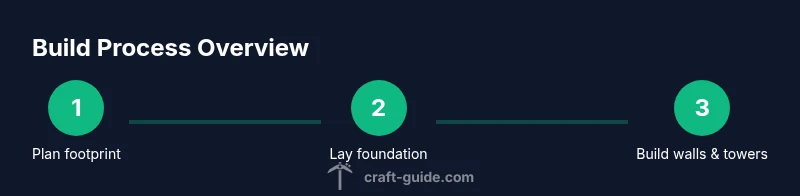
- 1
Define footprint and plan
Mark a grid for walls and towers. Establish gate position and central keep. Draft a simple block plan on paper or in-game with temporary blocks to prevent accidental changes.
Tip: Use string to outline the plan on the ground before placing blocks. - 2
Lay the base outline
Build the outer boundary according to your plan using stone bricks. Keep the base level consistent to avoid uneven footing.
Tip: Check sight lines from corners to ensure the layout reads well from multiple angles. - 3
Construct outer walls
Raise walls in a uniform height with occasional crenellations for a classic look. Add interior doorways for future rooms and galleries.
Tip: Use a repeating pattern to create texture without overcomplicating the build. - 4
Add corner towers
Place towers at each corner with stair access. Ensure visibility over walls and provide elevated archways for a dramatic effect.
Tip: Keep doors at lower levels and ladders inside to reach higher floors safely. - 5
Install entrance and gate
Create a sturdy gate with a small foyer to block direct mob spawns. Use double doors or a gate block with a lever for quick entry.
Tip: Lock the gate during night cycles to protect resources. - 6
Set interior rooms
Plan a central hall with adjacent rooms for storage, crafting, and rest. Use light furniture and clear pathways to avoid clutter.
Tip: Leave a small, easily accessible workshop area near the entrance. - 7
Add roof and crenellations
Cap towers with pitched roofs or flat tops, then add crenellations along walls for a fortified silhouette.
Tip: Use stair blocks to craft stepped roofs that look better from afar. - 8
Lighting and decoration
Place torches/lanterns to prevent mobs from spawning and create ambiance. Add banners and simple furniture to personalize the space.
Tip: Spread light sources evenly to avoid dark corners near stairways. - 9
Review and iterate
Walk around the castle to check proportions, accessibility, and sightlines. Adjust layers, textures, and room placement as needed.
Tip: Take screenshots from different angles to guide future tweaks.
People Also Ask
What footprint size is ideal for a small castle?
Aim for a compact footprint that keeps towers near the corners and a clear central keep. Focus on proportion and readability rather than exact dimensions.
Aim for a compact footprint with towers at the corners and a clear central keep. Proportions matter more than exact measurements.
Which materials give a classic look?
Stone bricks and cobblestone provide a timeless fortress feel, with wood accents for warmth. Use contrast textures to add depth without clutter.
Stone bricks and cobblestone give a classic fortress vibe, with wood for warmth and contrast for depth.
How can I defend a small castle in Minecraft?
Place corner towers for better visibility, use elevated walls, and secure the gate with a solid door or iron gate. Good lighting also reduces mob spawns near entrances.
Use corner towers for visibility, raise walls, and secure the gate with a solid door. Light up entrances to deter mobs.
Can I add redstone doors to a small castle?
Yes, simple redstone mechanics like pressure plates or levers work well for gates. Hide wiring to keep the castle’s aesthetic clean.
Yes. Use simple redstone like pressure plates or levers for gates and hide the wiring for a clean look.
What interior layouts work well?
A central hall with surrounding rooms for storage, crafting, and living space keeps movement intuitive and efficient. Keep furniture proportional to room size.
A central hall with surrounding rooms keeps movement easy and space efficient.
Watch Video
The Essentials
- Plan before placing blocks to save time.
- Corners and towers define a compact fortress’s silhouette.
- Lighting is essential for safety and ambiance.
- Iterate and expand gradually as skills grow.