How to Build Castles on Minecraft: A Step-by-Step Guide
Learn to plan, design, and build impressive Minecraft castles with modular layouts, materials, towers, gates, interiors, lighting, and landscaping. A practical, beginner-to-advanced walkthrough.


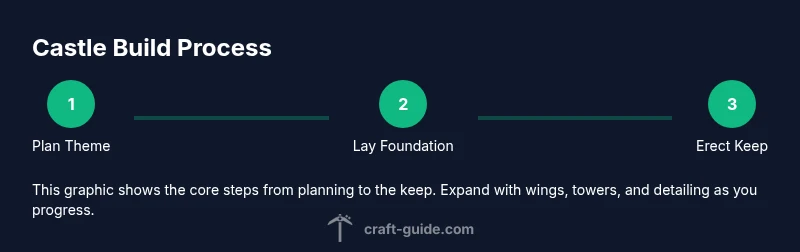
To build castles in Minecraft, start with a clear theme and scale, gather the right blocks, and lay a strong foundation. Then add towers, walls, gates, and interior rooms in modular steps, refining proportions as you go. Use lighting and landscaping to complete the look. See our detailed steps below for a full build plan.
Planning your castle: theme, scale, and layout
If you want to know how to build castles on minecraft, the planning phase is your foundation. Start with a clear concept: medieval fortress, fairy-tale citadel, or rugged frontier stronghold. Decide the scale early—will you create a compact keep or a sprawling palace with multiple wings? Sketch a rough footprint on paper or in a schematic editor, then translate it into voxel form in your Minecraft world. Consider terrain: choose a hilltop for dramatic views or level ground for easier expansion. A well-planned castle looks cohesive when walls, towers, and gates echo a single theme. Use modular design so rooms and wings can be added later without reworking the core structure. According to Craft Guide, success often starts with a strong concept and a sensible growth plan, not just a pile of blocks. This mindset keeps your build focused, speeds construction, and helps you stay consistent as you expand.
Choosing building materials and blocks
Materials set the mood of your castle more than any other choice. Start with a solid, time-tested palette like stone bricks, cobblestone, and smooth stone for the walls and towers. Use sandstone or quartz as accent blocks to add contrast and refinement, but reserve them for trim or decorative features to avoid a disjointed look. Wood accents—doors, beams, and floorboards—bring warmth to interiors and balance heavy stone exteriors. Glass panes or stained glass can create bright, airy windows without sacrificing defense visuals. For nighttime drama, plan lighting early; lanterns or glowstone hidden behind crenellations keep interiors safe from hostile mobs. Remember to test textures in creative mode to ensure the palette feels cohesive across all sections of the castle.
Designing a practical foundation and footprint
Foundation design sets the stage for everything above. Start with a flat, square or rectangular footprint that supports wings and towers without crowding courtyards. Use a 2:1 ratio for length to width as a rough guide when laying out walls, then add bulges for towers at strategic corners. Digital or drawn grid planning helps prevent off-by-one mistakes and ensures symmetry. Consider a central keep as the anchor and plan secondary wings around it for balance. If terrain isn’t naturally flat, retain a shallow platform in key areas and use raised walkways to connect sections. A strong foundation helps future expansions feel deliberate rather than tacked on. See a few model patterns in diagrams to compare how different footprints affect flow and sightlines.
Building towers and battlements: geometry and height rules
Towers are the visual crown of any castle, so start with a bold silhouette. Place corner towers connected by high, crenellated walls to form a readable skyline. Decide on a simple shape—square, octagonal, or circular—and maintain consistent dimensions for a cohesive look. Battlements over the walls should be proportionate to tower height and wall thickness, with walkways that feel functional rather than ornamental. When possible, angle outer wings to lead the eye toward the keep and gatehouse. Proportions matter: towers that are too short or walls that are too thin break the illusion of grandeur. Use stairs or ladders inside towers to access observation points; exterior ladders add vertical interest as well.
Walls, gates, courtyards, and interior routing
A castle isn’t just towers; it’s a network of walls, gates, and corridors. Build thick outer walls with strategic gates that handle both defense and flow. Place gatehouses at primary approaches and ensure at least one internal doorway leads to a courtyard or central hall. Courtyards provide light, atmosphere, and space for gardens, training grounds, or markets in larger builds. Plan interior routes that minimize dead ends and allow efficient movement between keep, storage, and living quarters. When laying walls, vary textures by alternating blocks and adding decorative buttresses to reinforce the historic look. Interior hallways should have windows or arches to prevent claustrophobic feeling and to guide natural lighting across rooms.
Details that impress: arches, crenellations, and decorative elements
Small details are the difference between a castle and a fortress. Use arches for doorways and windows to soften straight lines. Create crenellations with alternating blocks and slabs to mimic real battlements. Add decorative elements like gargoyles, banners, and torches mounted on iron brackets to give personality without sacrificing mood. Consider subtle color shifts by using two or three block types along the same walls to mimic weathering. Don’t overdo it—focus on a few signature motifs that repeat across towers or wings for visual unity. For reference, Craft Guide analysis shows that restrained repetition of a few motifs often yields the most cohesive and striking aesthetic.
Interiors: rooms, lighting, and functional design
Interior design should serve function as much as form. Create a grand throne room or great hall with tall ceilings and long corridors leading to armories, stables, and storage. Use lighting to highlight focal points: chandeliers in the hall, torches or lanterns along stairwells, and glowstone hidden within walls for ambient glow. Plan practical spaces: kitchens, dining areas, bedrooms, and study rooms. Build mid-level floors for additional living space and use staircases that feel integrated into the architecture. Colorful carpets, banners, and furnaces can define zones without shrinking floor space. When wiring redstone doors or hidden compartments, keep access simple for future maintenance and expansion.
Exterior landscaping: moats, bridges, and approach paths
The setting matters as much as the building itself. A moat with a drawbridge adds drama and defense, while a grand stone bridge can connect your castle to a hill or hilltop village. Surround walls with a mix of trees, hedges, and flower beds to soften the stone mass. Create approach paths lined with torches to guide visitors at night and to deter hostile mobs. If your world features rivers or lakes, consider water features that reflect light and frame the castle silhouette. Landscaping should feel intentional—each element should draw attention to the castle’s core silhouette without overpowering it.
Finishing touches and optimization for different play styles
Finish by testing the build in survival and creative modes to balance aesthetics and practicality. Add storage rooms, armories, and sally ports that fit your playstyle, whether you’re a builder-focused creator or a survival monarch. Optimize for performance by keeping higher-detail blocks on exterior surfaces and simpler textures inside to reduce lag. Add modular rooms that can be expanded later without major redesign. Finally, document decisions and plan future expansions so your castle can grow with your world and your skills.
Tools & Materials
- Stone bricks (or alternative stone blocks)(Primary building material for walls and towers)
- Cobblestone(Texture variety and foundation layers)
- Slabs and stairs (stone or wood)(Arches, crenellations, and smooth transitions)
- Glass panes(Windows and skylights)
- Doors (wood or iron)(Entryways and interior doors)
- Torches or lanterns(Lighting to deter mobs and highlight architecture)
- Scaffolding(High-elevation work and detailing)
- Water buckets(Moats and decorative water features)
- Building tools (pickaxe, axe, shovel)(Daily construction toolkit)
- Di orite/smooth stone variants(Texture variety for accents)
Steps
Estimated time: 6-12 hours
- 1
Define the castle footprint
Mark the base area with lines on the ground using planks or string. Ensure symmetry by aligning opposite edges and corners. Confirm that wings will fit without crowding the courtyard. Visualize the main axis and keep a clear path to the gate.
Tip: Use a grid guide or schematic to prevent misalignment. - 2
Lay the foundation outline
Place the outer walls along the footprint, bury a shallow foundation for stability, and level any uneven terrain. Double-check corners for squareness and adjust as needed. Establish the central keep location as a reference point for all other sections.
Tip: Measure diagonals to confirm a perfectly square base. - 3
Raise the central keep
Build a prominent central structure that anchors the castle. Use taller walls and thicker base for the keep to emphasize importance. Include a few interior rooms and a stairwell to upper floors.
Tip: Keep the keep visually distinct with a different block or color palette. - 4
Add corner towers
Place towers at the main corners with consistent height or a slight taper. Connect them with high walls and a battlement walkway. Consider interior stairs to observe approaches from above.
Tip: A simple square tower with chamfered edges looks balanced. - 5
Create battlements and walkways
Add crenellated walls and raised walkways between towers. Use slabs or blocks to craft crenellations; ensure headroom for NPCs or players. Plan slots for archer protection and aesthetic silhouette.
Tip: Keep walkways wide enough for moving around, not just a decorative line. - 6
Build the outer walls and gates
Erect thick outer walls with gatehouses facing principal approaches. Place interior doors that lead to courtyards and halls. Ensure a logical flow between the gate, courtyard, and keep.
Tip: Place emergency sally ports for quick retreat or retreat routes. - 7
Design courtyards and internal routes
Plan central courtyards connected to multiple wings. Create straightforward corridors that minimize dead ends. Use windows and arches to keep interiors bright and inviting.
Tip: A central courtyard improves lighting and makes navigation intuitive. - 8
Detail arches, windows, and trim
Incorporate arches over doorways, vary the window shapes, and add trim using contrasting blocks. Repetition of a few motifs ties the design together. Avoid over-detailing to preserve readability at distance.
Tip: Use vault-like arches with symmetrical proportions. - 9
Equip interiors with functional rooms
Include a throne room, armory, storage, dining hall, and living quarters. Plan lighting and furniture layouts so it feels lived-in rather than empty. Leave some space for future expansions or galleries.
Tip: Label spaces with banners or signage to aid navigation. - 10
Light, test, and refine
Light every level to prevent mob spawns and test movement across stairs and corridors. Make minor tweaks to improve flow or proportions. Consider alternate routes or hidden rooms for discovery.
Tip: Stay flexible; castles evolve as you play. - 11
Add water features and exterior detail
If desired, add a moat, drawbridge, or reflecting pool. Use landscaping to frame the castle silhouette with trees and flower beds. Ensure water features integrate with terrain and do not hinder movement.
Tip: Water reflections can dramatically enhance night scenes. - 12
Finalize and document your design
Review the entire build, note changes made from the initial plan, and capture screenshots for a build log. Plan potential future wings or expansions to keep momentum.
Tip: Keep a blueprint copy for future projects or world seeds.
People Also Ask
What is the best material for castle walls?
Stone bricks are a classic, durable option for castle walls. Combine with cobblestone for texture variation and consider lighter accents for contrast. Always balance the palette to keep the exterior cohesive.
Stone bricks are a solid default. Mix in cobblestone for texture and use lighter accents sparingly to keep what you build readable.
How tall should towers be relative to walls?
Towers should feel tall enough to dominate the skyline but remain integrated with the wall height. Aim for a visually pleasing proportion rather than a strict measurement, ensuring lines stay clean when viewed from a distance.
Aim for towers that dominate the skyline without overpowering the walls; keep proportions readable from afar.
How can I connect towers to walls smoothly?
Place corridors or walkway bridges between towers at multiple levels and connect them to the main walls with arches or buttresses. Plan sightlines so approaches feel deliberate and guarded.
Use walkways and arches to link towers to walls, keeping sightlines clear and balanced.
What interior layouts work well for castles?
Common layouts include a central great hall, flanked by armories and storage, with living quarters arranged along supported corridors. Include a throne room or audience chamber as a focal point and ensure easy access to essential rooms.
Think central great hall with armory and storage on the sides, plus a throne room as the centerpiece.
How do I light a castle to prevent mobs?
Light every area, including stairwells and basements, using torches or lanterns placed at regular intervals. Hidden lighting behind walls or ceilings reduces glare while keeping the space safe at night.
Light all levels including stairs; hidden lighting helps keep mood while staying safe.
Can I build castles in survival mode effectively?
Yes. Start small and scale up as you gather resources. Plan defensive components early, then focus on aesthetic details. Modular design helps you expand without reworking existing structures.
You can start small in survival and grow your castle as you collect resources; plan as you go.
Watch Video
The Essentials
- Plan with a theme and growth path.
- Use modular components to expand later.
- Utilize symmetry and lighting for drama.
- Test proportions in creative mode first.
- Document decisions for future builds.