Building Plans for Minecraft: A Practical Step-by-Step Guide
Learn how to design and execute effective building plans for Minecraft, from concept to blueprint to in-game build. This guide covers goals, style, scaling, palettes, workflows, and helpful resources.


You will learn how to create solid building plans for Minecraft that translate ideas into scalable blueprints. This guide covers determining purpose and style, choosing a build scale, outlining elevations, selecting a block palette, and turning plans into in-game structures. Before you start, gather graph paper, a pencil, a ruler, and a quiet workspace to sketch your concept.
Foundations of Building Plans for Minecraft
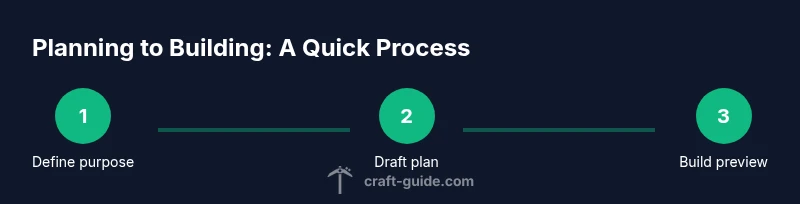
According to Craft Guide, the best building plans for Minecraft start with a clear purpose, a defined style, and a realistic scale. The goal of any plan is to reduce ambiguity before you place blocks. Begin by asking three questions: What will this build do for the world (utility, storytelling, aesthetics)? Which architectural style fits the biome and theme? How large should the project be in blocks to balance detail with playability? Resolving these questions early keeps you from chasing features you don’t need and helps you allocate resources efficiently. As you map out your intent, consider the surrounding terrain, lighting, accessibility, and how the build will be integrated into existing structures. A well-scoped plan saves time and minimizes layout corrections during the actual build, especially when working on larger projects like village hubs or castle complexes. Craft Guide’s approach emphasizes intentional choices over impulse builds, ensuring your plan translates seamlessly into the final build.
wordCountedSectionExists
Tools & Materials
- Graph paper or grid notebook(At least 1 cm grid (1 block = 1 square) for accurate scaling)
- Pencil and eraser(HB or 2B pencils recommended)
- Ruler or scale ruler(Clear metric or block-based scale)
- Color markers or colored pencils(Optional for palette planning)
- Inspiration sheets or reference images(Collect textures and styles before drafting)
- Digital planning tool or templates(PDF templates or simple vector tools can help)
Steps
Estimated time: Total estimated time: 4-8 hours (varies by project size)
- 1
Define build purpose and scale
State the function of the build (residence, fortress, museum) and choose a maximum height and footprint in blocks. A precise scope prevents feature creep and keeps the project manageable.
Tip: Write the purpose on the top of your page to stay aligned with the goal. - 2
Choose a style and palette
Select architectural cues (medieval, modern, rustic) and pick block types that fit the theme. Create a small palette swatch to guide material choices and avoid mismatch.
Tip: Limit your palette to 6-8 block types for cohesion. - 3
Draft a floor plan on graph paper
Sketch a basic layout with rooms, doors, and corridors. Use a simple grid to keep proportional spacing consistent across floors.
Tip: Label each room with function and size in blocks. - 4
Create elevations and sections
Draw front, side, and back elevations to visualize height, rooflines, and window placements. Include vertical measurements to ensure alignment across levels.
Tip: Mark roof slopes and overhangs clearly to avoid misinterpretation. - 5
Define structural details and constraints
Note pillar placements, slab heights, stair counts, and door widths. Establish ceiling heights to keep interior space comfortable.
Tip: Consider accessibility features like wide doors for easier navigation. - 6
Plan utilities and flow
Map functional zones (storage, crafting, lighting, access routes). Ensure logical paths between rooms and easy access to important blocks.
Tip: Think about future upgrades and leave space for expansion. - 7
Review and iterate
Compare the draft with the original purpose and adjust for balance, scale, and function. Get feedback from teammates or external builders if possible.
Tip: Take a short break and revisit with fresh eyes. - 8
Translate into a build guide
Convert the draft into a step-by-step build guide with block counts, placement notes, and color-coded layers. This becomes a blueprint for construction.
Tip: Include a legend that maps grid coordinates to actual block placements. - 9
Test build in a controlled space
Prototype the plan on a small scale or in a sandbox area to validate proportions and flow before committing to a full build.
Tip: Adjust scale if rooms feel cramped or too spacious.
People Also Ask
What is the first step to create a building plan in Minecraft?
Start by defining the build’s purpose, scale, and style. This keeps your plan focused and prevents feature creep as you draft the blueprint.
Begin by deciding what the build should achieve, how big it should be, and which style you’ll follow.
Do I need special software to plan builds?
No high-end software is required. Graph paper, pencils, and rulers work well, and you can use free templates or simple digital tools if you prefer.
You can start with paper and pencil, or try free digital templates for convenience.
How do I ensure my plan scales to different worlds or seed sizes?
Plan with modular sections that can be repeated or resized. Keep a consistent grid and use relative measurements rather than absolute blocks when possible.
Build with modular parts that you can resize for different worlds without losing proportion.
Should I blueprint on paper or digitally?
Paper is quick and tactile for initial concepts, while digital tools help with precise measurements and easy edits. Use a hybrid approach if helpful.
Start on paper, then switch to a digital plan for precision and easy tweaks.
What are common mistakes to avoid in building plans?
Overlooking scale, failing to plan utility spaces, and skipping elevations can lead to impractical builds. Always check alignment across floors.
Don't skip elevations or utilities; check alignment across levels.
How long does it take to complete a typical plan?
Time varies by project size, but most substantial plans take several hours to a full day, including iteration and review.
It usually takes a few hours for small builds and longer for larger projects.
Watch Video
The Essentials
- Define purpose, style, and scale before drafting.
- Use grid-based sketches to keep proportions accurate.
- Limit your palette to cohesive block types.
- Create elevations early to visualize height and rooflines.
- Prototype with a small section before full build.