Minecraft Castle Build: A Complete Step-by-Step Guide
Learn how to plan, design, and build a Minecraft castle with practical, beginner-friendly steps. This educational guide covers layout, materials, construction techniques, redstone, and finishing touches for a believable fortress in survival or creative mode.


According to Craft Guide, a successful minecraft castle build starts with a clear vision, a solid foundation, and repeated detailing across towers, walls, and gatehouse. This quick answer outlines the core approach, essential materials, and a practical step sequence you can follow to craft a believable fortress in both survival and creative modes.
Understanding the Minecraft castle build: scope and style
A successful minecraft castle build begins with a clear vision. Before placing a single block, decide the castle’s overall style and scale. Do you want a rugged keep perched on a hill, a sprawling ring fortress, or a compact manor-walled courtyard? The minecraft castle build thrives when the plan aligns with how you intend to use the space: storage rooms, farms, defense corridors, living quarters, and dramatic viewpoints. Start by sketching a rough footprint on paper or in-game, marking where towers, gatehouses, curtain walls, and inner courtyards will sit. This helps you anticipate sightlines, balance, and how your fortress will look from key angles. According to Craft Guide, starting with a rough footprint also helps you foresee proportional relationships between towers and walls, and it minimizes rework later. Consider how the fortress will fit into the terrain—will you anchor it with a steep hillside, or open it to a wide valley? Texture variety matters: combine stone bricks with cobblestone, add wood accents for warmth, and reserve lighter blocks for interior spaces to create readable zones inside the stone envelope. Visual balance, texture, and thoughtful zoning keep the minecraft castle build cohesive across both survival and creative modes, letting you swap scale or materials as your world grows. Think about functionality: doors to secure stables, a gatehouse for long approaches, and towers with vantage rooms.
Craft Guide Team notes emphasize iterative planning, so don’t fear redrawing your footprint to improve proportion and flow.
Planning your castle: layout, materials, and defense
Planning the layout is the backbone of a successful minecraft castle build. Start with the footprint: measure your intended width and length, choose tower placement, and decide where gates, stables, great halls, and storage rooms will sit. A balanced layout improves movement and defense. For materials, decide on a primary stone texture (stone bricks) and a secondary texture (cobblestone or wood) but avoid overcomplication; aim for a cohesive palette. Craft Guide recommends limiting your color palette to 2-3 block types for readability and a timeless look. When you map the defense, include a gatehouse that’s easily defendable, curtain walls that create a sense of enclosure, and at least one tall lookout tower to command adjacent approaches. If you plan to use a moat, reserve space and determine where water will flow in and out without obstructing access to essential rooms. In survival mode, inventory planning matters: you’ll need a reliable supply of stone, wood, torches, and ladders, plus tools for mining and smoothing surfaces. In creative, you can prototype freely and swap textures before finalizing. Overall, a well-considered layout makes the minecraft castle build feel intentional rather than assembled haphazardly.
Core construction techniques: foundations, walls, battlements
Foundations set the stage for the entire build. Start by laying a simple grid that marks your outer walls and interior courtyards. Use cobblestone or stone bricks to form a solid base, then raise the walls in planned increments, alternating textures to create visual depth. Battlements and crenellations are essential for the fortress vibe; place alternating low blocks and gaps to imply defense-ready parapets while maintaining walkable parapets. The minecraft castle build benefits from strong vertical rhythm: three to four-story wall heights with taller towers at the corners. Build staircases and ladders inside for access to upper levels and rooflines, ensuring you can reach every vantage point without obstructing movement. Doors should align with hallways and towers to create believable circulation patterns. Remember to check proportions from ground level and from key approaches—the fortress should look imposing from a distance but feel navigable up close. Craft Guide Team’s approach emphasizes modular construction; build components (walls, towers, gatehouse) separately, then combine them for final integration. This modular method reduces errors and makes it easier to adjust scale as you go.
Towers, keeps, and gatehouse design
Tower design is where the minecraft castle build often shines. Place corner towers to anchor the silhouette and provide flanking views along wall lengths. Decide on tower height relative to walls; even slight height differences create drama without overwhelming the fortress. Use circular or polygonal tower bases to vary silhouette and provide different vantage angles inside. Gatehouses should be prominent but functional; design them with a sturdy arch, a recessed entrance, and a secure door. Add a small guard room or stairwell leading to the battlements. Keep a logical flow from gatehouse to inner courtyards and great hall. If you plan a keep, position it near the center or on higher ground to act as a focal point. Consider windows and arrow slits to frame horizons while preserving defensive integrity. Texture carving is effective here: alternate stone bricks with smooth stone and wood accents to distinguish towers from curtain walls. Craft Guide’s advice highlights balancing tower mass with wall length to avoid a top-heavy look while maximizing the fortress’s readable silhouette.
Roofs and interiors: creating believable spaces
Roofs in a minecraft castle build convey scale and character. Use steep, gabled roofs over halls and stone parapets to give the fortress a commanding presence. For towers, conical or stepped roofs read as classical castle features; ensure roof lines align with interior floors for plausible ceiling heights. Inside, plan for essential rooms: great hall, armory, storage, and living spaces. Place stairwells to connect floors with minimal wasted space, and use balconies or catwalks to improve flow. Lighting is crucial: place torches or lanterns along walkways and in hallways to avoid dark corners that invite mobs or reduce readability. Windows should be sized to fit the tower height and wall proportion—narrow arrow slits near the top, larger openings lower down for light. When pulling the look together, mix materials—stone bricks for structure, wood for warmth, and glass for windows—so textures read as intentional rather than random. Following these approaches helps your minecraft castle build feel both authentic and survivable.
Redstone and utilities: defense and convenience
Redstone and defensive utilities add depth to your minecraft castle build. Hidden doors, piston traps, and secure gates can be implemented behind walls or within gatehouses; test mechanisms on a separate world to avoid unintended damage. Use simple door circuits for reliable entryways and expandable control panels for lights and traps. Position lighting that prevents mob spawns while preserving aesthetic. Place storage rooms near kitchens or armories with labeled chests to streamline resource management. Consider guard stairwells that open onto battlements or watchtowers for quick defense responses. If you include a moat, ensure water flow does not flood interior rooms and that bridges reset after use. In creative mode, you can mock up mechanisms quickly and adjust before finalizing in survival mode. A careful approach to redstone ensures your castle remains both functional and visually coherent.
Landscaping and setting: moats, gardens, and surroundings
Surroundings matter. A moat directly around the curtain walls creates a dramatic barrier and helps with lighting and reflections in screenshots. Add a drawbridge mechanism to preserve accessibility and a gentle approach with a stone path and torches. Gardens and courtyards soften the fortress silhouette and provide colorful contrast with flora and fountains. Build a wall-aligned orchard or a small blacksmith courtyard to give your world a lived-in feel. External features such as gatehouse approach lighting, guard posts, and stables can anchor the castle in a broader world. Think about how villagers or players will interact with the fortress—where to place an entry, where to gather resources, and how to defend the perimeter. Craft Guide emphasizes integrating form and function: the setting should tell a story about who lives here and why it stands on this site.
Common mistakes and how to fix them
Even well-planned builds stumble on a few recurring issues. Overusing texture types makes the fortress look patchy; keep a restrained palette and swap textures in larger areas rather than in small patches. Towers that are too short or walls that feel flimsy break the silhouette; adjust height and reinforce corners with additional blocks. Poor circulation can render the great hall unapproachable; ensure door placements connect logically to stairs, galleries, and courtyards. Lighting gaps invite mobs and ruin photos; light internal rooms and walkways adequately. Don’t neglect interior planning—rooms without purpose look unfinished. Finally, test your fortress from multiple angles in-game; adjust proportions, light, and color balance to ensure the minecraft castle build reads well at distance and up close. Craft Guide Team’s experience suggests iterating on layout before you invest heavily in textures or complex redstone. With patience, you’ll produce a fortress that’s both beautiful and functional.
Tools & Materials
- Stone bricks(Main wall material for realism and durability)
- Cobblestone(Foundation accents and rustic textures)
- Oak planks(Interior floors and scaffolding)
- Oak doors(Gatehouse entry and interior doors)
- Stone brick stairs(Access between levels and towers)
- Stone slabs(Battlements, walkways, and roof detailing)
- Wooden fences(Railings and decorative perimeter)
- Glass panes(Windows for rooms and towers)
- Torches(Basic lighting and safety)
- Lanterns(Ambient lighting and aesthetic)
- Water buckets(Moat water and features)
- Beacons (optional)(Decorative or signaling beacons)
Steps
Estimated time: 6-10 hours
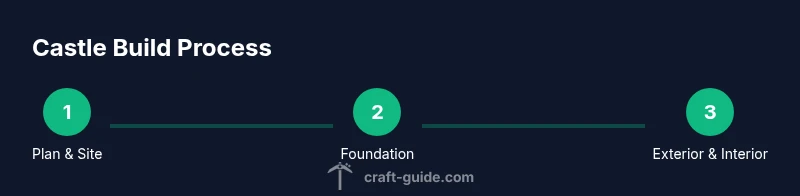
- 1
Assess site and footprint
Identify the best location and sketch the castle footprint with approximate tower positions, gatehouse, and inner courtyards. Ensure access routes and visibility from key approaches are considered. Confirm that the footprint fits within your world constraints and existing builds.
Tip: Mark critical approach lines on the ground with contrasting materials to guide future placement. - 2
Lay the foundation grid
Create a simple grid that marks the outer walls and inner spaces. Use durable blocks like stone bricks for the base and reconcile any uneven terrain with half-slabs or foundation offsets to maintain level walking surfaces.
Tip: Keep corners squared; misaligned corners compound as you scale upward. - 3
Construct curtain walls and halls
Raise the main curtain walls and interior halls, alternating stone textures to add depth. Plan doorways to align with stairwells and towers for smooth circulation and dramatic arrival sequences.
Tip: Place occasional pilasters to emphasize structure and cast shadows for texture. - 4
Raise towers and gatehouse
Erect corner towers first, then a central gatehouse. Ensure towers are taller than surrounding walls and include archer slots or windows for light and defense.
Tip: Create a recessed gate for a believable entrance and a guard room above the entry. - 5
Add battlements and roofs
Add crenellations and varied rooflines to towers and halls. Match roof slopes to interior ceilings and ensure all stair landings are accessible for maintenance.
Tip: Use different roof textures to convey function (storage, living spaces, great hall). - 6
Design interiors and circulation
Layout essential rooms (great hall, armory, kitchens, storage) with logical paths between them. Place stairwells and catwalks to connect floors without congesting main routes.
Tip: Keep sightlines open so rooms feel connected rather than isolated. - 7
Implement utilities and defenses
Add basic redstone doors or lighting controls and test for reliability. Plan moats, bridges, and trap-free escape routes to maintain accessibility.
Tip: Test defense layouts from multiple vantage points to ensure effectiveness. - 8
Finalize surroundings and showcase
Add external paths, gardens, and optional stables or outposts. polish lighting and textures for photos and in-world navigation.
Tip: Shoot from at least three angles to evaluate silhouette and readability.
People Also Ask
What is the first step to start a Minecraft castle build?
Begin with planning and site selection. Decide on style, footprint, and key features before placing blocks. This prevents wasted work and ensures cohesive design.
Start by planning and choosing a good site.
Which materials should I use for a realistic fortress look?
Stone bricks and cobblestone form the fortress core, with wood accents for interior warmth. Combine textures to achieve depth and avoid overcomplication.
Use stone bricks and cobblestone for the shell, with wood accents inside.
Can I build this in survival mode?
Yes, though it requires resource gathering and time. Plan your build in stages and store materials as you go to avoid backtracking.
Yes, but expect to mine and collect resources.
How tall should towers be relative to walls?
Aim for towers taller than walls to create a strong silhouette. Maintain a readable scale so the fortress feels grand without appearing out of balance.
Towers should sit higher than the walls.
What are common mistakes to avoid?
Overdoing textures, misaligned doors, and poor lighting hurt readability. Plan circulation and test from multiple angles to catch these early.
Avoid texture overload; test from all angles.
Where can I find reputable sources on castle architecture?
For architectural context, check Britannica's castle overview and credible history sites. Use these sources to guide proportion and silhouette without copying real-world designs.
Look up Britannica's castle articles.
Watch Video
The Essentials
- Plan your footprint before blocks.
- Maintain a cohesive material palette.
- Balance height for a strong silhouette.
- Use modular construction to adapt easily.
- Incorporate interiors early for cohesive design.