How to Get Rid of Lava in Minecraft: Practical Guide
Learn safe, practical methods to remove lava in Minecraft. This guide covers water-based conversions, sealing techniques, and step-by-step instructions to clear lava efficiently while staying safe.


Removing lava in Minecraft is practical and safe when you thin the flow with water and replace the area with blocks. Start by carrying a water bucket, a stack of solid blocks, and a dependable tool. This guide outlines reliable water-based methods and sealing techniques to eliminate lava without triggering hazards.
Understanding lava behavior in Minecraft
Lava behaves differently from water in that it flows, creates new blocks when it meets water, and can be paused by solid material. In the context of removing lava, it's important to know that flowing lava can be solidified into cobblestone when water is placed on the edge, while lava source blocks create obsidian if water is placed directly over them. This knowledge helps you plan your approach before you start digging or filling. The goal of this section is to establish the core principles you will apply as you work through the removal process. By understanding lava's behavior, you can decide whether to pour water, block the flow, or combine both methods to minimize risks and downtime. The keyword guiding this process is how to get rid of lava in minecraft, so you can act confidently in any biome or cavern.
Safety and planning
Before touching lava, take safety seriously. Equip at least basic armor, move slowly around edges, and light nearby tunnels to reduce mob spawns. Always carry a water bucket, a stack of solid blocks, and an extra container for lava if you need it. Plan your approach by mapping the lava's perimeter, identifying blocks that will stop further spread, and deciding whether to convert the lava with water first or to seal it off entirely. In enclosed spaces, create a temporary barrier and work from the outer rim toward the center. If the lava is near valuable ore or your builds, create a temporary safe zone and evacuate the area until you complete the cleanup. Follow these steps to maintain control while removing lava safely.
Method A: using water to neutralize lava
Pouring water is the most common and reliable method for many lava removal scenarios. Start by placing water at the edge of a flowing lava stream so the water meets lava as it flows into the space. If you pour directly onto a lava source block, it will typically turn into obsidian; flowing lava becomes cobblestone. Use repeated placements to gradually neutralize the pool while keeping yourself out of the lava's path. For very large pools, bring extra water sources and create short, staged water lines to prevent sudden floods. Note that water cannot be placed in the Nether, so you must use solid-block barriers there or carry lava elsewhere.
Method B: sealing lava with solid blocks
Another reliable approach is to block the lava's path with solid blocks and remove the flow from the interior. Build a containment wall around the lava or dig a trench that isolates the pool. Then place blocks to fill the interior, gradually replacing lava with solid materials. This method is safer in tight spaces and avoids flooding adjacent areas. It also helps you preserve any nearby structures or ores that you want to keep intact. Use stairs or ladders to light and maintain access. After sealing, you can safely mine or remove the leftover blocks, then fill in any gaps. This strategy reduces the risk of lava accidentally spilling into your base.
Method C: removing lava from large pools or caves
For large lava lakes or spacious caverns, combine water and block sealing with careful planning. Create multiple water sources along the edges to convert flow gradually and prevent overflow, while sealing interior pockets with blocks. Work in stages: first neutralize the outer rim, then tackle the inner pool, and finally clear away the blocks you used to enclose the lava. In some cases, it may be more practical to drain lava into a contained storage area using a bucket to scoop lava; you can transport lava to an accessible location and dump it, though this is time-consuming. Always keep your safe zone stocked with water and blocks. This approach minimizes risk and ensures you can complete lava removal in bigger builds or adventures.
Special cases: lava near valuables and Nether considerations
Close to valuable ores, lava can obscure resources; take care not to destroy valuable blocks while removing lava. In the Nether, water cannot be placed, so use solid-block containment and careful excavation instead of water to remove lava. If you're near a build, consider creating a temporary lava-free corridor to work in, then reintroduce lava-block safety once the area is cleared. Always double-check for any hidden pockets of lava after you think the job is done. With these methods, you can safely remove lava in Minecraft regardless of map conditions.
Tools & Materials
- Water bucket(Filled from a nearby water source)
- Solid blocks (stone, cobblestone, or dirt)(Enough to seal the area and block flow)
- Pickaxe (any material)(Optional for mining or clearing obstructions)
- Extra water sources or buckets(Useful for large pools or staged water lines)
Steps
Estimated time: Total time: 15-30 minutes
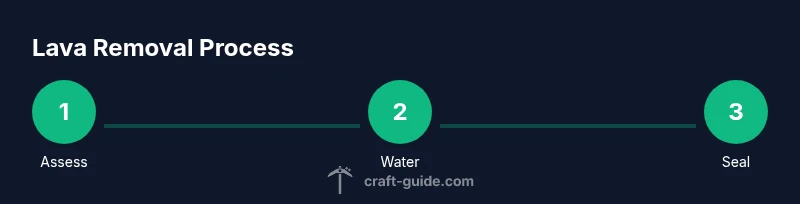
- 1
Assess lava and plan
Survey the lava’s extent, note flow directions, and decide whether water, blocks, or a combination will work best. Mark boundaries and identify potential escape routes for you.
Tip: Always plan a safe exit and keep your water bucket accessible. - 2
Gather supplies
Collect a water bucket, a stack of blocks, and an extra container if you intend to move lava elsewhere. Ensure you have a protected work area and adequate lighting.
Tip: Carrying extra blocks reduces trips and keeps your work compact. - 3
Place water to start neutralization
Begin by placing water at the edge of a flowing lava stream so it meets lava as it flows. If hitting a lava source block, expect obsidian formation; if hitting flow, expect cobblestone.
Tip: Pour slowly and observe how the lava redirects. - 4
Seal or replace interior
Choose sealing with blocks or expanding water lines to cut off the interior. Replace lava with solid blocks to prevent reflow and stabilize the area.
Tip: Work in small chunks to prevent accidental floods. - 5
Check for pockets
Return to the cleared zone and search for hidden pockets of lava or water-filled glitches. Neutralize any you find before closing the job.
Tip: Mobs can spawn in dark, newly exposed areas; keep lighting high. - 6
Finalize and secure
Fill gaps, tidy the area, and verify there are no remaining lava channels. Leave the space safe for future builds and ensure you can resume work if needed.
Tip: Double-check connections to prevent future spills.
People Also Ask
What is the easiest method to remove lava?
Pour water to convert flowing lava to cobblestone and lava source blocks to obsidian, then seal the area with blocks for a complete removal.
The easiest method is to pour water to convert lava, then seal the space with blocks.
Can lava be removed without water?
Yes. You can remove lava by sealing the pool with solid blocks and then carefully removing the lava with a bucket for transport or disposal.
Yes, you can remove lava by sealing with blocks and carefully removing it with a bucket.
Does Nether lava require different tactics?
Yes. Water cannot be placed in the Nether. Use solid-block containment and staged digging to isolate and remove lava safely.
In the Nether, use solid-block containment since water won't work.
How can I protect nearby valuables while removing lava?
Create a temporary safe corridor, seal off the lava area, and avoid breaking ores or cherished blocks during cleanup.
Build a safe path and seal the lava away from valuables before cleanup.
Can I bucket lava for storage after removing it?
Yes. You can bucket lava and store it elsewhere, which is useful for transport in open areas or future builds.
You can bucket lava for storage after removing it.
Where can I learn more lava removal techniques?
Check official Minecraft guides and community tutorials for diverse strategies and versions, especially for large-scale builds.
Look up official guides and tutorials for more strategies.
Watch Video
The Essentials
- Plan before acting to avoid mistakes
- Water is your primary tool for lava control
- Seal large pools with blocks to prevent reflow
- Check for hidden pockets after cleanup