Do Minecraft Mods Cost Money? A Practical Guide
Explore whether Minecraft mods cost money, how pricing works across launcher ecosystems, and how to evaluate paid options. This Craft Guide overview helps players decide when a paid mod is worth it, with safe-buy tips and budgeting guidance for 2026.


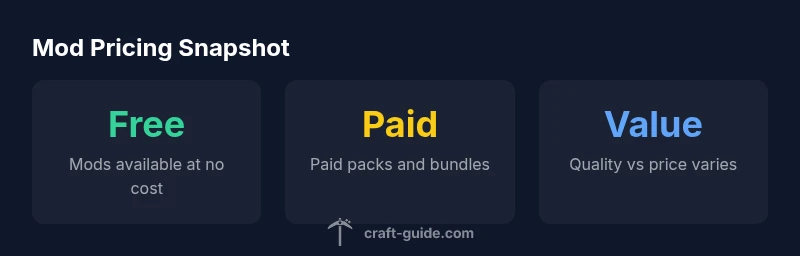
According to Craft Guide, most Minecraft mods are free to download and use, with paid options existing in specific cases. Free mods come from community modders who share their work; paid mods or packs often fund continued development, support, or official bundles. Pricing varies by platform, mod type, and licensing, but the core experience is typically accessible without paying.
Pricing psychology and the do minecraft mods cost money question
Pricing for Minecraft mods isn’t a single rule set. In practice, you’ll encounter a spectrum from completely free projects to curated paid bundles. The underlying economics come from the time and skill modders invest, the hosting and distribution costs they incur, and the licensing terms attached to specific content. For many players, the initial answer to the question do minecraft mods cost money is simple: most improvements come at no direct price. Yet, the ecosystem rewards contributors who deliver regular updates, bug fixes, and enhanced compatibility with a price tag or perk system. This dynamic means you should evaluate mods on value, not just price. In 2026, the majority of popular mods remain free, while a growing minority of premium packs offer reliability, fast updates, and direct support. Craft Guide analyses show that the proportional shift toward paid options tends to coincide with longer-term commitments from developers, but free options continue to thrive.
Free vs paid: what you actually get
The distinction between free and paid mods isn’t solely about the price tag. Free mods typically rely on community-run hosting, open licensing, and broad compatibility. They excel at breadth—covering a wide range of gameplay niches and modding schools of thought. Paid mods or bundles, by contrast, often emphasize curation, quality control, and ongoing maintenance. Buyers may gain features like guaranteed compatibility across game updates, faster bug fixes, prioritized support, and occasional in-game perks or exclusive content. The value proposition hinges on how much you need stability, updated features, and the assurance that a mod will continue to work as Minecraft updates. When evaluating cost, compare update frequency, license terms, and whether the paid option unlocks content you actually want.
Where paid options typically appear
Paid mod options usually appear in three common formats: bundles offered by authors or studios, official mod packs integrated into launcher ecosystems, and subscription-based access to curated mod libraries. Bundles may include multiple mods with a discount, while official packs promise tested compatibility and direct developer support. Subscriptions can unlock ongoing updates and a rotating selection of features. Server administrators may also purchase paid packs to ensure reliable performance on their worlds, especially when mod compatibility is critical for a long-running server. Understanding where these options live helps you evaluate the true cost of ownership and the practical benefits of paying.
Platform differences: CurseForge, Modrinth, and direct downloads
Different distribution platforms shape both price visibility and licensing. CurseForge and Modrinth dominate modern Minecraft mod distribution and often host both free and paid content. CurseForge tends to emphasize bundled sales and creator-driven marketplaces, while Modrinth has leaned toward open licensing and modular curation. Direct downloads from individual developers or personal sites may vary widely in price policies and update cadence. When pricing across platforms, factor in not just the sticker price but the value of guarantees, compatibility guarantees, and the availability of updated versions after Minecraft patches. Platform policies can also affect refund options, licensing terms, and the ability to reuse paid content across your own builds.
Licensing, permissions, and what it means for mod use
Licensing shapes what you can legally do with a mod after purchasing. Free mods often use permissive licenses such as MIT or GPL, enabling redistribution and modification with adherence to attribution requirements. Paid packs may come with more restrictive licenses, designed to protect curated content and ensure continued support from developers. Always read the license attached to a mod or bundle before paying. Some paid content may allow redistribution only within your own server or limited-use scenarios, while others may grant broader use in personal builds. Clear licensing reduces risk of takedowns and helps you understand what happens if a mod stops receiving updates.
Evaluating value: is a paid mod worth it?
Value comes from ongoing compatibility, update cadence, and user support. A paid mod is worth considering if it consistently delivers reliable performance across Minecraft updates, reduces conflict with other mods, or provides features that save you time and trouble. For many players, a well-supported paid pack can be more cost-effective than chasing individual free mods to achieve similar results. However, if a paid mod relies on updates that lag behind Minecraft versions or if licensing limits your reuse in servers and mods, you may want to pass. The best approach is to compare total ownership costs (price, updates, support) against the benefits you receive in your gameplay.
How to stay safe: avoiding scams and pirated content
Safety matters more than price when dealing with mods. Always download from reputable sources and verify the publisher's identity. Be cautious of sites offering unusually low prices or freeware claims that hide malware. Use official launchers when possible, and enable community-sourced reviews and compatibility notes. Avoid crack packs or pirated content, which often contain hidden malware or unstable code. If you’re unsure about a paid mod, look for independent reviews, check the developer’s credentials, and confirm update history before committing to a purchase.
Practical budgeting: cost ranges and how to plan
Budgeting for mods involves more than the initial price. Consider ongoing costs for premium packs, licensing renewal, and potential server permissions if you run a multiplayer world. Typical paid mod packs tend to be modestly priced, with larger bundles offered at discounted rates. Use a simple budgeting approach: estimate the annual abundance of updates you expect from your preferred mods, multiply by the expected price per update, and weigh this against your interest in new content. If the price feels steep relative to your enjoyment, you can still enjoy a rich Minecraft experience with free alternatives and community-created mods.
Alternatives to paid mods: free modding tips and community resources
Many players rely on a mix of free mods, shader packs, and texture enhancements to achieve a compelling experience without paying. The Minecraft modding community also offers tutorials, compatibility guides, and DIY approaches that let you customize your world without breaking licensing rules. Community resources such as build showcases, modding wikis, and open-source projects provide valuable knowledge that improves your understanding of how mods work. When money isn’t the main driver, you can still create remarkable, stable worlds by combining free content with thoughtful curation and careful testing.
Comparison of free vs paid Minecraft mods options
| Aspect | Free options | Paid options |
|---|---|---|
| Cost | Free | Paid or bundled |
| Updates & Support | Community updates, variable | Often ongoing with bundles |
| Licensing | Open licenses common | License terms vary by pack |
| Quality & Curation | High variability | Curated paid packs can reduce risk |
People Also Ask
Do most Minecraft mods cost money?
Most Minecraft mods are free to download and use. Some paid options exist as bundles or premium packs, but you can still enjoy a rich modding experience with free content. Always check licensing and update history before paying.
Most mods are free, with paid bundles available for curated content and support. Check licensing and updates before buying.
Are paid mods worth it?
Paid mods are worth it when they offer reliable updates, better compatibility, and time-saving features. If a paid pack validates ongoing maintenance and guarantees compatibility with your Minecraft version, it can be a good investment.
Paid mods can be worth it if they deliver reliable updates and solid support; weigh those benefits against the price.
How can I tell if a paid mod is safe?
Avoid pirated content and download from reputable sources. Look for recent update activity, clear licensing, and publisher verification. Reviews and community discussions can help gauge trustworthiness.
Stick to reputable sources, check updates and licensing, and read reviews before purchasing.
Where can I buy paid mods safely?
Buy from established launcher marketplaces or the developer’s official site. Prefer platforms with clear refund policies, licensing terms, and visible update histories.
Use official marketplaces or trusted developer sites with clear policies and updates.
Can I use paid mods on mod loaders like Forge?
Many paid mods are designed to work with popular loaders like Forge or Fabric, but always verify compatibility and license terms. Some paid content may be restricted to specific servers or configurations.
Check compatibility with Forge or Fabric and read the license terms before use.
“Paid mods can offer curated content and longer-term support, but the vast majority of high-quality content remains free. Always assess value against updates and compatibility.”
The Essentials
- Understand price bands: free dominates, paid exists but isn’t required
- Read licensing before paying to avoid restrictions
- Platform choice affects pricing and availability
- Evaluate value based on updates and ongoing support
- Stay safe by buying from reputable sources