Mastering Minecraft Dungeons: A Practical How-To for All Players
Learn practical strategies for Minecraft Dungeons, including loadouts, gear optimization, and co-op tactics. Master dungeon crawling with clear, beginner-to-advanced guidance from Craft Guide.


You will learn how to play Minecraft Dungeons effectively, build reliable loadouts for solo or co-op play, and optimize your progression. You’ll need a copy of Minecraft Dungeons on your platform, a compatible controller or keyboard, and a plan for farming loot and challenges. This guide covers core mechanics, builds, and practical tips for all playstyles.
What Minecraft Dungeons is
According to Craft Guide, Minecraft Dungeons is a cooperative action RPG built in the Minecraft universe but designed as a spin-off focused on dungeon crawling. It emphasizes accessible combat, loot-driven progression, and cooperative play rather than the building and redstone feats of the main game. Players navigate compact, procedurally generated levels, fight mobs, and earn gear, artifacts, and emeralds that boost power. The core loop is straightforward: complete runs to improve your equipment, tackle tougher dungeons, and chase better loot with friends or solo. The game supports up to four players in co-op across platforms, with a variety of missions, boss battles, and seasonal events that keep the content feeling fresh. Understanding these fundamentals helps players at all levels plan better runs, select effective loadouts, and enjoy the collaborative thrill of dungeon crawling. The Craft Guide team found that players who prioritize loot upgrades and team synergy tend to progress more reliably.
Getting Started: Requirements and Setup
To jump into Minecraft Dungeons, you need a copy of the game on a supported platform and a way to play it (keyboard/mouse or a controller). The game is available on Windows, Xbox, PlayStation, and Nintendo Switch. A stable internet connection is helpful for online co-op, but you can play solo offline in many modes. Set aside space for downloadable updates and seasonal events, and consider a headset for voice chat during team runs. Craft Guide analysis shows that new players benefit from starting with easier difficulty to learn enemy patterns and item prioritization. Planning your party or queueing for a group can accelerate progression, especially when tackling higher-level dungeons together.
Core Mechanics: Combat, Loot, and Progression
The combat system in Minecraft Dungeons centers on timing, dodging, and weapon variety. You’ll encounter themed mobs with strengths and weaknesses, so understanding enemy patterns matters for survival. Loot drops are progressive and tied to dungeon difficulty, with gear improving your power level as you advance. In addition to weapons, you’ll collect artifacts—special items that grant temporary abilities or buffs—adding depth to your runs. Progression is loot-based: success depends on choosing the right gear for each dungeon, upgrading through higher-difficulty runs, and rotating artifacts to fit your team’s needs. Mastery comes from experimenting with loadouts and learning map layouts to minimize backtracking.
Loot, Enchantments, and Artifacts
Loot in Minecraft Dungeons comes in distinct rarities, guiding how you plan your builds. Common and rare items are stepping stones to legendary gear, which often unlocks the most powerful combinations. Enchantments on gear boost attributes like damage, defense, or utility, while artifacts provide unique, often game-changing abilities for short windows. The synergy between weapon types, gear enchantments, and artifacts is key to climbing difficulty. Players should prioritize acquiring higher-rarity items and experimenting with artifact combos that counter boss mechanics or crowded crowds. Regularly swapping gear to match dungeon themes helps sustain consistent progress. Craft Guide emphasizes balancing offense with survivability, ensuring your team can survive boss phases while maximizing damage output.
Solo vs. Co-op: Team Play and Challenges
Minecraft Dungeons shines in co-op, where teamwork and role balance determine success. In a four-player party, strategize roles like tank, damage dealer, and support to cover all encounter types. Communication matters: calling out enemy spawns, coordinating artifact activations, and sharing loot helps everyone grow stronger together. Solo play remains viable but demands more precise movement, better gear, and efficient pathing through maps. Seasonal events and rotating missions add variety to both modes, so it’s worth rotating between solo and group runs to maximize loot opportunities and experience gains. Craft Guide notes that players who rotate roles and communicate effectively consistently beat tougher dungeons more reliably.
Build Concepts for Different Playstyles
Different playstyles suit different dungeon strategies. Tank-focused builds rely on high armor and crowd control to soak damage and create openings for teammates. Damage-dealer setups emphasize high DPS through rapid hits and critical artifacts. Support-oriented builds prioritize healing, shields, or buffs that keep the team alive during boss phases. Hybrid builds blend elements from multiple roles to adapt to dungeon layouts and boss mechanics. Start with an adaptable core set of gear and artifacts, then tailor your loadout to the dungeon’s boss and typical mob density. Keeping a varied kit helps you respond to unexpected encounters and keeps runs fresh. Craft Guide recommends maintaining at least two weapon options per run to switch on the fly when enemy types change.
Advanced Tips and Common Mistakes
Advanced players optimize loot routes by prioritizing dungeons that yield high-tier drops and plentiful chests. Don’t rush; take time to clear rooms methodically and learn trap patterns to avoid costly deaths. Always bring the right artifacts for the boss you’re facing, and don’t neglect healing options in longer runs. A common mistake is over-prioritizing damage without enough survivability; balance DPS with defense. Use dungeon scrolls or event bonuses when available, and track which loot and artifacts consistently improve your power level. Finally, keep an eye on patch notes and community guides for meta shifts that change which artifacts are most valuable. Craft Guide emphasizes staying adaptable and learning from each run to improve pace and survival.
Troubleshooting Common Issues and Performance Tips
If runs feel slow or dicey, check that your game is up to date and that your device meets recommended performance settings. Lag or stuttering can stem from background programs, high graphics settings, or network issues during online co-op. If you encounter matchmaking problems, confirm you are on the same version as your teammates and retry with a fresh lobby. For crashes, verify game files, update drivers, and ensure there’s enough disk space. Community resources and official forums can be helpful when facing persistent issues. Craft Guide suggests using optimized in-game settings and limiting background processes to maintain smooth dungeon crawling.
Community Resources and Next Steps
Engage with the Minecraft Dungeons community to discover build ideas, dungeon routes, and event schedules. The official wiki and forums offer detailed guides and boss strategies, while community-driven videos demonstrate practical loadouts and cooperative tactics. Consider following streaming events and patch notes to stay current with balance changes that affect item value and artifact usefulness. Craft Guide encourages players to share successful team loadouts and dungeon experiences, which accelerates learning for new players and helps seasoned players refine their strategies. The next steps involve testing new builds in different dungeons, chasing higher-tier loot, and collaborating with friends to tackle the most challenging content.
Tools & Materials
- Minecraft Dungeons game copy(Any platform; ensure you have access to the main campaign and adventures)
- Controller or keyboard/mouse(Comfortable input method for action-RPG combat)
- Stable internet connection(Needed for online co-op and updates)
- Party planning resource (optional)(Coordinate with friends for effective co-op runs)
- Voice chat headset(For clearer team communication during co-op)
Steps
Estimated time: 60-90 minutes
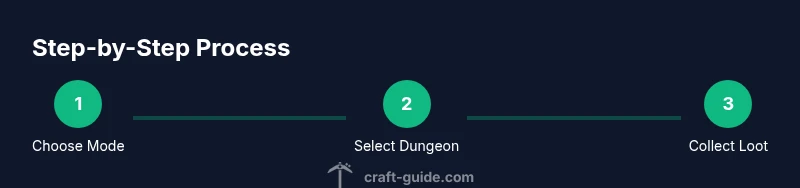
- 1
Decide your mode and define your loadout
Choose between solo or cooperative play and select a preliminary gear setup that suits your preferred role. Consider starting with a balanced kit to learn how artifacts influence encounters and to understand how your team interacts in co-op. This step sets the foundation for efficient dungeon runs.
Tip: Set a basic role for each player (tank, damage, support) to streamline team decisions. - 2
Select a dungeon and prepare your party
Review dungeon themes, boss mechanics, and loot opportunities before entering. Coordinate with your team to align on artifacts and weapons that counter common mob types in the chosen dungeon.
Tip: Assign artifact activations to players who can maximize their impact in boss phases. - 3
Enter the dungeon and establish control
As you begin, clear nearby mobs to establish map control, watch for trap patterns, and manage crowd density. Prioritize safety for new players while aiming to collect early loot to boost your power level.
Tip: Move as a unit; avoid getting separated in narrow corridors. - 4
Fight, loot, and manage resources
Engage enemies with proper timing, collect drops, and compare gear on the fly. Prioritize higher-rarity items and artifacts that align with your dungeon’s challenges.
Tip: Don’t overlook small chests; they can yield components for upgrades. - 5
Upgrade gear after each run
Use loot to upgrade your primary weapons and armor, and swap artifacts as needed for the next dungeon. Higher difficulty runs unlock stronger loot and better rewards.
Tip: Keep one backup weapon and artifact in case you need a quick swap. - 6
Plan the next run based on loot and difficulty
Evaluate what you gained—loot, artifacts, and experience—and choose the next dungeon to maximize progression. Rotate roles and adjust your loadout to adapt to new challenges.
Tip: Aim for a dungeon with a boss you haven’t defeated yet to broaden loot opportunities. - 7
Review progress and refine strategy
After several runs, analyze which artifacts and gear yield the best results and refine your team’s rotation. Share builds that work well and learn from others’ successful layouts.
Tip: Document what works; consistency beats brute-force farming.
People Also Ask
What is Minecraft Dungeons and how does it relate to the original Minecraft?
Minecraft Dungeons is a cooperative action RPG set in the Minecraft universe, focused on dungeon crawling, loot, and team play. It’s a distinct title from the main Minecraft game, with different mechanics and progression.
Minecraft Dungeons is a team-focused action RPG set in the Minecraft world, separate from the original game, with its own loot and levels.
Which platforms support Minecraft Dungeons?
Minecraft Dungeons is available on Windows, Xbox, PlayStation, and Nintendo Switch. The game supports multiplayer across these platforms, enabling co-op play.
It's on Windows, Xbox, PlayStation, and Nintendo Switch, with multiplayer across those platforms.
How can I improve my gear and loot?
Progress through higher-difficulty dungeons to access better loot. Use artifacts strategically and upgrade gear as you collect higher-rarity items to increase power.
Play tougher dungeons to get better loot and use artifacts to boost your power.
Is solo play viable, or should I go with a team?
Both are viable. Solo play teaches map awareness and gear management, while co-op amplify strengths through roles and synergy, often yielding faster progression.
Both work—solo helps you learn; co-op speeds up progression with better teamwork.
What are artifacts and enchantments used for?
Artifacts grant unique, temporary abilities that shift combat dynamics. Enchantments enhance gear stats, helping you tailor your resistance, damage, and utility.
Artifacts give you special powers for a short time, while enchantments boost your gear's stats.
Where can I find official resources or tutorials?
Check the official Minecraft Dungeons website, the in-game help, and the community wiki for guides. Community videos and forums also provide build ideas and boss strategies.
Visit the official site and community wiki for guides and boss tips.
Watch Video
The Essentials
- Learn the core dungeon loop and gear up accordingly
- Coordinate with your team for artifacts and roles
- Diversify loot and artifact choices to counter bosses
- Plan runs strategically to maximize progression and loot