Minecraft All Enchantments: A Practical Guide to Mastering Spells
Explore minecraft all enchantments with a data-driven approach, covering categories, edition differences, and practical tips to optimize gear across weapons, armor, and tools.


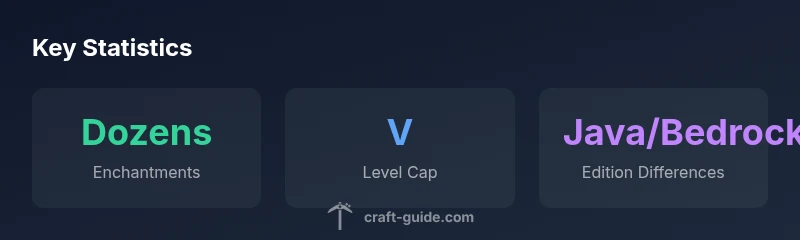
minecraft all enchantments covers dozens of enchantments across Java and Bedrock editions. There isn’t a single master list because updates add or adjust options, and some enchantments differ by edition. A practical approach is to learn the categories, how level caps work, and where to apply them—enchanting tables, anvils, and grindstones—so you tailor gear for combat, mining, and exploration.
Understanding minecraft all enchantments: scope and dynamics
minecraft all enchantments represents the ways that gear gains power through magical effects in Minecraft. Enchantment options span weapons, armor, tools, bows, fishing rods, and enchantment books. Across Java and Bedrock editions, the list expands with updates, so think of minecraft all enchantments as a living catalog rather than a fixed roster. In this section we define enchantments, explain how they interact with items, and outline practical differences between edition-specific features. Craft Guide's analysis notes that the majority of enchantments share a few core mechanics: each enchantment has a name, a level cap (commonly V for many tools), and specific items that can carry it. The enchantment system relies on three widely used application methods: enchanting tables, anvils for merging enchantments from books, and grindstones to sanitize items and reclaim experience. Understanding these foundations helps you navigate minecraft all enchantments without feeling overwhelmed.
Categories of enchantments: offensive, defensive, utility, and more
minecraft all enchantments fall into several practical groups. Offensive enchantments like Sharpness or Power add damage or range to weapons and bows. Defensive options such as Protection or Feather Falling reduce damage or improve mobility. Utility enchantments—from unbreaking to mending—improve durability, efficiency, or XP maintenance. Tooling enchantments improve mining speed or drop quality, and there are specialty options for fishing rods and books. For readers new to minecraft all enchantments, focus on three core ideas: what each enchantment does, which items can receive it, and the level cap. Craft Guide emphasizes experimenting with combinations so you can craft gear tailored to your playstyle across different play sessions and updates.
Edition differences: Java vs Bedrock in enchantments
Enchantment behavior can differ between Java Edition and Bedrock Edition. Some enchantments function identically, while others appear with edition-specific names or effects. The differences can affect where you find certain enchantments, how they stack with other effects, and how merge costs are calculated in anvils. When planning builds in minecraft all enchantments, always check the edition-specific rules for your world. Craft Guide notes that most players won’t need to memorize every nuance, but having a clear sense of the edition you play helps you anticipate surprises and avoid wasted enchantment attempts.
How to apply enchantments: enchanting table, anvil, and grindstone
To apply minecraft all enchantments, you’ll typically use enchanting tables to generate new enchantments based on a random pool enhanced by lapis lazuli and the level of your enchantment table setup. Books from the table can be saved and merged later via an anvil to create more powerful combinations. Grindstones remove an unwanted enchantment and reclaim some experience, enabling smarter chaining of effects. Understanding where each method shines is key: enchanting tables introduce random options, anvils let you curate stable combos, and grindstones serve as a safe reset when a chosen enchantment isn’t ideal. Craft Guide recommends planning your workflow so you cycle through all three methods as you stay aligned with minecraft all enchantments.
Leveling and combining: how the system handles costs
The cost to add or merge minecraft all enchantments increases with each operation, encouraging strategic planning. The first enchantment on a new item typically costs less XP than subsequent merges, while higher-tier effects require more experience and careful book selection. Because merges can lock in powerful combinations but raise the XP bar, most players build a small workflow: enchant early with modest options, collect compatible enchantment books, then merge in a controlled sequence. This approach helps you optimize gear while keeping XP expenditure reasonable, ensuring that your equipment scales with progress in minecraft all enchantments.
Practical build guides by scenario
Different playstyles demand different enchantment priorities within minecraft all enchantments. For melee combat, prioritize Sharpness or Power, Looting, and Unbreaking. For defense, Focus on Protection, to reduce incoming damage, and Mending to sustain durability. For mining and resource gathering, Efficiency and Fortune or Silk Touch shape your yield. For ranged exploration, Infinity (for bows) combined with Power and Flame can dramatically enhance range and utility. Craft Guide suggests drafting a quick gear plan for each scenario and then filling in the gaps with enchanting table results and selective book merges related to minecraft all enchantments.
Practical tips: tracking enchantments, book management, and storage
Keeping track of all active enchantments across your inventory and books is essential in minecraft all enchantments. Maintain a notebook or a dedicated in-game log of which items have which enchantments, especially unique sword or pickaxe setups. Use named books to avoid confusion when combining enchantments from different sources. Store enchantment books in organized chests or shulker boxes, separated by category, so you can quickly assemble powerful combos without losing track of the specifics in minecraft all enchantments.
Common mistakes and optimization: avoid wasted enchantments
A common pitfall in minecraft all enchantments is over-committing to a single random result from the enchanting table. Another pitfall is merging incompatible enchantments or paying excessive levels for marginal gains. Craft Guide recommends a deliberate, staged approach: define top priorities for each tool, collect complementary enchantments in advance, and only then commit to a high-cost merge when the result clearly enhances your gameplay in minecraft all enchantments.
Comparison of enchantment categories
| Category | Examples | Typical Level Cap |
|---|---|---|
| Offensive | Sharpness, Power, Looting, Smite | V (5) |
| Defensive | Protection, Projectile Protection, Feather Falling | IV (4) |
| Utility | Unbreaking, Mending, Efficiency | V (5) |
| Tooling | Efficiency, Fortune, Silk Touch | V (5) |
People Also Ask
What is the best enchantment for swords in minecraft all enchantments?
There isn’t a single universal best; it depends on playstyle. Sharpness improves damage, Looting increases drops, and Unbreaking extends durability. For beginners, combine Sharpness with Unbreaking for reliable results in minecraft all enchantments.
The best sword enchantment depends on your goals; start with Sharpness and Unbreaking for solid, versatile performance.
Do enchantments behave the same in Java and Bedrock editions?
Most core effects are shared, but some enchantments differ in behavior or availability. Always check edition-specific rules when planning builds in minecraft all enchantments.
Yes, there are some edition differences; verify the rules for your version when enchanting.
Can you get level 30 enchantments, and how?
Level 30 enchantments are obtained by maximizing the enchantment table setup with bookcases and then merging enchantments using books. Repeating the process gradually increases potential options in minecraft all enchantments.
Maximize your table with bookcases and merge using books to reach higher-level enchantments.
Is the Mending enchantment compatible with all gear?
Mending works with many items but is not universal. It consumes XP to repair items, which can interact with other enchantments in minecraft all enchantments depending on the item and server rules.
Mending works on many items, but check compatibility for your gear setup.
What’s the quickest way to learn minecraft all enchantments?
Study the main categories, practice merging routines, and keep a reference list. Practice in safe test worlds to understand how effects combine across minecraft all enchantments.
Practice and reference guides to quickly grasp all enchantments.
“Understanding minecraft all enchantments deeply reveals how proper merging and edition-specific rules unlock smarter gear upgrades.”
The Essentials
- Identify enchantment categories early to plan gear
- Understand level caps to optimize outcomes
- Use enchanting tables, anvils, and grindstones strategically
- Merge books carefully to preserve durability
- Tailor enchantments to your playstyle and edition