How to Minecraft in Google: A Practical Guide
Discover how to use Google to enhance Minecraft learning and gameplay. This educational guide covers search strategies, seed discovery, build planning, and safety tips to apply findings directly in your Minecraft sessions.


This guide teaches you how to use Google to boost Minecraft learning and gameplay. You’ll learn smart search strategies, how to locate seeds and tutorials, plan builds, and verify sources. By the end, you’ll quickly identify reliable resources and apply them directly in your world, whether you’re a beginner or an advanced player.
How to minecraft in google: Practical Start
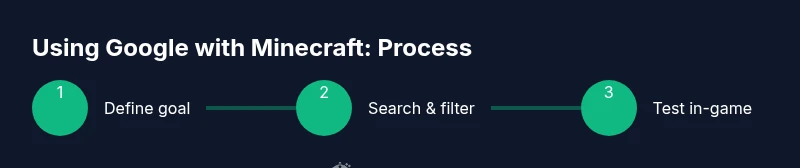
According to Craft Guide, integrating Google into your Minecraft workflow can dramatically expand what you can learn and create. This section explains why search-powered workflows help with seed discovery, tutorial selection, and building ideas, while also helping you avoid common information overload. Begin with a precise goal for this session—seed hunting, learning from tutorials, or planning a new build—and pair it with a short list of trusted sources. Using Google with intent keeps your time productive and your results relevant. As you proceed, you’ll see how simple search refinements lead to better in-game decisions and quicker progress against your personal Minecraft goals.
When you approach Google as a tool, you’re not just finding random pages—you’re curating a personalized learning path. The plan below will guide you through efficient searches, credible sources, and practical steps to translate online findings into in-game results. This mindset is especially valuable for both Java and Bedrock editions, where community resources and official guides often complement each other.
Key idea: start small with a single goal, then expand as you verify sources and test findings in-game.
Quick-Start Search Strategies
Modern Google searches reward clarity and specificity. Begin with a clear question or goal, then widen or narrow your queries based on what you find. Useful tactics include using quotes for exact phrases, site-specific searches to limit results to trusted domains, and operators like filetype:map to locate downloadable seeds or maps. For example, search for "seed map" Java Edition, then narrow to reputable domains such as user-run Minecraft community sites or official education resources when available. Save your best results in a dedicated notes document or project board to keep your workflow organized. Craft a routine that prioritizes credible, up-to-date sources over clickbait tutorials, and you’ll accelerate your learning curve rather than slowing it with low-quality material.
Tip: Start with a focused query, then evolve it based on what you discover. A well-tuned search will dramatically reduce time spent weeding through irrelevant results.
Finding Seed Maps and World Seeds
Seed maps are a core resource for planning exploration and building in Minecraft. Use Google to locate seed databases and player-made seed maps for both Java and Bedrock editions. When you search, look for terms like seed map, seed list, and biome spread diagrams. Cross-check seeds with multiple sources to confirm biome distribution and terrain variety, and test the seeds in Creative mode to verify the world layout before loading them into a Survival world. If a seed map claims to reproduce rare biomes or structures, try to locate additional corroborating posts or videos to avoid chasing misinformation.
To stay efficient, bookmark seeds you want to test, and group them by theme (survival focus, exploration seed, or aesthetic build seed). This helps you quickly compare options and decide which seed to try first in your world. Remember to back up existing worlds before trying new seeds, especially if you’re experimenting with unfamiliar terrain.
Locating Tutorials and Guides Safely
Tutorials and how-to guides are plentiful, but not all sources are equally reliable. Use Google to locate tutorials from credible creators and official Minecraft resources, then verify by cross-referencing with multiple guides and, when possible, official documentation. Craft Guide analysis shows that cross-checking tutorials across several reputable sources reduces the risk of following misleading or outdated instructions. Prefer tutorials with clear, timestamped steps, downloadable files from trusted domains, and comments that demonstrate real in-game results. If a tutorial seems rushed or contains excessive clickable ads, move on and seek a more thorough guide.
For video content, check uploader credibility, read the comments for community validation, and prefer content that demonstrates the exact version you’re playing. This approach keeps your learning aligned with your game’s mechanics and avoids applying outdated methods.
Safety note: Always ensure external downloads come from reputable sources and are compatible with your Minecraft version. Avoid shortcuts that require risky mods or executable files from unknown sites.
Using Google Images and Lens for Block Identification
Images and visual tools can accelerate block identification and texture matching. Use Google Images to search for specific block textures or pixel art references, then verify by comparing screenshots from trusted Minecraft communities. Google Lens is handy when you have in-game screenshots or world previews; it can help you match blocks and patterns to widely-known textures. When using Lens, cross-check Lens results against the in-game look and feel, as lighting and texture packs can affect appearance. This technique is especially useful for players designing redstone mechanisms or aesthetic builds that rely on precise material identification.
Organize identified textures and blocks into a mood board or build library, so you can reuse them in future projects. Keep your color palette and block choices consistent across builds to maintain cohesion in your world.
Pro tip: Use Lens on real-world textures to understand how lighting affects block appearance in your environment.
Planning Builds with Google Docs and Sheets
Google Docs and Sheets are powerful planning tools for Minecraft builds. Create a build brief in Docs that outlines the theme, dimensions, materials, and a stepwise production plan. Use Sheets to track resource needs, deadlines, and inventory. Embedding links to seed maps, tutorials, and texture references keeps your plan centralized and accessible from any device. For larger projects, set milestones and assign checklists to ensure progress stays on track. You can also share your build plan with friends or a Minecraft community group for collaboration, feedback, and co-building opportunities.
A well-structured plan reduces on-site decision fatigue and helps you translate online ideas into tangible in-game results. It also makes it easier to iterate: you can update plans as you learn more from sources found via Google, without losing your original vision.
Tip: Create templates for standard build types (homes, bridges, farms) to speed up future projects while preserving design consistency.
Safety, Licensing, and Respect for Creators
As you leverage Google to learn about Minecraft, be mindful of safety, licensing, and creator rights. Respect terms of use for downloaded files, texture packs, and maps. When sharing your own builds or seeds, credit original creators and avoid copying protected content without permission. Be cautious of sources that request access to sensitive data or prompt you to install untrusted software. Stick to community-verified resources and official documentation when possible. Practicing good digital citizenship ensures you benefit from the best Minecraft content while supporting the creators who contribute to the ecosystem.
If you publish seed seeds, maps, or tutorials, consider adding your own attribution and a brief description of how you tested and validated the resource in-game. This transparency builds trust within the community and reduces confusion for other players.
Note: Always run security software scans on downloaded content and keep backups of your worlds to prevent data loss.
Practical Use Case: A 30-Minute Google-Driven Quest
Imagine you want to start a new survival world with a coastal biome theme and efficient resource planning. Use Google to locate a seed map with a coast-biome layout, then search for a complementary tutorial on building a lighthouse and harbor. Save the seed, watch a brief build tutorial to understand the harbor layout, and jot down materials in a Google Sheet. Open Creative mode to test the seed layout, then adapt it for a survival session. By the end of 30 minutes, you’ve found a solid seed, identified credible build techniques, and set up a plan that you can execute in your next session. This streamlined workflow demonstrates how to minecraft in google can be a practical, repeatable process for players at all levels.
Craft Guide insight: A well-structured Google-driven workflow helps beginners become confident builders quickly while giving seasoned players a repeatable approach for efficient research and practice.
Authority Sources
- https://www.stanford.edu
- https://www.bbc.co.uk
- https://www.nytimes.com
Authority Sources
- https://www.stanford.edu (Stanford University – general information literacy for online research)
- https://www.bbc.co.uk (BBC – practical guides and tutorials on digital skills)
- https://www.nytimes.com (The New York Times – reporting on technology and education trends)
Tools & Materials
- Computer or tablet with internet access(Stable connection; modern browser)
- Web browser (Chrome/Firefox/Safari)(Latest version for best security and features)
- Google account(Helpful for saving searches and Drive organization)
- YouTube app or browser access to tutorials(Useful for video-based learning)
- Notes app or Google Docs(To capture seeds, build ideas, and verification notes)
- Headphones(Enables focused watching of tutorials without distractions)
Steps
Estimated time: 45-60 minutes
- 1
Open Google and define your goal
Launch your browser and set a clear objective for this session (seed discovery, tutorials, or build planning). A defined goal keeps searches focused and reduces irrelevant results. If you’re unsure, start with a simple goal like finding a coastal seed map and a basic lighthouse tutorial.
Tip: Write your goal in a single sentence before you begin. - 2
Search for seed maps and seeds
Use precise keywords (e.g., seed map Java Edition, coast biome seed). Combine with operators like site:, intitle:, and filetype:map to narrow to credible sources. Save promising seeds to a dedicated notes document for later testing.
Tip: Use quotes for exact phrases to avoid broad results. - 3
Evaluate source credibility
Prioritize sources from established Minecraft communities, official guides, or well-known creators. Check the date, version compatibility, and user feedback. If a source lacks verifiable evidence, move on to more credible options.
Tip: Cross-check seeds or tutorials across at least two independent sources. - 4
Open tutorials and compare approaches
Open multiple tutorial results and compare approaches to the same task. Note differences in materials, designs, and strategies. Look for tutorials that provide step-by-step demonstrations with timestamps.
Tip: Prefer tutorials with clear steps and observable in-game results. - 5
Test findings in-game in Creative mode
Take your seeds or build ideas into a safe Creative world to verify terrain, resources, and layout before applying to a survival world. This reduces the risk of loss and saves time testing modifications.
Tip: Try one seed/build idea at a time to avoid confusion. - 6
Organize resources and notes
Consolidate seeds, tutorials, and build plans into a single document or folder. Use headings and tags for quick retrieval. Create a quick-reference index for frequent tasks (seed discovery, building techniques, redstone tips).
Tip: Label each item with version and date for easy tracking. - 7
Experiment and iterate
Apply what you learned in-game, then refine your approach based on outcomes. Keep iterating until you reach your target design or survival goals while recording adjustments for future sessions.
Tip: Treat searches as ongoing experiments; revisit and revise periodically. - 8
Protect privacy and safety
Be mindful of sharing personal data and avoid downloading untrusted files. Prefer official or well-reviewed resources, and use safe download practices when pulling mods or data.
Tip: Never install software from unknown sources. - 9
Document your builds and seeds
Record the exact seed, biome layout, and build steps in your notes so you can reproduce or share your results later. This reduces ambiguity and fosters collaboration.
Tip: Include screenshots or diagrams to illustrate key steps. - 10
Review and iterate your Google workflow
Periodically evaluate how well your Google-based approach supports your Minecraft goals. Update queries, seed selections, and tutorials as new content becomes available.
Tip: Set a monthly reminder to refresh your resource pack.
People Also Ask
How can I quickly find reliable Minecraft tutorials on Google?
Start with official guides or credible creators, then cross-check with multiple sources and recent content to ensure accuracy.
Start with official guides or credible creators, then cross-check with other sources for accuracy.
What strategies help verify the quality of seeds I find on Google?
Compare seeds across several reputable sources, test them in Creative mode, and check for version compatibility.
Compare seeds across several reputable sources and test them in Creative mode.
Can I use Google Lens to identify blocks in screenshots?
Yes, Lens can help recognize blocks from images; always cross-check with in-game visuals and texture packs.
Yes, Lens can help identify blocks from images, but always cross-check in-game.
Is it safe to click on YouTube tutorials found via Google?
Prefer tutorials from reputable channels, review comments for validation, and avoid suspicious links.
Prefer reputable channels and check comments before following along.
Does this approach work for both Java and Bedrock editions?
The underlying workflow—search, verify, test—applies to both editions; always confirm edition compatibility.
Yes, the workflow works for both editions; just check compatibility.
Where can I find reliable seeds without spoilers?
Look for seeds in community seed databases and reputable builds threads, and always back up your world before loading new seeds.
Look for seeds in trusted databases and back up your world first.
Watch Video
The Essentials
- Define research goals before searching
- Cross-check seeds with multiple credible sources
- Organize findings for quick reuse
- Test seeds/builds in Creative mode before applying