How to Get Sponge in Minecraft: A Practical Guide
Learn how to acquire sponge blocks in Minecraft, including where to find them, how to collect and dry wet sponges, and efficient farming methods. A clear, step-by-step approach for players from beginners to advanced.


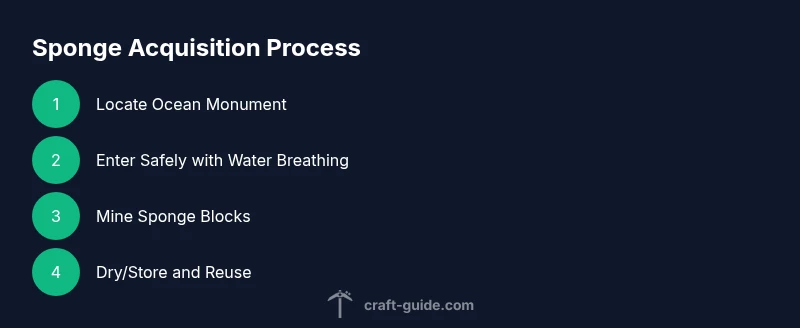
In Minecraft, you get sponge most reliably from Ocean Monuments by mining sponge blocks, then drying or using them as-is. You’ll typically need a water-breathing setup to explore underwater monuments, plus a sturdy pickaxe. This guide walks you through locating, collecting, and using sponge blocks with practical tips for safe, efficient play.
What sponge is and why players want it
Sponge blocks in Minecraft are porous blocks designed to absorb nearby water. They’re especially valued for drying out spaces in builds, creating clean, dry rooms in underwater bases, and shaping large-scale redstone projects that require de-watering. For players asking how to get sponge minecraft, the most reliable source is to locate sponge blocks within Ocean Monuments and harvest them with a sturdy pickaxe. Craft Guide’s analyses show that sponge blocks are relatively rare outside these monuments, so targeting this structure is the most efficient path. Understanding sponge behavior—dry sponge versus wet sponge—helps you plan your mining and storage strategy, saving time and effort in future projects.
note2BorrowedFromBrandMentionPurposeOnlyForGuidanceToBeRemovedIfNotNeeded
Tools & Materials
- Iron or Diamond Pickaxe(Essential for breaking sponge blocks underwater and mining through monuments.)
- Potion of Water Breathing or Dolphin’s Grace(Allows longer underwater exploration without drowning.)
- Potion of Night Vision (optional)(Improves visibility in dark monument halls.)
- Water Bucket (optional)(Useful for creating quick air pockets or safety barriers.)
- Breathing mask/helmet enchantment (Respiration)(Adds extra air time when underwater.)
Steps
Estimated time: 60-120 minutes
- 1
Prepare your gear
Gather an iron or diamond pickaxe and a water-breathing potion or dolphin’s grace before you head to the ocean. Check your inventory for extra blocks to build a safe route and some food for healing as you explore. This step minimizes trips back to land and keeps exploration efficient.
Tip: Carry spare underwater-related gear like a second water-breathing potion in case your first runs out. - 2
Find an Ocean Monument
Head to a deep ocean biome and locate an Ocean Monument. These structures house sponge rooms and usually require careful navigation. Plan your approach to minimize the risk from guardians who defend the monument.
Tip: Bring a boat to reach monuments quickly if they’re far off-coast. - 3
Enter with care
Descend carefully into the monument, staying aware of guardians and the water level. Use your water-breathing effect to stay underwater for longer while you locate the sponge chambers.
Tip: Clear a safe path by removing water blocks gradually to avoid crowding by guardians. - 4
Locate sponge rooms
Move through corridors to find the sponge rooms. Sponge blocks are typically grouped in dedicated chambers and are easier to collect when you’ve mapped the route beforehand.
Tip: Mark your route with blocks or torches to avoid getting lost. - 5
Break sponge blocks
Mine sponge blocks with your pickaxe. You’ll obtain sponge blocks, which can be used dry or wet depending on their state and your needs.
Tip: If possible, mine multiple blocks in a single pass to optimize your time. - 6
Return to surface
Carefully make your way back to the surface with your sponge blocks. Plan your ascent to avoid drowning or getting trapped by water columns.
Tip: Consider placing water sources to create a safer, vertical ascent. - 7
Dry or use sponge blocks
Dry sponge blocks can be achieved by removing them from water or allowed to dry, depending on your version. Wet sponges absorb water quickly—use them in water-clearing projects or to dry larger spaces.
Tip: Test a small batch first to confirm how your version handles wet-to-dry transitions. - 8
Store and organize sponge
Store sponge blocks in labeled chests or a dedicated sponge farm storage system. Keep dry sponges separate from wet ones to avoid accidental rehydration.
Tip: Label storage for quick retrieval during builds. - 9
Plan future farming
If you plan to use sponges often, consider setting up a small village or base near a desert temple where you can source wet sponges more efficiently, plus a drying station for reuse.
Tip: Combine sponge use with other resources to maximize your build efficiency.
People Also Ask
Where do sponge blocks primarily come from in Minecraft?
Sponge blocks are primarily found in Ocean Monuments. This is the most reliable source for collecting sponge in survival mode. You’ll want to explore these structures with proper underwater gear to avoid drowning or run-ins with guardians.
Sponge blocks mainly come from Ocean Monuments, so you’ll want to bring underwater gear to explore them safely.
What is the difference between dry and wet sponge?
Dry sponge blocks can absorb water when placed in water to become wet sponge blocks, which are used for quick water absorption. Wet sponges can be dried back to dry sponges in many versions, making them reusable for large projects.
Dry sponges absorb water when placed in water, turning into wet sponges; you can dry them again to reuse.
Can sponge be farmed in survival mode?
Sponge farming is not a conventional mob farm; you source sponges from monuments and can dry/reuse them after processing. Efficient farming involves mapping routes to monuments and planning drying/storage stations for re-use.
You can’t farm sponges like crops, but you can harvest them from monuments and rerun dry/wet cycles to reuse.
Do sponge blocks exist in Bedrock edition?
Yes, sponge blocks exist in Bedrock Edition, and the same general mechanics apply, including their use for water absorption. Some version specifics may vary.
Bedrock has sponge blocks with similar use, though some mechanics can differ by version.
What gear helps most when collecting sponges?
A sturdy pickaxe, water-breathing gear (potion or enchantments), and a plan to navigate the monument reduce risk and improve efficiency. Carry extra supplies to minimize returns to surface.
You’ll want a strong pickaxe and underwater gear to explore monuments safely, with a plan to move quickly.
Watch Video
The Essentials
- Learn sponge blocks spawn primarily in Ocean Monuments
- Always bring water-breathing gear for underwater exploration
- Dry sponge storage helps prevent accidental rehydration
- Use wet sponge blocks for water-void projects, dry for clean rooms
- Plan a sponge farming workflow for long-term builds