How to Craft a Sponge in Minecraft
Learn where to find sponges in Minecraft, how to dry wet sponges, and the best practices for using sponges to remove water from builds. A clear, step-by-step guide for beginners and seasoned builders alike.


How to craft a sponge in minecraft isn’t a standard recipe you can complete with ordinary items. Sponges come from ocean monuments as blocks or wet sponges in chests, and you can convert a wet sponge to a dry sponge by smelting it in a furnace. This quick guide explains the best ways to obtain and use sponges for water management.
What is a sponge in Minecraft?
A sponge is a practical block used to absorb water, making large-scale builds and underwater renovations feasible. In Minecraft you’ll encounter sponges in two states: dry and wet. On its own, a sponge doesn’t perform many magical tricks, but when placed in water, it soaks up the liquid and becomes a powerful tool for controlling moisture in your builds. The Craft Guide team emphasizes that sponges are especially valuable for transforming flooded caverns or undersea bases into dry, build-friendly spaces. Understanding how sponges are obtained and switched between states sets you up for efficient water management in both survival and creative modes.
Beyond their utility, sponges also offer a satisfying, tangible way to improve your world’s cleanliness and airflow. This section builds a foundation for your sponge workflows by outlining where sponges come from and how their properties change with water and heat. By following Craft Guide's practical approach, you’ll be able to plan sponge-heavy projects with confidence.
How to obtain sponges
Sponges don’t appear from a simple crafting bench. The primary sources are ocean monuments where sponge blocks and wet sponges can be found in sponge rooms or loot chests. In some worlds, wandering traders or dungeon loot may yield sponges as rare drops, but monuments remain the most reliable source. Once you locate sponges, you can collect them by breaking the sponge blocks or looting chests that contain the items. Since sponges come in two states, you’ll often end up with a mixture of dry sponges and wet sponges, depending on how they’re found and manipulated in your world. Craft Guide analysis shows that players who plan exploration routes around monuments save time and gather more sponges per expedition. Remember that breaking a sponge block yields a sponge item that can be smelted or stored for later use.
Additionally, some worlds feature sponge drops from underwater dungeon loot, which can supplement monument finds. Keep an eye out for ancient debris or glow-like blocks in submerged areas that hint at sponge reservoirs nearby. If you’re playing in survival mode, consider bringing a solid armor set and a water-breathing potion or enchantment to safely explore deeper ocean floors where sponges tend to be located. The goal is to amass a useful stock of sponges without excessive risk.
Drying wet sponges and converting to dry sponges
Wet sponges can be dried by smelting them in a furnace. Place the wet sponge in the furnace input, fuel the furnace with coal, charcoal, or other accepted fuels, and wait for the process to complete. The result is a dry sponge that can be stored or used again for absorption. This mechanic makes wet sponges a flexible resource: you don’t need to find all sponges in a single trip—wet sponges can be converted on-demand for immediate use. Craft Guide’s practical approach emphasizes pairing wet sponge collection with an efficient furnace setup, especially when you’re prepping for large-scale water management projects. After you’ve dried a sponge, you can reuse it as part of a drying or cleaning workflow without sacrificing resources.
While drying, plan how many sponges you’ll need for your immediate build. Dry sponges are easier to transport and stack than water-logged blocks, and they integrate smoothly into storage systems. An organized stockpile saves you from constant trips back to monument sites and keeps your project moving forward.
Sponge use cases and tips for water management
Sponges are most valuable when you’re dealing with flooded structures, underwater bases, or caves with water pools. Placing a sponge in an area filled with water allows it to absorb liquid, creating dry space for blocks, rails, or redstone devices. When your sponge’s absorption is maxed, you can replace it or move it to the next water-filled zone. For large projects, it’s common to deploy multiple sponges in sequence to drain an area efficiently and quickly. The Craft Guide team notes that combining sponges with other water-control strategies—like using flood- or block-based barriers—helps you manage water in stages, reducing the risk of backflow or overflow.
Pro builders often dedicate a dedicated sponge room or a rolling sponge deployment path so they can drain large volumes of water quickly. Visible organization matters: label chests with sponge counts, track exhausted sponges, and replace them methodically to avoid accidental water spread. If you’re working underwater or near coral, keep some extra dry sponges on hand for immediate absorption when water levels shift during construction.
In short, sponges streamline water removal, but they work best when you’ve planned your water flow and sponge inventory ahead of time. Craft Guide’s guidelines emphasize deliberate planning, a reliable furnace setup, and a clean storage workflow to maximize sponge usefulness across projects.
Can you craft or duplicate sponges in Minecraft?
Contrary to what some players expect, sponges aren’t crafted from standard blocks on a basic crafting table. The main, reliable sources are ocean monuments and dungeon loot, where sponges or sponge blocks appear. Once you’ve acquired sponges, you can dry wet sponges in a furnace to obtain dry sponges that can be reused for absorption. The concept of duplicating sponges through crafting does not apply; instead, focus on gathering several sponges during monument exploration and then drying or storing them for future projects. Craft Guide’s approach keeps things simple: collect from monuments, dry what you need, and keep a stocked inventory for big builds.
Practical build scenarios: large-scale water removal
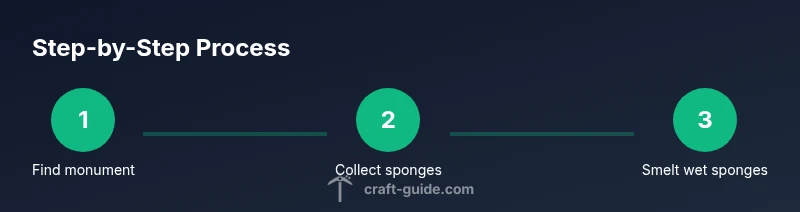
Imagine a submerged base where you need to remove water from cavern rooms, hallways, and storage bays. A practical approach is to create a sponge workflow: first, locate a monument or a rich source of sponges; second, smelt wet sponges into dry sponges to prepare a batch; third, place sponges in water-adjacent areas and monitor absorption progress. For massive projects, set up a temporary drain trench to channel water away while sponges soak, then swap exhausted sponges with fresh supply. The efficiency gains come from pre-planning and maintaining an organized sponge inventory, which reduces the number of trips back to monument sites. Craft Guide’s tested approach emphasizes practical deployment, especially for large-scale builds that involve extensive underwater renovation.
This strategy is particularly valuable for players who want to convert flooded spaces into usable areas quickly and with minimal risk. By integrating sponges into your build plan, you can reduce downtime and accelerate the overall project timeline.
Tools & Materials
- Sponge (wet or dry)(Primary resource; obtained from ocean monuments or chests; dry sponges can be reused after absorbing water.)
- Furnace(Used to dry wet sponges into dry sponges.)
- Fuel (coal, charcoal, or wood)(Necessary to smelt wet sponges in the furnace.)
- Storage (chest or barrel)(Organize and store sponges for quick access.)
- Water source for testing absorption(Optional; handy to test how well sponges absorb water in a controlled area.)
Steps
Estimated time: 25-45 minutes
- 1
Find an ocean monument
Begin your search in deep ocean biomes. Ocean monuments are the most reliable source of sponges, whether dry or in blocks. Navigate carefully, as guardians can be a threat near these structures. The goal is to locate sponge rooms or chests that contain sponges and sponge blocks so you can start your collection.
Tip: Bring a water-breathing potion or enchantment to extend underwater exploration time and avoid drowning. - 2
Collect sponges from the monument
Break sponge blocks or loot chest sponges and collect as many as you can. Sponges drop as items, and you can stockpile them in storage to avoid repeated trips to the monument. If you encounter wet sponge blocks, pick them up as well; they can be dried later in a furnace to yield dry sponges.
Tip: Use a strong pickaxe to speed up breaking dense sponge blocks, then quickly move to safe terrain to avoid guardians. - 3
Smelt wet sponges to dry sponges
Place wet sponges into the furnace input and fuel the furnace. Wait for the process to finish, and collect the resulting dry sponges. This step is essential for reusability and long-term sponge efficiency, especially when you visit monuments with limited initial supplies.
Tip: Plan fuel usage ahead; combining multiple smelting sessions can reduce downtime in a single build cycle. - 4
Test sponge absorption
Place a sponge in a water area and observe absorption. Dry sponges will begin to soak up water immediately, turning the space drier with each application. If the sponge becomes exhausted, retrieve it and replace it with a fresh one from storage to maintain momentum.
Tip: Organize your sponge placement to maximize coverage and minimize backtracking. - 5
Transport and store sponges
Carry sponges in a dedicated storage chest or barrel to keep them organized by status (dry or wet). This makes it easier to locate the exact sponge you need when you’re in the middle of a build.
Tip: Label chests for quick inventory checks and reduce time spent searching for sponges during projects. - 6
Maintain your sponge workflow
Regularly replenish your sponge stock by visiting monuments or looting chests, and keep a burner-ready furnace nearby for on-demand drying. A steady workflow minimizes delays on large builds and helps you stay on track with your project timeline.
Tip: Set up a small, near-monument workflow zone so you can process sponges quickly without trekking far each time.
People Also Ask
Can you craft a sponge in Minecraft?
No. Sponges aren’t crafted from basic blocks. They’re primarily found in ocean monuments or chests, and wet sponges can be dried in a furnace to create dry sponges.
Sponges aren’t craftable from standard blocks. They come from monuments or chests, and you can dry wet sponges in a furnace to get dry sponges.
Where can I find sponges in the world?
Sponges are most reliably sourced from ocean monuments. You may also find sponges in dungeon loot or chests in underwater ruins, but monuments are the primary method.
Ocean monuments are your best bet for sponges, though you can also find them in other underwater loot.
What’s the difference between dry and wet sponges?
Dry sponges are ready to absorb water, while wet sponges are currently saturated. All sponges can be dried and reused after absorption.
Dry sponges soak up water; wet sponges are saturated. Dry them to reuse.
Do sponges respawn after you collect them?
Sponges don’t respawn automatically. You’ll need to explore monuments or loot more chests to replenish your stock.
Sponges don’t respawn on their own; you need to find more from monuments or loot.
Are there uses for sponges beyond water removal?
Primarily for water removal in builds and renovations. After drying, sponges can be reused again and again in future projects.
Sponges are mainly for drying water, then reusing them in future projects.
What’s a quick strategy for large underwater builds?
Combine a monument run with a dedicated sponge workflow, drying sponges in a nearby furnace and storing dry sponges in labeled chests for fast access.
Run monuments, dry sponges in a nearby furnace, and store them neatly for fast access.
Watch Video
The Essentials
- Sponges are not crafted; obtain them from monuments or chests.
- Dry wet sponges in a furnace to reuse them effectively.
- Plan sponge collection with a dedicated storage system.
- Test absorption in water-prone build zones before committing.
- A monument-based sponge workflow accelerates large-scale projects.