How to Get Clay in Minecraft: A Practical Guide
Discover how to locate, mine, and craft with clay in Minecraft. Learn where clay spawns, the fastest mining methods, and how to turn clay into bricks, terracotta, and decorative options for your builds.


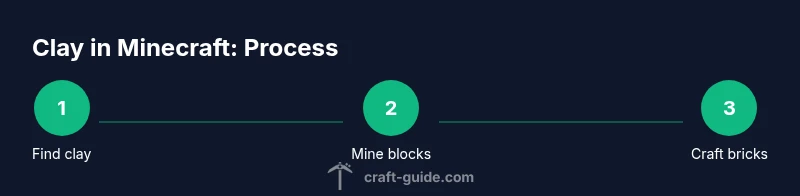
Goal: learn how to get clay in Minecraft and turn it into useful blocks. Clay blocks spawn in rivers, lakes, and shallow pools, where breaking them yields clay balls. Use a shovel for faster mining, and stay aware of water or mobs nearby. Collect clay balls to craft bricks, brick blocks, and terracotta, or mine with Silk Touch to obtain clay blocks.
What clay is and where to find it
Clay is a natural resource in Minecraft that exists as blocks and balls you mine from the world. In practice, clay blocks spawn most commonly in rivers, lakes, and shallow pools, especially along warm and temperate biomes. When broken, clay blocks drop clay balls that you can use for crafting. For builders, clay adds earthy tones and is essential for traditional brick-and-terracotta aesthetics. Craft Guide's practical approach emphasizes simple search strategies and reliable yields, so you can plan a clay run without chasing rumors. This foundational knowledge helps you map out a quick clay-finding route near your base and maximize your early-game materials.
Tools, basics, and safety prep
Before you start collecting clay, assemble a small kit: a shovel (iron or better speeds up mining), a crafting table, and a couple of chests for storage. While you can break clay blocks with your bare hands, a shovel speeds up mining significantly. If you’re near water, bring a water bucket to manage accidental drowning and to help you reposition quickly on riverbanks. Light your mining area to deter mobs, or plan your run during daylight. Craft Guide advises keeping a spare pickaxe in your inventory in case you uncover nearby stone or other blocks you want to collect.
The fastest way to mine clay in rivers and lakes
Clay blocks appear in riverbeds and calm pools; the best approach is to work from the shore and stand on dry ground when possible. Use a shovel to break clay blocks; you’ll typically receive clay balls as drops. If Silk Touch is available, you can harvest clay blocks themselves instead of balls, which is convenient for certain builds. Efficiency on your shovel and a stable footing will speed up the process and reduce wear on your tools. To prevent items from washing away, consider placing a few nearby blocks to form a shallow platform or dropping items onto a safe surface before collecting.
What to do with clay once you have it
Clay balls are the core resource for building. In a crafting table, four clay balls create one brick. Bricks can then be arranged into brick blocks for strong, decorative walls. You can also dye and smelt clay or terracotta variants for varied textures, depending on your goals. Plan ahead by setting up separate chests for clay balls, bricks, and brick blocks, so you can quickly convert gathered material into usable blocks for your project. Craft Guide recommends keeping a modest stockpile of clay-based materials for future projects.
Common mistakes and quick fixes
Common mistakes include mining clay blocks directly beneath water, causing drops to wash away, or running out of inventory space before securing your haul. Remedy these issues by bringing a chest or ender chest for on-the-spot storage, and building a small, dry platform to mine from. If you’re in a swamp or marsh, underwater exploration can be treacherous; take small, deliberate steps and always carry a light source. Finally, avoid breaking blocks at the edge of a current where items can drift.
Advanced tips: Silk Touch, efficiency, and farming ideas
If your goal is clay blocks instead of balls, enchant a pickaxe with Silk Touch and mine clay blocks to drop the blocks themselves. For speed, apply Efficiency to your shovel and consider Unbreaking to extend tool life during longer clay runs. A simple clay-farming concept is to build a shallow canal along a riverbank with a clear exit route for water and items, letting you gather more clay with less backtracking. Use earthy tones—clay, terracotta, and bricks—to achieve cohesive builds.
Quick build ideas using clay resources
Clay resources are versatile for many builds. Use bricks to create sturdy walls, borders, or arches, and terracotta variants for decorative patterns. Glazed terracotta offers color diversity for mosaics, tiles, and accents. A practical approach is to reserve clay for specific projects, and gradually expand your palette as you collect more. With thoughtful storage and planning, clay becomes a cornerstone material for rustic cabins, desert temples, or medieval towns.
Tools & Materials
- Shovel (iron or better)(Faster mining; essential for breaking clay blocks quickly)
- Crafting table(Needed to convert clay balls into bricks and bricks into blocks)
- Chest (or ender chest)(Helpful for organizing and storing clay materials during a run)
- Water bucket(Useful when mining near water to prevent drowning or aid maneuvering)
- Silk Touch enchantment (pickaxe or book)(Allows collecting clay blocks instead of clay balls)
Steps
Estimated time: 25-60 minutes
- 1
Find clay sources near water
Scan riverbeds, lake edges, and shallow pools for exposed clay blocks. Prioritize calm water and shorelines to reduce item loss. Mark a waypoint or lay down temporary markers to return later.
Tip: Bring a compact map or footholds on the bank to keep you steady while mining. - 2
Prepare your mining kit
Ensure your shovel is in good condition or enchanted with Efficiency. Place a crafting table nearby and prepare storage chests on solid ground to keep clay separated from other blocks.
Tip: Carry extra torches for night mining and a spare tool in case your primary breaks. - 3
Mine clay blocks efficiently
Swing with your shovel to break clay blocks. If Silk Touch is available, you can collect clay blocks instead of clay balls. Collect the resulting clay balls into a labeled container.
Tip: Work in a sheltered patch to avoid rain and mobs while you mine. - 4
Sort and transport clay materials
Deposit clay balls and any clay blocks into separate chests or shulker boxes. Keeping materials organized makes crafting faster later.
Tip: Create a small loom of blocks near your start point for quicker access. - 5
Craft bricks and brick blocks
In a crafting grid, four clay balls yield one brick. Place four bricks in a 2x2 pattern to craft a brick block. Save specific items for builds with brick textures.
Tip: Plan your brick block layouts in advance to speed up large walls. - 6
Advanced option: Silk Touch harvesting
If you want clay blocks rather than balls, enable Silk Touch on your pickaxe and mine clay blocks directly. This is especially helpful for decorative or architectural builds.
Tip: Use Silk Touch carefully; it can reduce the chance of producing brick pieces you need later.
People Also Ask
Where can I find clay in Minecraft?
Clay blocks spawn in rivers, lakes, and shallow pools. Look for light blue blocks near riverbeds and along the banks.
Clay is found in rivers, lakes, and shallow pools near riverbanks.
Do I need Silk Touch to mine clay blocks?
No. Clay blocks drop clay balls when mined, but Silk Touch lets you collect the blocks themselves.
You don’t need Silk Touch for clay, but it lets you get the blocks instead of balls.
How many clay balls do you get from a clay block?
Mining a clay block yields four clay balls in most versions.
A clay block typically drops four clay balls.
What can I build with clay?
Clay can be crafted into bricks, brick blocks, terracotta varieties, and glazed terracotta for decorative patterns.
Clay helps you make bricks, brick blocks, and terracotta-based decorations.
Is clay renewable in Minecraft?
Clay sources are finite; as you explore new rivers and lakes, you’ll find fresh clay deposits.
Clay is finite; explore new water bodies to find more.
Watch Video
The Essentials
- Find clay in rivers and lakes to start collecting.
- Use a shovel for faster mining and safety near water.
- Four clay balls make one brick; four bricks make a brick block.
- Silk Touch enables collecting clay blocks for certain builds.
- Plan storage and crafting order for efficient builds.