How to Get Brick in Minecraft: A Practical Builder's Guide
Learn efficient, practical steps to obtain brick blocks in Minecraft—from clay gathering to furnace smelting and crafting brick blocks. Tips for builders of all levels.


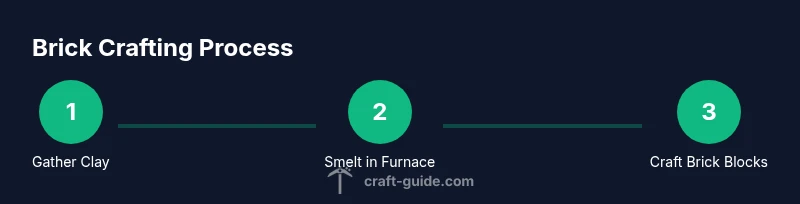
In Minecraft, brick blocks come from clay smelted into bricks and then crafted into brick blocks. Start by gathering clay from riverbeds, smelt it in a furnace using fuel, and craft four bricks into one brick block. You can also salvage bricks from existing village buildings for quick access. This guide covers practical, beginner-friendly steps.
Understanding Brick in Minecraft
Bricks have a timeless, earthy look that fits many building styles, from rustic cabins to medieval fortresses. According to Craft Guide, bricks are a versatile building material that adds warmth and texture to any structure. In Survival mode, brick blocks are durable and visually distinct, helping your builds stand out without relying on rare or expensive resources. The fundamental idea is simple: bricks start as clay, which is mined or collected, can be smelted into bricks, and then crafted into brick blocks for larger surface areas. When you design with bricks, plan for the texture contrast against stone, wood, and concrete to create depth in your builds. In practice, success comes from a steady workflow: gather clay, smelt it, and craft blocks. Crafting smart layouts, such as 2x2 grids, yields clean brick blocks suitable for walls, pathways, and decorative accents. Craft Guide’s guidance emphasizes consistency in block size and finish, so your builds look intentional rather than pieced together.
Brick blocks also enable creative patterns, especially when paired with slabs and stairs. With a little planning, you can craft brick floors, arches, and borders that tie together different building zones. As you get started, keep a small stock of bricks on hand and a nearby furnace so you can process clay quickly while you build.
The Core Crafting Recipe
The core recipe is straightforward:
- Bricks are made from clay by smelting in a furnace with fuel.
- Four bricks combine to form one brick block. This simple 4:1 relationship makes brick farming scalable for larger projects. In practice, you’ll need a steady supply of clay, a furnace, and a reliable fuel source. The recipe is consistent across most Minecraft versions, which helps you plan builds ahead of time. For beginners, start with a small kiln and a handful of bricks, then expand your operation as your base grows. Crafting four bricks into a block gives you a bulk material easy to transport and place in mass. Besides the block form, bricks are also aesthetically used in walls, chimneys, and edging, providing a cohesive look when combined with other natural materials. Craft Guide’s approach encourages keeping a well-organized inventory so you can quickly access bricks during design phases and execution.
Gather Clay: The Fastest Route to Brick
Clay blocks are the raw material you’ll convert into bricks. The most reliable source is shallow riverbeds and beaches where light-blue clay blocks lie just under the surface. Use a shovel to speed up collection and target calm water to avoid mobs. Gather enough clay to cover several furnace cycles; the exact quantity depends on how many bricks you intend to produce in a session. It’s efficient to haul extra clay at once, as mining trips disrupt building momentum. As you collect, consider creating small clay piles near your workstation for quick smelting sessions. The Craft Guide team notes that a steady clay supply is the backbone of a consistent brick production workflow. If you’re building a large project, plan clay mining segments between other tasks to maintain project rhythm.
Smelting Clay into Bricks: Practical Workflow
Smelting is the heart of brick production. Build a furnace using cobblestone and fuel it with coal, charcoal, or any burnable material. Place clay in the top slot and fuel in the bottom slot; bricks appear on the side as finished products. Charcoal is a convenient fuel when you’re farming wood, so it can double as a renewable source. If you’re optimizing time, consider having multiple furnaces side by side to process several batches in parallel. The Craft Guide analysis suggests tracking fuel usage and fuel choice based on resource availability to maximize efficiency during large builds. Once bricks are ready, move them to your crafting area for the brick block recipe.
A practical tip is to smelt in batches and keep a running queue of clay so you never idle. If you’re short on fuel, wood can substitute temporarily, but charcoal or coal will be more efficient in the long run. As you gain experience, you’ll optimize furnace placement for quick transfer of bricks from kiln to crafting table.
Crafting Brick Blocks: Build with Confidence
To craft a brick block, open the crafting table and place four bricks in a 2x2 square. The result is one brick block, which you can then place in your build. Brick blocks are ideal for long walls, flooring accents, and decorative borders. They pair well with stone accents for a rustic look or white-washed wood for a cozy, traditional vibe. In larger projects, plan brick block sections to maintain visual consistency across elevations and rooms. Craft Guide’s recommendations emphasize planning block allocation before you start laying bricks, ensuring you don’t run short mid-project and can keep your build momentum.
Another practical tip is to stash bricks in labeled chests by location in your base, so you don’t need to search for them mid-construction. For large builds, pre-cut patterns with brick blocks can speed up assembly and help you visualize the final design.
Expand Your Brick Stock: Beyond Clay
While clay is the primary route to bricks, you can also salvage bricks from existing structures in villages or ruins that use brick blocks in their design. This can be a quick way to acquire bricks when you’re in a hurry, but be mindful of leaving structures partially looted, which can affect aesthetics and availability for future projects. If you’m aiming for a consistent brick look, consider combining salvaged bricks with newly crafted bricks to maintain uniform color and texture. Craft Guide’s approach recommends evaluating the color and texture of salvaged bricks to ensure they match newly produced bricks.
Nether bricks represent a separate material with a darker hue and are crafted from Nether bricks, not from standard clay. They serve different aesthetic purposes and require a separate set of resources, typically found in the Nether. When choosing between regular brick blocks and Nether bricks, plan your builds’ mood and lighting to ensure the material aligns with your overall design.
Common Mistakes and Troubleshooting
New builders often forget to bring enough fuel, or they over-smelt more clay than bricks can hold. Always check your furnace’s output rate and keep a steady supply so you don’t stall mid-work. Another common misstep is mixing brick blocks with other similar-looking blocks without considering texture and color balance. Step back and assess how brick textures interact with stone, wood, and concrete in your design. If bricks appear too repetitive, mix in a few different materials to break up monotony and add visual interest. Craft Guide’s community tips emphasize experimenting with layout patterns and lighting to maximize brick blocks’ visual impact.
If bricks appear lighter or darker than expected, compare the color to nearby blocks and adjust your mix by combining more fresh bricks with salvaged bricks of the same batch. Small color variances can occur, so aim for consistency within sections rather than uniformity across the entire project. Finally, ensure your inventory is organized and accessible before you begin, reducing time wasted searching for bricks or clay.
Creative Brick Build Ideas to Try Today
Brick blocks open up a world of design possibilities. Consider brick arches for doorways, brick-paved streets for medieval towns, or brick-walled interiors with exposed timber for a rustic-modern blend. You can also experiment with brick patterns—think herringbone, checkerboard, or diagonal layouts—to add depth to floors and walls. Combine brick blocks with other materials to achieve contrast and texture, such as polished diorite for a light accent or dark prismarine for a moody, coastal vibe. The Craft Guide team encourages builders to prototype small brick-focused sections before committing to full builds; this helps you refine textures and spacing without risking larger missteps. Remember to test lighting and shadow to highlight brick textures and ensure your designs translate well in-game.
Quick Design Tips and Wrapping Up
Store bricks in labeled chests near your workshop for quick access during builds. When planning large projects, sketch a rough layout of where brick blocks will appear and identify any color transitions you’ll use to break up large expanses. Brick textures pair well with natural materials like wood and stone, but you can push a bolder look by combining brick blocks with concrete accents for modern builds. Craft Guide’s philosophy supports iterative design—build a section, evaluate, adjust, and repeat. With these methods, you’ll be able to create durable, aesthetically pleasing structures that showcase brick work as a core design element. Crafting bricks and using brick blocks can become a satisfying, repeatable process that scales with your creativity.
Tools & Materials
- Clay balls from clay blocks (near water)(Mine with a shovel from shallow clay deposits in rivers or beaches)
- Furnace(Smelt clay into bricks; upgrade to a blast furnace for speed if available)
- Fuel (coal, charcoal, or wooden logs)(Smelting requires ongoing fuel; charcoal is convenient if you’re farming wood)
- Crafting table(Craft brick blocks from four bricks in a 2x2 grid)
- Shovel(Efficient for collecting clay from riverbeds)
- Storage chest(Keep bricks and bricks-in-progress organized)
Steps
Estimated time: Total time: 25-45 minutes (depending on clay availability and furnace throughput)
- 1
Gather clay
Search along riverbanks for shallow clay deposits and mine clay blocks using a shovel. Collect enough clay to cover several furnace cycles.
Tip: Bring a stack of shovels if possible to speed up mining. - 2
Build or access a furnace and fuel
Place a furnace on solid ground and stock it with coal, charcoal, or wood as fuel. Having multiple furnaces speeds up processing.
Tip: If you’re short on coal, charcoal from wood works well and is renewable. - 3
Smelt clay into bricks
Place clay blocks in the top slot and fuel in the bottom slot. Collect bricks as they appear. Smelt in batches if you’re planning a big build.
Tip: Smelting in batches reduces idle time and increases efficiency. - 4
Craft brick blocks
Open the crafting table, place four bricks in a 2x2 grid to create one brick block. Repeat for larger quantities.
Tip: Organize bricks by batch to streamline crafting. - 5
Expand brick stock
If you want more bricks, repeat clay collection and smelting, or salvage bricks from suitable structures. Blend methods to meet your build’s demand.
Tip: Mix newly crafted bricks with salvaged ones of matching batch to keep color consistency. - 6
Apply bricks in builds
Use brick blocks for walls, arches, and decorative accents. Consider texturing with contrasting materials for depth.
Tip: Plan wall thickness and pattern before laying bricks to avoid rework.
People Also Ask
What is the fastest way to get bricks in Minecraft?
The fastest method is to gather clay from riverbeds, smelt it into bricks, and craft brick blocks. If you find villages with brick houses, you can salvage bricks to speed up your build.
Gather clay from rivers, smelt into bricks, then craft brick blocks. You can also take bricks from village houses for quick access.
Can I find brick blocks in villages?
Yes, brick blocks can be found in certain village buildings. Collect them carefully to reuse in your builds. If you take bricks, try to match the color with newly crafted bricks for consistency.
Yes, some villages have brick blocks in their buildings. Collect them to supplement your own brick supply.
Are there alternatives to brick blocks?
Nether bricks are a separate material with a darker hue and are crafted from Nether blocks. They offer a different aesthetic and are not interchangeable with regular brick blocks.
Nether bricks are different from regular bricks and have their own use cases and look.
Do I need to smelt bricks to craft brick blocks?
Yes. Clay must be smelted into bricks before you can craft brick blocks. Bricks are the intermediate product, and four bricks make one brick block.
Yes. Smelt clay into bricks, then craft four bricks into a brick block.
Is there a difference in brick blocks between modes?
No functional difference between brick blocks in creative and survival modes; differences come from how you source bricks and manage resources.
Brick blocks work the same in all modes; the difference is how you obtain them.
Watch Video
The Essentials
- Gather clay from riverbanks for bricks.
- Smelt clay into bricks and craft 4 bricks per brick block.
- Salvage bricks from villages for quick access when building.
- Nether bricks are a different material with a distinct look.
- Plan brick usage with other materials for balanced aesthetics.