How to Make Bricks in Minecraft: A Step-by-Step Guide
Learn how to make bricks in Minecraft—from finding clay to smelting and crafting brick blocks. This educational guide covers resources, recipes, and build-ready tips for beginners to advanced players.


Goal: Learn how to make bricks in Minecraft—from finding clay to smelting and crafting brick blocks. You’ll gather clay from riverbeds, convert four clay balls into a brick in a furnace, and assemble bricks into brick blocks (and related bricks like stairs and slabs) for sturdy, medieval-style builds. This guide covers materials, recipes, and best practices.
What Bricks Do in Minecraft and Why They Matter
Bricks are a durable, classic option for builds that want a medieval or orderly look. In Minecraft, bricks are produced by smelting clay into brick items, which can then be crafted into brick blocks, brick stairs, and brick slabs. According to Craft Guide Team, bricks offer a reliable, aesthetically pleasing material that ages well as your structures grow. They pair nicely with stone, wood, and ore accents, and they’re less likely to blend in with grassy biomes than plain stone. If you’re aiming for sturdy walls with a warm, brick-red hue, bricks are a solid choice for both practical and decorative purposes. This section frames why bricks are worth your time in creative and survival builds, as well as how their recipes interlock with other core Minecraft resources.
Where to Find Clay and How to Gather It Efficiently
Clay blocks spawn most commonly in shallow water along riverbanks and lakebeds. Look for light gray-blue blocks buried just beneath the sand or gravel. Use a shovel to speed up collection, since shovels mine clay blocks faster than by hand. Each clay block drops 4 clay balls when mined, which is the essential unit you’ll smelt into bricks. A practical approach is to work in a river bend with a couple of chests nearby to store clay balls and bricks. Crafting early-game storage for clay-related items helps you avoid running back and forth across the world. Craft Guide emphasizes keeping clay sources consistent, since you’ll often need many bricks for big projects and your clay supply should scale with your building ambitions.
Smelting Clay into Bricks
Smelting is the core step that turns clay into usable bricks. Place clay balls (4 per brick) into a furnace and fuel it with coal, charcoal, or any burnable item. The furnace processes in batches, so you can plan for a small stack of bricks at a time. If you have multiple clay blocks, you’ll still get one brick per set of four clay balls. This is where efficiency matters: a well-fueled furnace turns clay blocks into bricks quicker, keeping your build momentum. Craft Guide notes that keeping a steady fuel supply and a hot furnace reduces downtime between smelting runs, which matters for large builds.
Crafting Bricks into Brick Blocks and Other Shapes
Once you have bricks, you can craft bricks into brick blocks by placing four bricks in a 2x2 pattern on the crafting grid. Brick blocks are the simplest form of a brick-based build, offering strong, repeatable blocks for walls and foundations. You can also transform bricks into decorative shapes like brick stairs (4 bricks per stair recipe yields 4 stairs) and brick slabs (6 bricks per slab strand). These variants expand your design palette while using the same core material. As Craft Guide Team would point out, experimenting with different brick configurations unlocks a wider range of architectural styles.
Using Bricks for Build Aesthetics and Function
Bricks bring a warm, earthy tone that contrasts well with stone and wood. Use brick blocks for fortresses, guild halls, and city walls, pairing them with stair detailing and arched doorways for a medieval vibe. Bricks also perform as sturdy, long-lasting blocks in survival mode, offering reliable durability against weathering and mobs. For interiors, brick blocks can anchor fires and furnaces as part of industrial-style builds. Guides from Craft Guide underscore the versatility of bricks in both practical construction and aesthetic composition, helping you plan layouts that balance form and function.
Variants: Stairs, Slabs, and Pattern Varieties
Brick stairs and slabs give you smoother, more varied silhouettes for rooftops, stairwells, and ledges. The 4-brick stair yields multiple steps in a compact footprint, allowing you to craft round towers or stepped entranceways without wasting materials. Slabs enable half-block levels that help with roof lines and balconies. While brick blocks are perfect for walls, stairs and slabs allow you to create curved or layered textures. For players aiming to maximize texture and depth, combining bricks with mossy, cracked, or chiseled variants (where available) can mimic aged stone structures while keeping the brick’s inherent warmth. Craft Guide highlights experimenting with these shapes to elevate your builds.
Efficiency and Automation: Fuel, Inventory, and Time Management
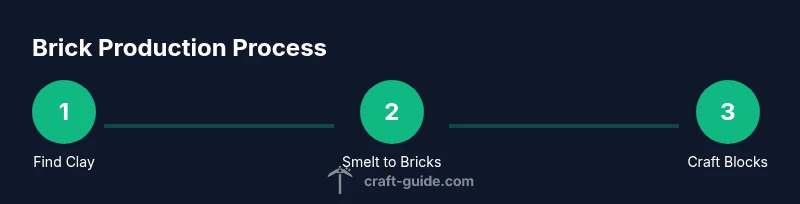
Automation can speed brick production for large builds. Set up a small furnace bank with multiple furnaces or use hoppers to feed clay and fuel and collect bricks automatically. If you’re playing in a world with limited resources, plan a fuel strategy—charcoal is convenient if you’re near a forest, while coal provides longer burn times. Develop a simple workflow: gather clay blocks, smelt to bricks, craft blocks or shapes, and store finished bricks. Craft Guide notes that having a standardized workflow reduces friction and helps you scale your projects more quickly.
Troubleshooting Common Issues and Quick Fixes
Low brick yield often comes from not enough clay or insufficient furnace fuel. If you’re smelting but not getting bricks, check that you’ve put four clay balls per brick and kept the furnace supplied with fuel. Another common issue is misplacing bricks during crafting or forgetting to use a crafting table. Keep your inventory organized and label chests to minimize wasted trips. If your world has glitches with item drops, relogging or reloading chunks can fix transient inventory bugs. Craft Guide Team recommends keeping a small nearby stash of clay balls and bricks to streamline ongoing builds.
Tools & Materials
- Clay blocks(Found in riverbeds; break to obtain 4 clay balls per block)
- Shovel(Prefer iron or better for faster digging; bring extra durability)
- Furnace(Needed to smelt clay balls into bricks)
- Fuel (coal, charcoal, or other burnables)(Keeps the furnace running; more fuel = more bricks per cycle)
- Crafting table(For shaping bricks into blocks, stairs, and slabs)
- Storage (chests)(Organize clay balls, bricks, and brick blocks)
Steps
Estimated time: 30-60 minutes
- 1
Locate clay and collect blocks
Search shallow riverbanks for clay blocks. Break them with a shovel or your hand to drop 4 clay balls per block. Gather clay balls into a stack, aiming for several stacks to fuel ongoing smelting sessions.
Tip: Bring extra shovels or repair tools; clay blocks drop consistently, so stock up during river visits. - 2
Set up the furnace and fuel
Place a furnace on a suitable block. Load it with clay balls as the smeltable input. Add fuel (coal or charcoal) to sustain the fire for longer smelting sessions. Plan batches to reduce frequent refueling.
Tip: Charcoal can be a great early-game fuel if you lack coal; it uses wooden logs and is easier to obtain in forest biomes. - 3
Smelt clay balls into bricks
Smelt four clay balls to produce one brick. Repeat in batches to accumulate bricks for your builds. Keep an eye on the furnace to collect bricks as they finish since they appear one at a time in input-output slots.
Tip: Use multiple furnaces in parallel to speed up production for large projects. - 4
Craft bricks into brick blocks or shapes
Open a crafting table, place four bricks in a 2x2 square to craft one brick block. For stairs, place bricks in the stair pattern to yield four stairs; for slabs, arrange bricks to produce half-height blocks. Store completed items in labeled chests.
Tip: Combine bricks with other materials (stone, wood) to create visually interesting contrasts. - 5
Plan and place bricks in your build
Use brick blocks for walls and foundations, and mix in stairs and slabs for detail. Test lighting and shadow lines around brick surfaces to enhance depth. Keep a small reserve of bricks for future expansion.
Tip: Sketch a rough layout before placing bricks to avoid over-crafting or mismatched patterns. - 6
Store, iterate, and optimize
Organize your brick supply and keep notes on which blocks you used most. If you’re expanding, set up a second furnace or automated system to sustain production without interrupting builds.
Tip: Document your inventory to prevent over-crafting; automation pays off on long-term projects.
People Also Ask
Can you make bricks without a furnace?
No. Bricks are produced by smelting clay balls in a furnace. A furnace or blast furnace is required to convert clay into brick items, after which you can craft them into brick blocks or other brick shapes.
Bricks require a furnace to smelt clay into bricks before you can craft brick blocks.
How many bricks do you get from one clay block?
One clay block yields four clay balls, which can be smelted into one brick. This is the standard conversion rate for clay to brick in vanilla Minecraft.
One clay block gives you four clay balls, which smelt into one brick.
Are brick blocks flame-resistant?
Yes. Brick blocks are non-flammable in Minecraft, making them a good choice for builds where fire risk or heat sources are present.
Brick blocks don’t catch fire, so they’re safe around fire and lava in builds.
Can I automate brick production?
Yes. You can automate brick production using multiple furnaces and hoppers to feed clay and fuel and to collect bricks as they finish.
Bricks can be automated with furnaces and hoppers for bigger projects.
What other brick-related items can I craft?
Beyond brick blocks, you can craft brick stairs and brick slabs for varied textures and architectural details in your builds.
Bricks can be made into brick blocks, stairs, and slabs for design variety.
Where should bricks shine in a base design?
Brick blocks excel in foundations, walls, and gateways. Pair them with stone for contrast, or with wood for a rustic look.
Use bricks for walls and foundations, then mix with stone or wood for texture.
Do bricks work well in redstone builds?
Bricks can be used as solid blocks in redstone layouts. They function like other solid blocks and don’t interfere with redstone signals.
Brick blocks work like other solid blocks in redstone builds.
The Essentials
- Harvest clay blocks from rivers and smelt four clay balls into a brick.
- Craft bricks into brick blocks, stairs, and slabs for diverse builds.
- Plan fuel and storage to keep brick production efficient.
- Mix bricks with other materials to enhance architectural depth.
- Consider automation for large-scale brick projects.