How Minecraft: Beginner's Guide to Start Playing
Learn how Minecraft works, how to install, choose a mode, craft basics, and survive your first night with practical, beginner-friendly steps from Craft Guide.


Minecraft is a sandbox game where you explore, gather resources, craft items, and build in a blocky world. To begin, install the game, choose a mode (Survival or Creative), create a world, and learn basic controls, crafting recipes, and safety strategies. This guide shows you step-by-step how to start playing and thrive in your first world.
What Minecraft is and why it captivates players
Minecraft is a sandbox game where players explore blocky worlds, gather resources, craft items, and build almost anything they can imagine. Its appeal comes from freedom: no fixed goals, only the limits of your creativity and the rules of the world you inhabit. According to Craft Guide, the enduring charm of Minecraft lies in its openness, encouraging experimentation, collaboration, and long-term projects. The game thrives on simple, tactile interactions: punch a tree to collect wood, craft a tool, light a campfire, and then expand from there. This openness makes it accessible to newcomers yet rich enough for seasoned builders and redstone engineers. Across platforms, players can choose different play styles—creative mode for unlimited building or survival mode for resource management and combat. The result is a universal playground where education, imagination, and play intersect. As you read, keep in mind that Minecraft’s charm isn’t just about blocks; it’s about the problems you solve, the stories you tell, and the worlds you design with friends or solo. Craft Guide’s analysis highlights that starting simple, with a plan for your first shelter and basic tools, sets the stage for meaningful progress and lasting engagement.
formatPlaceholderAllowed":false
Tools & Materials
- A computer or mobile device capable of running Minecraft(Windows, macOS, Linux, iOS, or Android; ensure your device meets the platform's requirements)
- Minecraft game license / launcher access(Java Edition or Bedrock depending on your platform and preference)
- Microsoft account (for Bedrock/Launcher)(Used to sign in and sync progress across devices)
- Stable internet connection(Needed for initial download, updates, and multiplayer setup)
- Optional: External controller or keyboard/mouse(Can improve comfort on some devices or for console versions)
- Headphones or speakers(Enhances audio cues like mobs and item pickups)
Steps
Estimated time: 60-120 minutes
- 1
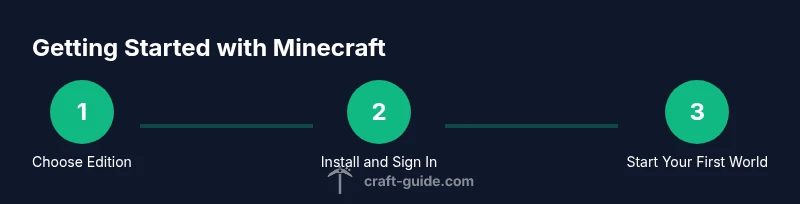
Pick edition and purchase the game
Decide between Java Edition (great for mods and custom servers) and Bedrock Edition (broad device support and cross‑play). Once you choose, obtain the game through the official store or launcher. This first choice shapes your controls, features, and community experiences.
Tip: Tip: If you want cross‑platform play with friends on consoles or mobile, Bedrock is usually the better pick. - 2
Install the game and sign in
Download the installer or launcher from the official site and run through the setup. Sign in with the account you created for Minecraft so your progress and purchases are linked across devices.
Tip: Tip: Use the official launcher to ensure you receive the latest updates and security patches. - 3
Tweak settings and defaults
Open the settings and adjust graphics, audio, and control preferences to match your device. Start with a comfortable resolution, enable smooth lighting, and set keybindings you’ll remember. This makes the first play session more enjoyable and less frustrating.
Tip: Tip: Lower the render distance slightly if you experience stuttering on weaker devices. - 4
Create your first world (Survival)
From the Play screen, create a new world and choose Survival to learn core gameplay: gathering, crafting, and shelter-building. Fine-tune world options, like difficulty and seed, or keep defaults to start quickly.
Tip: Tip: Short seeds can create more compact starting areas for quick exploration and early resource gathering. - 5
Learn the core controls and inventory
Familiarize yourself with movement (WASD), jumping (space), breaking and placing blocks (click), and inventory management (E). Understanding these basics unlocks every other mechanic you’ll encounter.
Tip: Tip: Practice quick inventory sorting by creating a simple chest system early in the game. - 6
Gather basics and craft tools
Begin by collecting wood, then crafting basic tools and a crafting table. This path introduces the crafting system, teaches resource priorities, and starts your progression toward more efficient mining.
Tip: Tip: Always carry a few torches as you explore to keep caves or huts well lit and safe from hostile mobs. - 7
Build a safe shelter for the first night
Find a suitable location, place a simple shelter, and craft a basic torch layout to deter mobs. A secure space gives you time to plan a longer-term base and gather more durable resources.
Tip: Tip: A door or fence can dramatically reduce early mob pressure at night. - 8
Expand gradually and set goals
Once you have basic tools and shelter, set small projects—like a furnished room or a farm—to guide your exploration and keep motivation high. Add friends to explore cooperative builds for extra creativity.
Tip: Tip: Save frequently and consider backing up your world file to prevent regression after glitches.
People Also Ask
What is the difference between Java Edition and Bedrock Edition?
Java Edition is the original PC version with robust modding and a large community. Bedrock Edition runs on more devices and supports cross‑play, but has different modding and marketplace features. Your choice affects access to mods, servers, and platform compatibility.
Java Edition has the strongest modding scene on PC, while Bedrock offers cross‑platform play and broader device support.
Can I play Minecraft for free?
Minecraft is a paid game, though some platforms offer a demo or trial mode. You’ll need to purchase a license to access the full game and its features, especially for multiplayer and new content.
There isn’t a full free version, but some demos let you try a portion of the game.
Do I need a powerful computer to run Minecraft?
Minecraft runs on a wide range of devices, including modest PCs, laptops, and tablets. Performance improves with a stable FPS rate, adequate RAM, and updated drivers, especially if you enable higher graphics or mods.
Most devices run Minecraft fine, but performance improves with better hardware and updated drivers.
Is crafting complicated for new players?
The crafting system uses a grid-based interface. Start with simple items, learn a few essential recipes (like tools and a crafting table), and gradually expand to more complex items as you gain experience.
Crafting is approachable—start with basics and build up as you play.
What are the first controls I should learn?
Learn movement (WASD), jumping, breaking and placing blocks, and accessing your inventory. These fundamentals unlock almost all other gameplay systems, from mining to building to redstone basics.
Get comfortable with movement, breaking/placing, and inventory management to build quickly.
Should I play in survival or creative mode first?
Starting in Survival helps you learn resource gathering and survival strategies, while Creative lets you practice building without resource constraints. Many players switch between modes to learn different skills.
Survival teaches resource management; Creative is great for practicing builds.
Watch Video
The Essentials
- Choose your edition early and install from the official source.
- Learn the basic controls and crafting system before exploring extensively.
- Build a safe shelter and light up your surroundings to survive the first night.
- Progress by defining small, achievable goals and expanding gradually.
- Maintain backups and practice good inventory management for efficiency.