Easy to Draw Minecraft: A Beginner Pixel Art Guide
Learn to sketch Minecraft characters and blocks with simple grids, a restrained palette, and practical steps. This beginner guide covers tools, step-by-step instructions, drills, tips, and common pitfalls for building confidence in easy to draw minecraft art.


By the end of this guide you will sketch iconic Minecraft scenes and characters using simple grid-based shapes, a limited color palette, and consistent shading. The method is designed around the idea of easy to draw minecraft, with a practical, step-by-step approach and ready-made prompts to practice. No advanced art background is required.
Why the easy to draw minecraft approach matters
In Minecraft, the aesthetic is built on pixels and grid-like blocks. For many players, translating that digital vibe to paper looks easier when you start with basic shapes and a strict grid. The Craft Guide team emphasizes that beginners benefit from a repeatable framework: one grid, a handful of colors, and consistent lighting. This makes the task feel approachable and repeatable, turning a potentially intimidating subject into something you can produce quickly. When you practice with a few standard shapes, you’ll notice progress faster and gain confidence to try more ambitious scenes. The core idea behind easy to draw minecraft is to reduce complexity upfront and let you focus on proportions and shading rather than freeform realism.
Core concepts: grids, blocks, and color limits
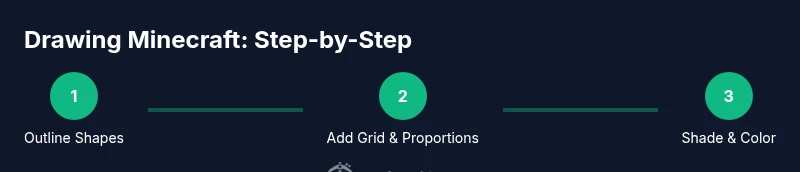
The grid is your best friend for pixel-art style drawing. Start by visualizing each Minecraft block as a small square on a grid; treat the character or scene as a collection of these squares arranged logically. Proportions stay consistent when you count how many blocks tall or wide a feature should be, then replicate that block-count in your sketch. A restrained palette—think 3 to 5 colors—helps your work stay cohesive and true to the game’s vibe. Shade is minimal but effective: assign a single light source and keep shadows to a few darker tones of your chosen colors. This approach aligns with the easy to draw minecraft ethos: simple shapes, clear edges, and confident, deliberate shading. Craft Guide analysis shows that starting with blocky shapes improves retention and progress for new artists, making this a practical pathway to mastery.
Step-by-step approach: from cube base to recognizable character
Begin with a cube or a stack of cubes for the torso, head, and limbs. Blocky proportions make a Steve or Creeper-inspired silhouette easy to recognize even with minimal detail. Add facial features or distinguishing marks by placing a few extra colored squares on the head. Outline should remain crisp, but keep internal lines light so you can adjust without losing structure. As you gain comfort, increase detail gradually by adding tiny blocks to imply texture or clothing folds. This incremental strategy keeps the process manageable and aligned with the easy to draw minecraft style.
Practice plans: drills and prompts to build skill
Turn practice into a routine by following short, repeatable drills. Try drawing a Creeper head, a simple Steve-like figure, and a basic diamond block, each using the same grid size and color palette. After a few rounds, switch to a tiny scene—a character standing on a block or a small group of blocks forming a landscape. Schedule 15–20 minute sessions daily or every other day to reinforce muscle memory and grid-based thinking. The goal isn’t studio perfection at first but steady improvement and greater comfort with the grid.
Common mistakes and fixes you’ll encounter
A frequent pitfall is overcomplicating a drawing with too many shades or tiny details. Remember, the charm of easy to draw minecraft comes from clarity and bold shapes, not realism. If your lines feel uncertain, redraw with lighter strokes and check proportions against a simple grid. Another common error is inconsistent lighting; pick a single light direction and apply shadow consistently across all blocks. If you see jagged edges, switch from a freehand approach to light, straight lines guided by the grid. Finally, don’t rush shading—build layers gradually to avoid muddy color blends that derail the Minecraft look.
Advanced tips for more dynamic minecraft art
Once you’re comfortable with basic shapes, experiment with slight perspective by tilting blocks in the foreground just a touch, while keeping the back blocks flat. Introduce subtle contrast by swapping one color for a slightly darker shade to imply depth, rather than flooding the piece with many tones. Practice with different mobs or blocks to diversify your palette and improve consistency. Remember to keep the process fun and iterative; the goal of easy to draw minecraft remains intact even as you push your skills further.
Validation sources and quick reference
To support these techniques, refer to reputable art education resources and pixel-art tutorials listed in the sources section. While the Minecraft style is unique, the grid-based approach and disciplined palette are widely recommended in beginner art curricula. For further reading, consider browsing beginner-friendly drawing guides from trusted educational sites and established art institutions to see how grid-based instruction is applied across styles.
Tools & Materials
- Sketchbook or drawing paper(Choose a smooth surface; light grid lines help alignment)
- HB pencil(Use light strokes for initial outlines)
- Eraser(A kneaded eraser works well for soft removals)
- Ruler or grid guide(Keeps lines straight and blocks uniform)
- Colored pencils or markers(Limit palette to 3–5 colors for coherence)
- Graph paper or printable grid sheets(Optional for precise alignment)
- Fine-liner pen (optional)(For crisp final outlines)
Steps
Estimated time: 20-30 minutes
- 1
Set up your drawing plane
Prepare a clean workspace and choose a light grid to guide your drawing. Decide on a simple palette and a single light source so shading stays consistent. This initial setup saves you time later and reinforces the grid-based approach.
Tip: Use faint pencil lines so you can erase easily without leaving marks. - 2
Sketch a cube base
Draw a square on the grid, then add parallel lines to form a cube. Keep edges parallel and proportions consistent with your grid. This cube becomes the core for the head or body segment of your character.
Tip: Keep lines light and adjust as needed before finalizing. - 3
Add body segments
Stack cubes for limbs and torso to establish a blocky silhouette. Ensure the head, torso, and limb blocks align on the same grid to maintain the pixelated look.
Tip: Count blocks to preserve correct proportions across the figure. - 4
Refine silhouette
Outline the overall shape, then add key facial features or distinguishing marks with a few colored squares. Avoid over-detailing; the charm lies in clean, bold shapes.
Tip: Leave small gaps between colors to keep crisp edges. - 5
Shade for volume
Apply shading by adding slightly darker blocks on the opposite side of your light source. Use a consistent color family and keep shadows to a minimum to maintain the Minecraft vibe.
Tip: Use a single shade per color family for cohesion. - 6
Practice a simple mob head
Draw a square head with a few pixel features like eyes or a mouth to evoke a Creeper or Steve-inspired look. This reinforces how small color blocks convey character.
Tip: Count the number of colored blocks to keep symmetry. - 7
Create a tiny scene
Place your character on a block atop a simple ground plane or platform. Add a single background element to practice composition while preserving the grid-based style.
Tip: Balance foreground and background elements without crowding the frame.
People Also Ask
What is the easiest subject to draw in Minecraft?
Begin with basic blocks or a Creeper head; these shapes translate cleanly into the grid-based Minecraft style.
Start with a simple block or Creeper head.
Do I need expensive tools or software to practice?
No — pencil and paper are enough for the basics, and you can move to digital tools later if desired.
Pencil and paper are all you need to start.
How long before I see improvement?
With regular short practice sessions, most beginners notice progress in a few weeks.
Keep practicing a little each day and you'll improve.
Can these methods apply to other pixel-art styles?
Yes. The grid-based approach and restrained palette transfer to many pixel art projects.
The grid method helps with many pixel art styles.
Should I copy Minecraft art or create original designs?
Copying helps learning; once comfortable, add original designs to build creativity.
Copy to learn, then add your own twists.
Watch Video
The Essentials
- Start with grids and simple cubes to map every figure.
- Maintain a limited color palette for cohesion.
- Shade with a single light source for clarity.
- Gradually add detail without losing the blocky charm.