How to Build an Easy Minecraft XP Farm
Learn how to build an easy minecraft xp farm to gain XP quickly for enchantments, with safe, repeatable setups. This guide covers mob spawner, furnace, and fishing options with practical tips.


An easy minecraft xp farm helps you gain XP quickly by automating mob spawns and enchanting readiness. Start with a compact, safe design that fits your world, then gather blocks, a water source, hoppers, and chests. Build with proper lighting to control spawns and streamline XP collection in your base.
Why XP Farms Matter in Minecraft
Experience points power enchanting, anvil repairs, and some villager trades. For many players, an easy minecraft xp farm is the fastest path to reliable enchantments without endless mining and potion brewing. According to Craft Guide, XP farming becomes a balance of efficiency, safety, and practicality: you want a design that you can run repeatedly with minimal attention. A well-built XP farm saves time, preserves resources, and can be scaled as your projects grow. In this guide, we’ll cover core concepts, common designs, and how to tailor a setup to your world type, whether you’re playing in survival, creative, or a small community server. The goal is a repeatable workflow that gives you steady XP while letting you focus on exploration and building.
Core Design Principles for an Easy XP Farm
The core idea behind an easy xp farm is to maximize XP per hour while minimizing downtime and risk. First, design for safety: secure the kill chamber, keep spawns contained, and ensure you can reach your XP with minimal exposure to hostile mobs. Second, optimize spawn rates by matching the farm to your world’s chunk loading and light levels. Third, plan modular modules so you can expand later without rebuilding. Craft Guide analysis shows that consistent lighting, efficient mob transport, and reliable collection systems dramatically improve results. Finally, consider your edition and server rules; some designs rely on features that behave differently across Java and Bedrock, so adapt accordingly. By keeping these principles in mind, you can choose a design that’s easy to maintain and scales with your ambitions.
Mob Spawner XP Farms: Setup and Pitfalls
Spawner-based XP farms use natural mob spawns inside dungeon or stronghold spawners. They are among the easiest to set up for beginners because the spawn source is persistent and predictable. The basic idea is to create a contained spawning room, funnel mobs to a kill area, and collect XP through an accessible hitting point. Pitfalls to avoid include lighting around the spawn zone that reduces spawns, incorrect block heights that limit mob movement, and complex redstone that creates needless lag. When designed well, you can run the farm AFK and rely on the XP orbs to boost your enchantment capabilities. Craft Guide notes that reliability increases when you limit extraneous lighting in the spawn zone and keep the transport paths simple and direct.
Furnace and Item XP Farms: Smelting for XP
Another reliable method is to collect items that benefit from smelting and feed them through a multi-furnace setup. Each item smelted yields XP, so you can build a compact furnace array fed by hoppers and a chest system. A practical starter design uses a line of furnaces with a shared fuel source and a hopper feeding input items on one end and an output chest on the other. The XP you gain comes from the act of smelting rather than combat, which makes this approach safer in crowded bases. For best results, keep the fuel and input balanced and ensure that items are smelted in batches to maintain a steady XP flow. Craft Guide’s guidance emphasizes keeping automation simple and avoiding bottlenecks that stall progress.
AFK Fishing XP Farms: Practical Alternatives
AFK fishing farms rely on fishing mechanics to yield XP and valuable items. They can be practical when you have space and a quiet body of water. In Java Edition, these farms function well with proper rod enchantments and an efficient collection system. On Bedrock, behavior may vary with game updates, so always test before committing. The main benefit is a low-risk, hands-off XP source, but you should monitor the farm to avoid AFK bypass rules on servers and to keep the fishing area free of hostile mobs.
Safety, Lighting, and Maintenance Considerations
Safety comes first when building XP farms. Keep the area well lit to reduce unintended spawns outside the farm, and ensure there are barriers to prevent players or pets from falling into kill zones. Use sturdy materials around water and lava to avoid accidental damage. Regular maintenance includes clearing blockages in transport channels, checking for despawn issues, and updating your design when game versions change. Craft Guide highlights that a modular approach reduces risk as you update features or swap editions.
Tips for Maximizing XP per Hour
- Pro-tip: Test designs in a sandbox world before committing to your main base.
- Warning: Do not leave exposed lava or open pits—mob farms can be hazardous.
- Note: Keep your base lighting low around the farm to avoid accidental respawns in other areas.
- Pro-tip: Use a compact, modular design to allow future expansion.
- Warning: On servers, respect rules about AFK and automated farms.
- Note: Regularly inspect transport channels for bottlenecks and fix them promptly.
A Simple Starter Build You Can Try Today
This final section walks you through a compact mob spawner XP farm design you can prototype in a spare dungeon room. Start by locating a dungeon spawner and creating a 9x9 block chamber with a 3-block-high ceiling. Add water streams to push mobs toward a simple kill floor, then funnel XP via a hopper-lined collection area. The goal is to achieve a steady stream of mobs and a reliable XP orb experience. As you gain confidence, you can scale up with additional spawners or switch to a furnace-based farm for variety. Craft Guide encourages experimentation, so feel free to adapt dimensions to your world and version.
Tools & Materials
- Building blocks(Assorted blocks for platform and enclosure)
- Water bucket(For creating drop zones and transporting mobs)
- Hoppers(To collect items and transfer XP)
- Chests(Storage for drops and items)
- Signs(Block water flow and guide mobs)
- Ladders/Scaffolding(Access and construction)
- Torches/Glass(Lighting and visibility)
Steps
Estimated time: 1-2 hours
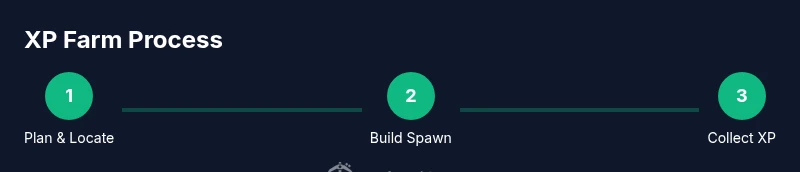
- 1
Locate the spawn source and plan the kill zone
Find a dungeon or stronghold spawner if available. If not, prepare a kill chamber suitable for a furnace-based alternative. Map a safe route from the spawn area to your collection point and mark all transport channels before placing blocks.
Tip: Draw a simple layout sketch to keep modules aligned as you build. - 2
Build the spawning chamber
Create a spacious spawn area with a height of at least 3 blocks and a floor of solid blocks. Keep the ceiling clear of obstructions and ensure walls are sturdy to prevent escapes. Install a basic roof and ensure there is easy access for maintenance.
Tip: Use consistent block heights to prevent mobs from getting stuck. - 3
Set up transport and flow
Install water streams or bubble columns to push mobs toward the kill area. Place signs to prevent backflow and ensure mobs travel in a single direction. Test with a few mobs to verify the flow works smoothly.
Tip: Test with a single mob to avoid wasting resources during setup. - 4
Create the kill chamber and XP path
Design a safe kill zone that doesn’t expose you to damage. Use a predictable method (fall damage, piston trap, or torch-based kill) to yield XP orbs near your hitting spot. Ensure you can collect XP without risking your character.
Tip: Keep the kill floor compact to maximize XP orb density. - 5
Install XP collection and AFK setup
Add a hopper line feeding into a chest so drops and XP are collected. Create a simple AFK area with safe standing space so you can earn XP while away from the machine. Verify that XP orbs spawn near you and are easy to pick up.
Tip: Position yourself so you can hit mobs without moving far from the collection zone. - 6
Test, tweak, and maintain
Run the farm for an extended period, observe spawn rates, collect data, and adjust lighting or transport timing as needed. Fix bottlenecks promptly and consider modular expansions if you wish to scale up.
Tip: Regularly inspect water sources and redstone lines for leaks or blockages.
People Also Ask
What is the easiest XP farm to build in Minecraft?
Most players start with a mob spawner farm or a furnace-based XP farm. Spawner farms are typically the simplest to implement if you have access to a dungeon or stronghold spawner; furnaces can be simpler in flat worlds. Both require basic automation for best results.
The easiest XP farms are mob spawner or furnace farms, depending on access to a dungeon and your world setup.
Can I use an XP farm on a server with restrictions?
Many servers allow XP farms if they are efficient and fair. Check rules about automation and AFK running to avoid policy violations. Always coordinate with admins if you plan a large build.
Most servers allow XP farms if they follow the rules; check admin guidelines.
Do XP farms work in both Java and Bedrock editions?
XP farms generally work in both editions but mechanics like spawner behavior and drop rates differ. Plan your design to match the edition you play.
XP farms work in both editions but expect edition-specific differences.
How long does it take to set up a basic XP farm?
A basic mob spawner XP farm can take a couple of hours, depending on your skill and world height; furnaces or fishing farms may take less time but require different materials.
A basic setup usually takes a couple of hours, depending on your design.
What safety steps are important?
Always light the area to control spawns outside the farm, guard against lava and fall hazards, and ensure redstone and water do not create unintended risks.
Brighten the area and guard against lava and falls.
Can XP farms cause lag or server load?
Yes, highly active farms can contribute to server load. Design farms to limit tick-heavy redstone and keep chunk loading efficient. Coordinate with admins when on shared servers.
Active farms can affect server performance; design for efficiency.
Watch Video
The Essentials
- Plan safety first before building.
- Choose a design that matches your world and play style.
- Automate XP collection to maximize efficiency.
- Test and refine for better yields.