Bedroom in Minecraft: A Practical Build Guide
Learn to design and build a cozy, functional bedroom in Minecraft with easy steps, material lists, lighting ideas, and personalization tips.


You will learn to design and build a cozy, functional bedroom in Minecraft. This guide covers layout, materials, lighting, storage, and decoration with a step-by-step plan you can adapt to any world. The goal is a comfortable space that fits your style and plays well in survival or creative modes.
Why a dedicated bedroom matters in Minecraft
Having a dedicated bedroom in Minecraft helps center your base, organize resources, and role-play more effectively. A well-defined space reduces clutter in your inventory and improves your movement between workstations. According to Craft Guide, establishing a separate resting area can improve mood and planning during long mining sessions, since respawn safe zones and storage are easy to locate. In creative worlds, a bedroom becomes a playground for color schemes, textures, and furniture layouts that reflect your personality. Even in survival, a small bedroom acts as a compact hub where you can store beds, chests, and maps, while keeping the rest of your base free for crafting and farming. The first step is to decide what “bedroom” means in your world: do you want a cozy, cottage-style retreat, a modern loft, or a rustic cabin feel? The answer will guide block choices, ceiling height, and the placement of windows. Prioritize accessibility: you should be able to reach your bed, storage, and a small crafting area from a single central zone.
Craft Guide analysis emphasizes clarity of function—treat the bedroom as a mini-hub rather than just a decorative space. When you design with purpose, the rest of your base feels more organized and easier to navigate. This mindset helps players avoid cramming too many storage blocks or decorative items into a single room, which can hinder movement and accessibility.
If you’re starting from a simple shell, map out zones for sleep, storage, and a compact crafting area first. Then, layer in ambiance with color, lighting, and textures. A well-planned bedroom also serves as a testbed for materials and textures you’ll use elsewhere in your builds, making future projects faster and more cohesive.
note_id null
-1 ήταν placeholder
Tools & Materials
- wood planks(Choose a consistent wood type for flooring and walls (oak, spruce, birch, etc.). A cohesive palette makes the room feel intentional.)
- bed(One bed per person; consider color variation for visual interest.)
- carpet or wool(Carpets can define zones and add color without heavy block use.)
- glass panes(Use for windows or decorative privacy. Helps light flow in.)
- trapdoors(Trapdoors are handy for shelves or window shutters.)
- bookshelves(Adds a cozy, study-like feel and blocks light planning.)
- stair blocks(Creates seating or loft-like features without extra space.)
- torches/lanterns(Mix ceilings and wall lighting to reduce dark spots and mobs.)
- paintings(Personalize walls with character and mood.)
- signs(Label storage or add notes for role-play.)
Steps
Estimated time: varies
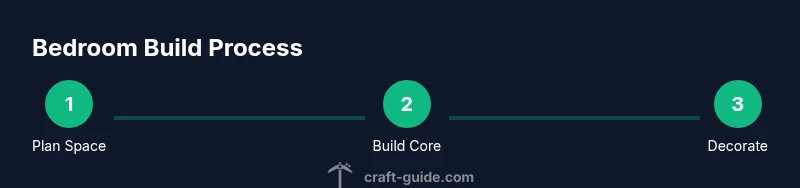
- 1
Define the room plan
Decide the bedroom’s size, shape, and core zones: sleep, storage, and a small workspace or crafting area. Visualize the flow and how you’ll move between the bed, chest, and door. This step sets the stage for all subsequent builds.
Tip: Sketch a rough layout in-game using a grid or map markers to keep proportions consistent. - 2
Lay the floor and erect walls
Choose a consistent flooring material and build walls at a comfortable height. Leave space near the bed for easy entry and ensure a clear line of sight to storage and a window if possible.
Tip: Keep the bed off-center to create a balanced focal point and improve navigation. - 3
Place the bed and essential furniture
Position the bed so you can access the chest, crafting area, and any seating. Add a small desk or shelf for items you want within reach.
Tip: Place the bed near a light source to avoid mobs spawning close by. - 4
Add storage and seating
Integrate chests or barrels with signs, install bookshelves for a cozy feel, and add a couple of seating blocks or stairs for a reading nook.
Tip: Use vertical storage first to save floor space and reduce clutter. - 5
Install lighting and refine textures
Layer lighting with ceiling lamps and wall torches or lanterns. Choose textures that harmonize with your color palette for a cohesive look.
Tip: Avoid harsh shadows by mixing light sources at different heights. - 6
Decorate and personalize
Add paintings, carpets, color accents, and themed decor to reflect your style. Consider a small window treatment or curtain-like blocks to soften edges.
Tip: Rotate decorations seasonally to keep the space feeling fresh.
People Also Ask
What is the best bed placement in a Minecraft bedroom?
Place the bed along a wall with enough space to walk on either side and access nearby storage. Facing a window or a wall shelf can create a balanced, comfortable feel.
Place the bed against a wall with space on both sides for easy access and nearby storage.
How can I make a small Minecraft bedroom feel bigger?
Use light colors for walls and床, maximize vertical space with shelves, and keep furniture lean. Glass panes for windows help bring in light, making the room feel open.
Light colors, vertical storage, and glass windows make a small room feel larger.
What materials are best for performance-friendly bedrooms?
Choose solid, widely available blocks like wood and stone and minimize complex textures on walls to keep rendering light on lower-end devices.
Stick to simple blocks to keep performance smooth.
Can this design be adapted for multiplayer servers?
Yes. Plan for multiple beds or a shared sleep area, and provide separate storage for each player to avoid clutter and conflicts.
You can add extra beds and personal storage for players.
How do I add storage without clutter?
Use labeled chests or barrels placed against walls, and keep a small centralized storage zone accessible from the bed. Avoid scattering items across multiple shelves.
Group storage in one zone and label it clearly.
Watch Video
The Essentials
- Define a clear room plan before building
- Use a consistent color palette for walls, floor, and bed
- Layer lighting to define zones and mood
- Keep storage accessible and organized
- Personalize with decorations that reflect your play style