Action and Stuff Minecraft: A Practical How-To Guide
Learn a practical, step-by-step approach to action and stuff minecraft—planning, tools, automation, and workflows to build, survive, and play with confidence.


In this guide you will learn how to perform practical, action-oriented tasks in Minecraft, focusing on planning, tool use, and repeatable workflows. You’ll explore how to move from idea to execution, whether you’re playing in survival or creative mode, and how to measure success along the way. By the end you’ll be able to tackle complex action sequences in a structured, repeatable way, improving your efficiency and outcomes in action and stuff minecraft.
What is action and stuff minecraft
In many Minecraft circles, players describe their process as a blend of purposeful actions, crafted workflows, and tactical decisions. The phrase action and stuff minecraft encapsulates how players translate free-form play into repeatable, productive tasks—whether that means building a redstone farm, organizing a survival base, or automating resource gathering. This approach isn’t about flashy tricks; it’s about creating reliable routines that you can adapt as your world grows. According to Craft Guide, mastering these routines reduces guesswork and makes big projects feel doable in stages. You’ll learn how to map tasks, select appropriate materials, and iterate on your design. The keyword here is consistency: repeated, well-planned actions compound into faster builds and safer exploration, especially when resources are limited and danger lurks around every corner.
Why a workflow approach matters
A workflow approach turns scattered, impulsive actions into a sequence of deliberate tasks. You’ll move from “I need to gather wood” to a plan that specifies where to gather, what tools to bring, how to log progress, and when to switch to a different goal. This mindset is valuable in both survival and creative play. It helps you optimize resource use, reduce risk, and finish projects on time. Craft Guide analysis shows that players who adopt structured play report higher confidence, better map discipline, and more satisfying builds. The idea is simple: define the end state, break it into steps, and execute with checks along the way. This is the core of action and stuff minecraft—the art of turning intention into tangible results.
Core tools and resources you’ll rely on
The practical toolkit for action-oriented Minecraft starts with reliable, repeatable gear. You’ll want a basic set of tools (pickaxe, axe, shovel), a crafting table, a furnace, torches for lighting, a stack of blocks for scaffolding, and enough food to stay healthy during long sessions. In addition, a water bucket and a small amount of cobblestone or other build-friendly material help with temporary storage, safety, and quick terrain shifts. For automation-minded players, redstone components unlock repeatable tasks and sequences. Keep a small inventory plan: designate spaces for farming outputs, storage, and work zones. By organizing your toolkit, you reduce downtime and keep action flowing smoothly, making action and stuff minecraft more approachable for beginners and veterans alike.
Tools & Materials
- Basic tools set (wood/stone)(Pickaxe, axe, shovel)
- Crafting table(Essential for item creation)
- Furnace or blast furnace(Smelting and cooking)
- Stacks of building blocks(For scaffolding and structures)
- Torches or light sources(Safety and visibility)
- Food for survival(Maintain health and stamina)
- Water bucket(Helpful for farming and safety)
- Redstone components (optional)(For automation experiments)
Steps
Estimated time: 60-90 minutes
- 1
Plan your action sequence
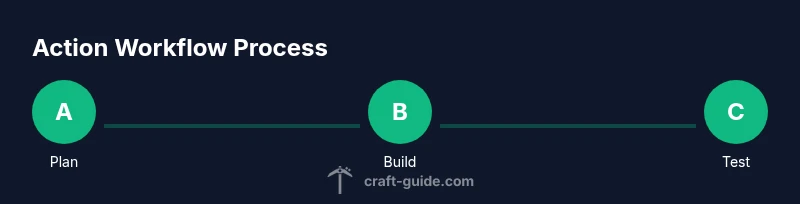
Define the end goal and success criteria. Break the project into major phases and identify the key milestones. Decide which areas require automation, which can be manual, and what risks you anticipate. A clear plan minimizes backtracking and accelerates execution.
Tip: Write a one-paragraph objective and a two-column task list before you touch any materials. - 2
Gather essential tools and resources
Assemble your toolset and materials based on the plan. Move materials to the planned work zone to avoid constant trips. Verify you have enough fuel, food, and lighting for extended sessions.
Tip: Pre-pack a carry chest with your primary resources to cut downtime. - 3
Set up a safe workspace
Choose a flat area or build a temporary platform. Clear hazards, place lighting, and build scaffolds to reach high spots. Create a mock layout that resembles the final build in miniature to test the flow.
Tip: Always light corners; mobs spawn in dark spaces and can slow progress. - 4
Create repeatable tasks with scaffolding
Turn complex actions into a sequence of smaller, repeatable steps. For example, farming can be automated in stages: seed, grow, harvest, store. Document exact steps and the order to perform them.
Tip: Use patterns and templates; a single template can map to multiple projects. - 5
Test in a controlled environment
Run a dry run of the workflow on a small scale. Observe bottlenecks, timing, and resource usage. Note any mistakes and adjust the plan accordingly.
Tip: Keep a notebook or screenshot log of each test run. - 6
Document the workflow
Create a concise guide showing inputs, steps, and outputs. Include safety notes and any common pitfalls. This becomes a reusable reference for future projects.
Tip: A one-page workflow card saves time in future sessions. - 7
Optimize with automation
Incorporate simple redstone or command-based logic to automate repetitive tasks. Start with small automations and scale up as you gain confidence.
Tip: Test automation at low scale first to avoid resource waste. - 8
Apply to a real build or farm
Put your plan into a real-world project, iterating as needed. Compare results with the initial plan and refine the workflow for better efficiency or safety.
Tip: Revisit criteria after completion to measure success and set next goals.
People Also Ask
What does 'action and stuff minecraft' mean in practice?
It refers to turning intentions into repeatable, practical tasks in Minecraft—planning, building, farming, and automation. The goal is to make play more efficient and less random by applying structured workflows.
Action and stuff Minecraft means turning ideas into repeatable tasks to make play more efficient.
Is this guide suitable for beginners?
Yes. The guide starts with fundamentals like planning and tool selection, then progresses to simple workflows and basic automation, making it accessible for new players while still helpful for seasoned builders.
Yes, it’s friendly for beginners and grows with you.
Do I need redstone to use these workflows?
Redstone is optional but valuable for automation. You can implement many tasks with simple timing and item movement, and add redstone as you become comfortable.
Redstone helps with automation, but you can start without it and add later.
How long should I practice these workflows?
Aim for regular short sessions, gradually increasing duration as your plans and tools improve. Consistency beats long, sporadic bursts.
Practice in short, steady sessions and build up over time.
Can I apply these ideas to both survival and creative modes?
Absolutely. The workflows transfer between modes, though outcomes will vary. In survival you’ll emphasize resource management; in creative you’ll focus on rapid iteration and large-scale builds.
Yes, these workflows work in both modes with mode-specific tweaks.
What’s a quick win for action-oriented Minecraft?
Set up a small automated tree farm or crop farm to practice planning, sequencing, and testing. It provides tangible results and a template for larger projects.
A small automated farm is a great starting project.
Watch Video
The Essentials
- Plan first, execute second to avoid backtracking.
- Build a toolkit and workspace suited to your workflow.
- Document workflows for reuse and learning.
- Start small with automation, then scale up.
- Maintain safety and lighting to keep sessions productive.