How to Make Minecraft Armor
Learn how to craft Minecraft armor from leather to netherite, upgrade with smithing tables, and enchant for protection. This educational guide covers recipes, upgrades, tips, and practical builds for every play style.


Armor in Minecraft protects you by reducing damage from attacks, and its effectiveness scales with material. This guide covers all armor types, from leather to netherite, plus exact crafting recipes, upgrade paths via smithing tables, and enchantments to optimize defense. Whether you’re new or returning, you’ll get a clear, step-by-step path to reliable gear.
Armor fundamentals and how armor works in Minecraft
Armor in Minecraft reduces the damage you take from attacks, helping you survive longer in dangerous biomes, caves, and combat scenarios. According to Craft Guide, armor pieces grant protected points that subtract a portion of incoming damage before your health is affected. The higher the material tier, the more protection and durability you gain. Leather, though cheap and easy to craft early on, provides the least protection but offers customization with dyes. Iron, gold, diamond, and netherite armor progressively increase durability and armor points, with netherite offering the highest combined protection and lasting power. Understanding these basics lets you plan upgrades rather than grabbing whatever you find. In this guide, you’ll learn how to craft each piece from leather to netherite, how to upgrade using smithing tables, and how enchantments can further boost your defense during exploration and boss fights. Whether you’re playing on Easy, Normal, or Hard, choosing the right armor path matters for your play style and the risks you’re willing to take. Craft Guide’s insights help beginners and veterans alike.
Material tiers, protection, and durability at a glance
Armor comes in six main tiers: leather, chain (optional), iron, gold, diamond, and netherite. Leather is easy to obtain with animals and smelting hides, but offers the lowest protection and durability. Chain armor exists as an intermediate option with moderate protection, primarily used in early game when you can’t access iron yet. Iron armor is a reliable middle-ground, combining decent protection with solid durability. Gold armor provides quick availability but shatters quickly under combat, making it a temporary upgrade while you search for better materials. Diamond armor delivers strong protection and durability, making it a staple for mid-to-late game. Netherite armor, crafted by upgrading diamond with ancient debris via a smithing table, provides the best protection and durability while maintaining upgrades. Regardless of tier, each piece reduces damage and increases your effective health pool. Durability management—via repair, repairs, and enchantments—extends the gear’s life in long expeditions. Craft Guide analysis shows that starting with leather for early exploration and then transitioning through iron, diamond, and finally netherite is a practical progression path for most players.
Crafting recipes by piece
Each armor piece uses the same shape across materials, but the material type changes the resource you consume. Here are the standard crafting requirements:
- Helmet: 5 units of your chosen material
- Chestplate: 8 units
- Leggings: 7 units
- Boots: 4 units
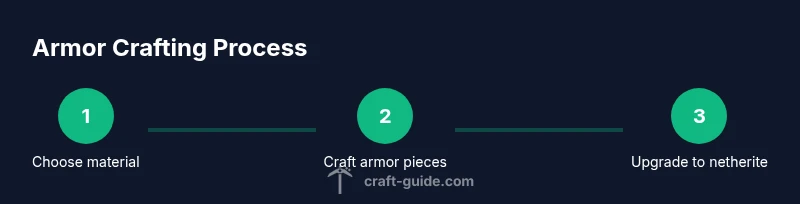
For leather, iron, gold, or diamond armor, simply place the appropriate material on the crafting grid in the corresponding pattern to produce the four armor pieces. Netherite armor uses the same shapes, but upgrade paths require a smithing table rather than a basic crafting grid. The exact quantities are consistent across materials, making it easier to plan your farming and crafting routes as you advance.
Nethe... Upgrade path to Netherite and beyond
Upgrading to Netherite is reserved for after you’ve obtained diamond gear. Netherite armor is crafted by upgrading diamond armor pieces via a smithing table using Netherite ingots (created from Netherite scraps and gold). The upgrade process preserves enchantments and increases durability and protection. To obtain Netherite scraps, you mine ancient debris in the Nether, smelt it into scraps, then combine four scraps with four gold ingots to produce one Netherite ingot. With this ingot, you can upgrade each diamond piece one by one. Remember: Netherite requires more planning and resource investment, but its durability and protection pay off for endgame exploration and boss fights.
Enchantments and practical usage
Enchantments complement raw armor stats by adding protection, reducing damage from specific sources, or extending durability. The most common enchantments for armor include Protection, Fire Protection, Blast Protection, Projectile Protection, and Unbreaking. Each enchantment has levels that can be added via an enchantment table, anvil, or enchanted books. Armor that is properly enchanted can significantly reduce the number of hits you take, and combined with the right playstyle, you can survive longer in dangerous environments like ancient temples, caves, and the Nether. Craft Guide emphasizes matching enchantments to your activities; for example, Fire Protection is valuable in the Nether, while Projectile Protection helps against ranged enemies in open areas.
Armor builds for different playstyles and world states
Early game: Leather armor is a forgiving starting point; it’s easy to dye and can prevent early deaths while you collect resources. Mid-game: Iron armor becomes the backbone of most players’ inventories, balancing protection and durability with feasible farming. Late game: Diamond armor remains practical until Netherite upgrades are available; netherite offers superior durability, protection, and the ability to retain enchantments when upgrading. In mixed biomes or challenging worlds, a mix of diamond armor pieces and enchanted accessories often yields the best survivability. Craft Guide’s approach is to plan upgrades around resource availability and adventure goals, ensuring you’re not stuck without protection when exploring new areas.
Common mistakes and optimization tips
Common mistakes include rushing to Netherite without gathering enough resources, neglecting enchantments, and failing to repair durability. A practical strategy is to carry a spare set of gear, enchant earlier, and use an anvil to repair or rename items for clarity. Maintain protection coverage by equipping at least three different armor parts and avoiding gaps in protection, especially in dangerous areas like the Nether and strongholds.
Putting it all together for your world
With a clear path from leather to netherite, you can tailor your armor setup to your current needs. Start with leather to build confidence, progress to iron, then diamond, and finally Netherite as you gather the necessary materials. Enchantments should be chosen to complement your tasks, be it mining, exploring, or fighting bosses. This article provides a practical, scalable framework that remains effective across different game modes and world states. The Craft Guide Team encourages players to experiment with different armor configurations to discover what works best for their play style.
Tools & Materials
- Crafting table(Required to assemble armor patterns on a 3x3 crafting grid)
- Iron ingots(Used for iron armor; optional for leather and gold start)
- Gold ingots(Used for gold armor; not as durable as iron or diamond)
- Diamond(Used to craft diamond armor; upgrade path later to netherite)
- Leather(Base material for leather armor; easy to obtain early)
- Ancient debris(Smelt into Netherite scraps for Netherite ingots (upgrade path))
- Netherite ingots(Used to upgrade diamond armor on a smithing table)
- Smithing table(Used to upgrade diamond armor to Netherite, preserving enchantments)
- Anvil(Useful for repairing armor and combining enchantments)
- Experience orbs / XP levels(Needed for enchanting and some repairs)
Steps
Estimated time: 60-90 minutes
- 1
Gather materials and prepare your workspace
Collect leather, iron, or diamonds depending on your target armor tier. Set up a crafting table and ensure you have space for each armor piece. This foundational step ensures you can craft without interruptions and keep a backup set handy.
Tip: Carry a small stock of spare armor pieces during long expeditions. - 2
Choose your starting material
For beginners, leather is the easiest starting point, but iron provides better protection early on. Decide based on resource availability and planned play style, then commit to the progression path.
Tip: Starting with leather lets you craft quickly while you mine for iron. - 3
Craft leather armor set
Use the leather items to assemble helmet, chestplate, leggings, and boots in the crafting table pattern. Leather armor is quick to assemble and dyes can personalize your look while you gather stronger materials.
Tip: Enrich leather armor with enchantments later to improve protection. - 4
Upgrade to iron armor
Swaps leather for iron by using iron ingots in the same armor patterns. Iron armor offers reliable protection and durability for mid-game exploration.
Tip: Keep a consistent supply of iron ingots by mining and smelting ore. - 5
Advance to diamond armor
Use diamond ingots to craft the same four-piece set. Diamond armor provides strong protection and durability suitable for challenging areas and bosses.
Tip: Plan mining trips to gather diamonds efficiently to avoid stockouts. - 6
Prepare Netherite upgrades
Mine ancient debris in the Nether, smelt into Netherite scraps, and combine with gold ingots to craft Netherite ingots. You’ll use a smithing table to upgrade each diamond piece.
Tip: Always carry a smithing table when exploring the Nether for quick upgrades. - 7
Upgrade to Netherite armor
Upgrade each diamond piece in a smithing table using Netherite ingots. Netherite armor has the best durability and protection, and it preserves enchantments from the diamond item.
Tip: Don't forget to enchant before upgrading if possible; upgrades preserve enchantments. - 8
Enchant, repair, and maintain
Use an enchantment table or anvil to add protections, repair the armor with experience, and keep a spare set in your chest for emergencies. Regular maintenance ensures your armor remains reliable in tough encounters.
Tip: Repair in small increments to avoid losing valuable enchantments.
People Also Ask
What materials are best for early armor in Minecraft?
Leather armor is the easiest to obtain early in a world, giving basic protection while you gather iron. Iron armor is a stronger, more durable option you should aim for once you have access to iron ore and a furnace.
Leather is the easiest starter armor, with iron as the next upgrade for better protection.
How do Netherite upgrades work and why should I bother?
Netherite upgrades require Netherite ingots, which come from Nether scraps and gold via a smithing table. Netherite armor has higher durability and protection than diamond, and upgrades preserve enchantments.
Upgrading to Netherite gives you the strongest armor with durable protection.
Can leather armor be enchanted?
Yes. Leather, like other armor, can be enchanted for protection and other benefits, though its base protection is lower. Enchantments help compensate for weaker materials in the early game.
Leather armor can be enchanted for more protection.
What enchantments are most useful on armor?
Protection and Unbreaking are broadly useful. Specific protections like Fire, Projectile, or Blast Protection depend on your activities and the environments you expect to face.
Protection and Unbreaking are good defaults for armor enchantment.
How do I repair armor without losing enchantments?
Use an anvil to repair armor with identical pieces or combine with enchantment books. Prefer repairing gradually to retain more enchantments and durability.
Use an anvil to repair and preserve enchantments step by step.
Are Netherite items different in Java vs Bedrock editions?
Core crafting logic is similar across editions, but some enchantment behavior and item interactions differ. The upgrade path via smithing tables remains a core mechanic in both editions.
Netherite upgrades work similarly across editions, with minor differences in enchantments.
Watch Video
The Essentials
- Start with leather for quick protection and dye options.
- Progress through iron and diamond before Netherite for resource efficiency.
- Enchantments dramatically boost armor effectiveness and longevity.
- Upgrade to Netherite when feasible for maximum protection and durability.