How to Make Minecraft Armor Stand: Step-by-Step Guide
Learn how to make minecraft armor stand with a practical, easy-to-follow guide. Gather materials, craft, place, and customize displays using armor and name tags. Includes step-by-step instructions, tips, and version notes for builders.


In this guide you’ll learn how to make minecraft armor stand from basic materials, how to craft it, place it, and customize it with armor and name tags. You’ll find step-by-step instructions, tools needed, tips to avoid common mistakes, and version-specific troubleshooting.
Understanding Armor Stands and Display Ideas
According to Craft Guide, armor stands are display blocks that let you showcase armor sets, held items, and decorative blocks without mobs interacting with them. They’re a staple for museums, storage showcases, and adventure maps. The armor stand supports a helmet, chestplate, leggings, boots, and an optional item held in the hand. In Java Edition and Bedrock Edition, the core behavior is the same, but the crafting recipe and placement quirks can differ slightly. For most builders, the appeal is the ability to position items at various heights and angles, creating a dynamic visual. Start by sketching a simple layout: a single stand on a pedestal, or a small grid of stands for a mini-gallery. Lighting matters: place torches or lamps to reduce shadows that hide details. If you’re new to this, practice with one stand to learn how items balance and how rotation affects the overall look. Once you’re comfortable, expand to a row of stands to create a polished display.
Materials and Setup: What you need before crafting
Before you craft an armor stand, assemble the basics. Crafting tables are required to perform the build, and you’ll need iron ingots and a stick for the recipe. Optional items can boost your display: a name tag for labeling, and an anvil to rename the tag so you can call your stand something meaningful. Craft Guide analysis shows that most players start with a modest kit: a handful of iron ingots, a stick, and a crafting table, plus a spare name tag if personalization is desired. Ensure you have a flat, stable surface to place the armor stand once it’s ready. If you’re building in survival mode, store the necessary materials in a chest nearby to streamline the crafting flow. If you’re in creative mode, you can skip resource gathering but still test patterns and alignments. Having a clean workspace makes the crafting and placement steps smoother and faster.
Crafting the Armor Stand: recipe notes and version differences
Crafting an armor stand uses a specific recipe on a crafting table; the arrangement of ingredients depends on your version. In Java Edition and Bedrock Edition the core idea is the same: iron ingots and a stick form the base of the stand, but the exact positions can differ. If you’re unsure, open the in-game recipe book and compare it with your edition to confirm the correct layout. After you place the items in the correct pattern, retrieve the armor stand and move it to your hotbar. If your world uses datapacks or mods that alter crafting, you may see variations; always verify with your current server or world settings. The important point is that the armor stand is a craftable item, not a naturally generated block, and it unlocks new ways to present your armor and gear in creative builds.
Placing and Positioning: display orientation and alignment
Place the armor stand on a solid block, in a location with good lighting and enough space for display. When you right-click to place a stand, you can adjust its orientation to face the center of your display or align it with a nearby wall. Consider setting up a small platform or pedestal that elevates the stand for better visibility. If you’re displaying multiple stands, align them in straight rows or a gentle curve to guide the viewer’s eye. Use blocks behind or under the stands to create depth and separate displays. Narrow gaps between stands can look cluttered, so maintain clear sightlines. Finally, test different heights so any visible items at the top of the display aren’t obscured by lighting or shadows.
Customization: name tags, armor, and accessories
Name tags add personality to armor stands. Rename a name tag at an anvil to reflect the purpose of the display, then apply it to the stand. You can also place helmets, chestplates, leggings, boots, and held items in different combinations to create unique looks. Elytra or swords mounted on a stand can serve as focal points in a gallery-style display. If you plan to reuse the stand, consider saving a template setup in your world by duplicating stands or using structure blocks. Remember that some items may visually clip into the stand depending on pose settings, so adjust your items accordingly.
Common mistakes and troubleshooting
Common mistakes include placing armor stands in cramped spaces, using poor lighting, or misplacing items—leading to a cluttered display. If your stand isn’t holding items, recheck the recipe and placement; in some versions, chairs or decorative blocks on the base can block item placement. If the stand won’t rotate or face the intended direction, verify the orientation and ensure there’s no block behind it preventing rotation. In multiplayer worlds, ensure you have permission to place and modify blocks. If you’re on a server with restricted commands, use creative mode or seek admin help.
Creative display ideas and advanced setups
In creative builds, armor stands can anchor elaborate scenes, such as armor walls, museum dioramas, or trading posts with multiple stands. Use different materials for the base and pedestal to create contrast; experiment with lighting to highlight gold or diamond gear. For advanced setups, align stands to face a central point in a courtyard or hall, and add signage to describe each set. With careful planning, your armor stand displays become practical art that enhances your Minecraft world. The Craft Guide team encourages builders to experiment and refine their displays to suit the mood of the scene.
Tools & Materials
- Crafting Table(Needed to craft armor stand; exact recipe varies by version)
- Iron Ingots(Typically required; exact recipe varies by version)
- Stick(Used in the armor stand recipe)
- Name Tag(Optional for labeling; rename at an anvil if used)
- Anvil(Needed to rename name tags in most versions)
Steps
Estimated time: 18-28 minutes
- 1
Gather Materials
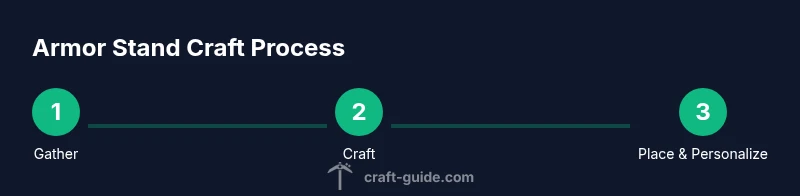
Collect the required materials from your world: a crafting table, iron ingots, and a stick. If you’re in survival, mine iron ore and smelt it into ingots. Have a spare name tag handy if you plan to customize later.
Tip: Double-check you have the core items before starting the crafting process. - 2
Open Crafting Table and Arrange Pattern
Open the crafting table and place the materials in the armor-stand pattern appropriate for your version. The exact layout can differ between Java and Bedrock. Use the recipe book to confirm the correct pattern for your edition.
Tip: Use the in-game recipe book to verify the pattern for your edition. - 3
Craft and Retrieve
Place the ingredients in the crafting grid according to the verified pattern to craft the armor stand. Move the result into your inventory and select it for the next step.
Tip: Keep an eye on your inventory space as armor stands can occupy 1 slot when crafted. - 4
Place the Armor Stand in the World
Move the armor stand to your hotbar and place it on a flat, solid surface. Ensure there is enough space around it for display and that the stand is oriented toward the main viewing area.
Tip: Place it away from edges to prevent tipping or tipping obstruction. - 5
Equip Armor and Items
Right-click (or the equivalent action) the stand to place armor pieces or other items on the slots. Distribute items evenly for balance and adjust the held item for visual emphasis.
Tip: Balance heavy items so the stand remains upright and visually stable. - 6
Personalize with Name Tags
If you want to label the display, rename a name tag at an anvil and apply it to the armor stand. This changes the stand’s name in-game and helps identify the display.
Tip: Renaming costs experience; plan accordingly. - 7
Test and Refine
Test visibility from different angles and adjust height, spacing, and lighting. Add a pedestal or backdrop if needed to improve contrast and focus.
Tip: Test with different lighting to ensure the display remains legible at all times.
People Also Ask
How do you craft an armor stand?
The armor stand is crafted using a crafting table with iron ingots and a stick in a specific pattern. Exact layout can vary between Java and Bedrock editions, so check your version’s recipe in the crafting book.
You craft an armor stand using a crafting table in a recipe that varies by edition; check your version’s recipe in the crafting book.
What items can you display on an armor stand?
Armor stands can hold armor pieces and additional items like swords or elytra. You place items on the stand by interacting with the stand in your version of Minecraft.
Armor stands hold armor and various items that you can place by interacting with the stand.
Can armor stands be renamed with a name tag?
Yes. Rename a name tag at an anvil and apply it to the armor stand to display the name above the stand. This works in most versions.
Yes, rename a name tag at an anvil and apply it to the stand to rename it.
Are armor stands different between Java and Bedrock editions?
The core function is the same, but there can be minor differences in placement, rotation, or interaction depending on edition.
Armor stands work similarly in both editions, with some small differences.
What’s the best way to display multiple gear sets?
Create several armor stands and rotate them to showcase different sets from various angles. Use name tags for labeling when appropriate.
You can use multiple stands to show off different gear, labeling them if you want.
How long does it take to set up a display?
A simple armor stand display typically takes 10-20 minutes, depending on how elaborate you want the setup to be.
A basic setup can take about 15 minutes.
Watch Video
The Essentials
- Gather the core materials first and confirm the recipe for your edition.
- Craft and place the armor stand in a clear, well-lit area.
- Use name tags to personalize your display.
- Experiment with different items on the stand for variety.