Minecraft Green House: Practical Build Guide
Learn to design and build a functional Minecraft greenhouse with glass walls, efficient lighting, and crop automation. Craft Guide provides a step-by-step approach for beginners and seasoned players to grow crops year-round in any biome.


Build a practical Minecraft greenhouse by planning a glass-walled structure, choosing the right lighting, and designing for ventilation. This guide shows you how to size the space, select materials, and set up farming automation so crops grow reliably even in challenging biomes.
What is a Minecraft greenhouse and why build one
A Minecraft greenhouse is a transparent, controlled space designed to maximize crop growth by providing light, warmth, and ventilation. In survival and creative modes, a greenhouse helps you grow crops faster, protect seedlings from mobs, and create a visually appealing farm. According to Craft Guide, a well-designed greenhouse also serves as a sturdy aesthetic anchor for your base, blending function with style. The Craft Guide team found that glass panes or blocks are common choices that balance light transmission with structural integrity. By planning a greenhouse with proper height, door placement, and ventilation, you can keep crops thriving in any biome, even in cold or barren areas. In this guide, you’ll learn how to plan, build, and optimize a Minecraft greenhouse for year-round farming, regardless of your world seed or resource constraints.
Craft Guide’s approach emphasizes readability and practicality so players of all levels can follow along without getting lost in jargon.
Design principles for a functional greenhouse
A functional greenhouse combines light, airflow, and accessibility. Start with a simple rectangular footprint to maximize interior space and minimize corners that trap mobs. Use transparent materials to keep light levels high, but consider a vented roof or operable doors to prevent heat buildup and ensure proper air exchange. Frame choices matter: wood offers affordability and a rustic feel, while stone or brick frames improve durability. Place doors on opposite sides for natural cross-ventilation, and consider adding a small attic-style gap above eye level for passive airflow. Lighting should be evenly distributed to prevent dark spots that slow crop growth. Finally, plan for irrigation and crop layout so you can harvest efficiently without trampling seedlings. Craft Guide notes that a consistent design language—same block types, tidy corners, and clear pathways—improves both aesthetics and farming efficiency.
Location, layout, and space planning
Choose a sunny biome or a spot with minimal shade; crops grow best with ample light, and a southern exposure in many designs helps maximize daytime sun. Plan for a modular layout so you can expand later without rebuilding the entire structure. A typical greenhouse benefits from a central pathway with raised beds on each side, allowing easy access and watering. Think about the proximity to your other farms or storage to reduce travel time during harvesting. If you’re building near water, add a small pump or water source to simplify hydration needs. Mark your footprint on the ground with blocks temporarily to preview the scale and ensure you have room for doors, a roof, and ventilation features. Craft Guide emphasizes planning as the most important step to avoid costly rework later.
Material choices: glass vs panes, frames, and ventilation
Glass panes offer a lighter look and easier handling, while glass blocks maximize visibility and insulation. For most players, a mix of glass panes for walls and clear glass blocks for corners creates a balanced aesthetic and structural clarity. Frame materials affect durability and mood: oak or spruce wood provides a warm, approachable vibe, while smooth stone or brick frames feel more industrial. Ventilation is essential; include movable components like trapdoors, shutters, or a vented roof to manage airflow during day-night cycles. Lighting is non-negotiable, with glowstone, sea lanterns, or lanterns powering plant growth while adding atmospheric charm. Craft Guide notes that consistent material choices improve both the build’s beauty and its in-world performance.
Lighting, climate control, and crop selection
Lights must keep crops at or above the required light level, typically level 9 for most crops in standard biomes. Place light sources high enough to avoid shade and damage to seedlings, but not so close as to burn plants in modded environments. A daylight sensor can automate lighting by turning lamps on at dusk, saving resources and time. For climate control, ensure there is airflow; use glass vents or open gaps to prevent heat buildup that could cause growth slowdowns. Choose crops based on your goals: wheat, carrots, and potatoes grow quickly and require less space, whereas melons and pumpkins require more room but yield substantial harvests. Craft Guide highlights the balance between crop variety and greenhouse footprint for efficiency.
Step-by-step approach to building the base and frame
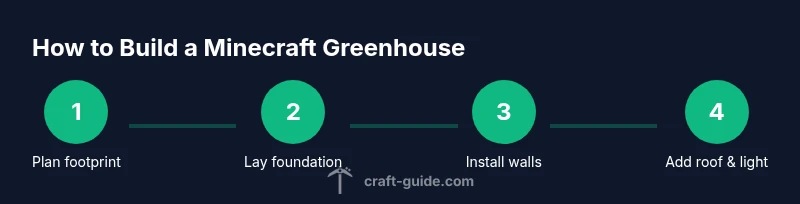
Start by clearing a flat area and marking the footprint with a durable base block. Build a rectangular foundation aligned to cardinal directions for predictable lighting. Erect vertical supports at regular intervals and connect them with horizontal beams to form a lightweight frame. Use planks and slabs to create walkways and elevated beds, leaving room for irrigation channels. Ensure corners are square and doors are positioned for easy access from both sides. This section forms the backbone of your greenhouse; a solid frame reduces bowing and wobble during long-term play. Craft Guide emphasizes checking symmetry and fit before adding the walls so you don’t waste materials later.
Roof design, glass installation, and sealing
A flat or gently sloped roof works well in most climates and makes drainage straightforward. Install glass panes or blocks in a consistent pattern, starting at the corners and working inward to avoid gaps. For extra heat retention, consider a partial glass block roof with a skylight using transparent blocks that still allow light in. Seal edges with a border of solid blocks to prevent mobs from entering through small cracks. Check for stray gaps and fill them with additional panes or a temporary scarf. As you complete the roof, test the airflow by opening vents and walking through the space to ensure there are no bottlenecks.
Planting, irrigation, and automated farming
Raise beds along the sides and leave a central aisle for farming. Hydration matters: farmland tiles require water within 4 blocks, so plan an irrigation layout that keeps beds moist without overwatering. Use a simple water channel system or small waterlogged blocks at bed edges. Place crops in easy-to-reach rows, enabling quick planting and harvesting without stepping on soil. Consider automation with a simple dispenser-based watering system or a daylight-sensor-powered lighting cycle that aligns with growth stages. Craft Guide notes that automation reduces repetitive work and helps you maintain consistent yields, especially when expanding your greenhouse.
Aesthetics, protection, and finishing touches
Finish with a cohesive exterior that matches your base’s theme: glass walls framed in wood for a cozy vibe, or glass and stone for a modern look. Add signage and organized storage nearby to keep seeds, crops, and tools accessible. To protect your crops, place lighting to deter hostile mobs and consider a doorstep or fence perimeter for added security. Finishing touches like decorative pots, planters, or vines can elevate the design while making maintenance straightforward. Craft Guide’s recommendation is to iterate on the look after you’ve tested harvest cycles; a few tweaks can dramatically improve both usability and enjoyment of the space.
Common mistakes and quick fixes
Common mistakes include overcomplicating the roof design, underestimating space, and neglecting ventilation. Quick fixes involve adding a simple vent system, reducing wall complexity to improve light diffusion, and ensuring the irrigation network reaches all beds. Keep doors accessible on both sides to maintain smooth movement during harvest. If growth slows, check light levels and ensure farmland is hydrated. For a more polished finish, go back and align all edges for symmetry and ensure materials have a consistent color scheme. Craft Guide recommends a short post-build walk-through to catch issues early.
Maintenance and upgrades over time
Your greenhouse benefits from periodic upgrades as you gather more resources and unlock new blocks. Consider upgrading from glass panes to thicker glass for insulation or adding powered lighting features to extend growing windows during longer nights. If you expand, preserve the original footprint while extending the central aisles and beds. Regularly inspect vents and doors to keep airflow steady and pests away. Craft Guide’s long-term advice emphasizes planning for future growth and keeping a maintenance log so you know what to replace or upgrade first.
Tools & Materials
- Glass panes(For walls and windows; aim for even coverage.)
- Glass blocks(Use sparingly for corners or skylights.)
- Wood planks (oak/spruce)(Frame and interior features; match color to theme.)
- Doors (wooden or iron)(At least two access points for cross-ventilation.)
- Fences or walls(Lightweight boundary; can deter mobs near beds.)
- Trapdoors(Useful for adjustable vents and shading.)
- Glowstone / Lanterns / Sea lanterns(Reliable light source that won’t burn crops.)
- Redstone torches or daylight sensors(Automate lighting and airflow.)
- Hoe(Prepare farmland beds; ensure irrigation nearby.)
- Water bucket(Hydrates farmland; plan a cornered distribution.)
- Dirt / Farmland blocks(Primary growing surface; ensure enough area.)
- Stone bricks or cobblestone(Foundation and perimeter reinforcement.)
Steps
Estimated time: 90-180 minutes
- 1
Choose location and footprint
Mark a flat zone with clear ground. Sketch a rectangular footprint that fits your storage and farming needs. Consider sun exposure and proximity to water or other farms for efficient resource management.
Tip: Use grid coordinates on the ground to keep edges straight and ensure symmetry. - 2
Gather essential materials
Collect glass panes, wood planks, doors, lighting, and farmland blocks. Make sure you have enough to cover walls, a roof, beds, and a central path. Pre-craft and sort items to speed up the build.
Tip: Organize items in chests by category to minimize trips during building. - 3
Lay the foundation and frame
Flatten the footprint and place a sturdy foundation with stone bricks or cobblestone. Erect vertical supports at regular intervals and connect with horizontal beams to form a stable frame.
Tip: Check corners with a <footnote>2-point check</footnote> to guarantee right angles. - 4
Install walls with glass
Fill walls with glass panes, leaving space for doors. Alternate panes to control glare and ensure consistent light levels across beds.
Tip: Start from a corner and work toward the opposite corner for clean seams. - 5
Add doors and ventilation
Place at least two doors on opposite sides for cross-ventilation. Install vents or trapdoors along the roof to regulate air flow.
Tip: Test airflow by standing inside and checking for drafts during day-night cycles. - 6
Set up lighting and irrigation
Position glowstone or lanterns to maintain light level 9+ above beds. Create a water source or irrigation channels near beds to hydrate farmland.
Tip: Keep lights high enough to avoid shading the crops. - 7
Plan and plant crops
Arrange crops in orderly rows with quick-reproducing varieties in easy reach. Use farmland near paths to minimize walking distance during harvest.
Tip: Group crops by harvest cycle to optimize workflow. - 8
Add finishing touches
Enhance aesthetics with a consistent color palette and clean lines. Add signage and storage nearby for seeds and tools.
Tip: Apply a consistent border or trim to unify the design.
People Also Ask
What is the purpose of a Minecraft greenhouse?
A Minecraft greenhouse provides a controlled space for faster crop growth and protection from mobs. It optimizes light and temperature settings to sustain year-round farming in most biomes.
A greenhouse helps crops grow faster and stay safe from mobs, so you can harvest more reliably.
What materials work best for greenhouse walls?
Glass panes are common for walls due to light transmission, while frames can use wood or stone for durability and style. Glass blocks can be used for corners or skylights to improve insulation and visibility.
Glass panes are usually best for walls, with wood or stone frames for support.
How can I ventilate a greenhouse effectively?
Install operable vents or trapdoors and consider a simple roof opening. Cross-ventilation helps regulate heat and humidity, keeping crops healthy.
Add vents on opposite sides and a roof opening to let hot air escape.
Can I automate lighting in a greenhouse?
Yes. Use daylight sensors or timers with glowstone or lanterns to maintain consistent light levels without manual input.
You can automate the lights with a daylight sensor so crops get light when they need it.
Which crops grow best indoors in Minecraft?
Wheat, carrots, and potatoes are reliable early crops; melons and pumpkins offer higher yields but require more space and planning.
Wheat, carrots, and potatoes are easy to start with, while melons and pumpkins give bigger harvests later.
How do I protect my greenhouse from mobs?
Use solid walls, well-lit interiors, and secure doors. A simple perimeter fence or gated entrance can deter roaming mobs.
Keep the space well-lit and closed off from mobs with sturdy doors.
Watch Video
The Essentials
- Plan the greenhouse footprint before building.
- Glass panes and proper ventilation maximize growth.
- Automation reduces repetitive farming tasks.
- Maintain a consistent aesthetic for easier maintenance.