Minecraft Bakeries: Step-by-Step Build Guide
Learn to design, build, and decorate inspiring Minecraft bakeries that fit villages, with practical layouts, materials, interior design, and simple automation ideas to keep players engaged.


Goal: design and build a cozy, functional Minecraft bakery that fits your village, supplies fresh bread and pastries, and looks inviting. You'll plan the layout, choose materials, decorate the interior, and implement a simple production line (manual or redstone-activated) to demonstrate food processing. This guide covers design, materials, steps, tips, and safety considerations for beginners to advanced builders.
What is a Minecraft bakery?
A Minecraft bakery is a themed building that centers on bread, pastries, and sweets crafted within the game. It combines aesthetic charm with practical gameplay elements—display counters, ovens, ingredient storage, and a simple production flow—to make a believable, immersive space. The concept is flexible: your bakery can be purely decorative, partially functional, or fully interactive, offering villagers a place to trade for food or for players to role-play a village economy. When we talk about minecraft bakeries, we’re focusing on smart layouts, materials, and decorative touches that feel authentic without being overbearing. In this guide you’ll learn how to balance form and function, so your bakery looks great and serves a clear purpose in your world.
Design principles for a bakery
Successful Minecraft bakeries rely on a few core design principles that translate well across skill levels. First, establish a cohesive theme and color palette—think warm browns, creams, and soft yellows for a cozy, inviting vibe. Second, ensure efficient flow: entrance, display counters, baking area, storage, and a small seating nook should feel logical and accessible. Third, use lighting to set mood and keep mobs away; a mix of lanterns, glowstone, and stained glass creates depth. Fourth, balance scale: don’t overwhelm the street with a massive facade; a compact, well-proportioned footprint often reads as more appealing. Finally, incorporate modular elements so you can expand later without rebuilding from scratch.
Planning your bakery layout
Layout is the backbone of a great bakery. Start with a simple floor plan: an exterior facade that invites customers, a central display area, a dedicated oven zone, and a back room for storage and ingredient farming. Place the wheat farm or storage nearby to simulate a steady supply chain while keeping gameplay convenient. Integrate a small seating area or a signboard advertising daily specials to add personality. Use zones to separate functions: display (for wheat, bread, and pastries), baking (furnaces and ovens), storage (chests and barrels), and checkout (villager trades or player purchases). Consider accessibility: wide doors, clear pathways, and distinct lighting cues help players navigate.
Building techniques and materials
Material choice sets the tone of your bakery. For a classic look, blend stone bricks, smooth stone, and quartz accents to evoke a traditional oven hall. Use glass panes for storefront displays and counters to show your items. Build counters with slabs and stairs to create comfortable heights for interaction. Ovens can be represented with furnaces or smokers behind display counters—use signs to label items. Lighting should be warm and even, with lanterns or glowstone tucked above shelves to minimize shadows. Floors can be a checkerboard pattern of light and dark blocks to add visual interest without overwhelming the space. A well-built bakery uses consistent detailing across exterior and interior to feel cohesive.
Functional features: ovens, stalls, and production lines
Functionality brings your bakery to life. Ovens (furnaces) should be placed behind a display counter with easy access for players to imagine baking. Pristine bread, cookies, cakes, and pastries can be represented with item frames and signs labeling fake items. A basic production line can be simulated by connecting a wheat farm to a crafting area. For realism, use a chest-and-hopper system to simulate ingredient flow and a crafting table to produce bread or cake. If you want speed, add a smoker for hot pastry visuals and use redstone to create a simple door or gate that signals when fresh items are ready. Remember: the goal is intuitiveness and charm, not industrial complexity.
Aesthetics and interior decorating
A bakery’s interior should welcome shoppers and tell a story. Use warm wood accents for furniture and display tables, with soft lighting and decorative blocks such as hay bales, item frames, and banners. Signage helps players understand what’s on offer, while subtle color accents (cream, tan, and brown) create a cozy atmosphere. Consider a small seating nook with stools made from stairs and slabs. Plants, posters, and a friendly counter design give the space personality. Keep clutter to a minimum to maintain a clean, shop-like feel. Finally, incorporate seasonal details or village-friendly motifs to make your bakery a memorable hub in the world.
Redstone, automation, and economies
Basic automation can elevate a bakery without overwhelming players. Use hoppers and chests to simulate ingredient flow and simple item routing. A single redstone clock can trigger decorative signals (like a display sign changing day/night). If you’re comfortable with more complex builds, consider a minimal vending system that dispenses bread when a player places wheat in a chest; this demonstrates a functional economy without requiring advanced circuits. Always test automation on a separate world to prevent accidental loss of items, and keep the setup modular so you can expand later.
World-building: integrating your bakery with villages
A bakery thrives when it feels integrated with its community. Position your bakery near a village or town center, aligning paths and bells with nearby houses for realism. Use villagers as workers or customers to simulate trade dynamics; assign a job site block to create a sense of purpose. Consider adding a flour mill or garden to supply ingredients, with signs explaining supply lines. In a larger world, connect the bakery to markets, farms, and other commerce hubs to create a believable economy. Remember to tailor the scale of your bakery to the size of your world for a natural fit.
Tools & Materials
- Stone bricks(For oven walls and arches)
- Smooth stone(Flooring or pathways)
- Glass panes(Display windows)
- Oak wood planks(Countertops, furniture)
- Furnaces(Ovens for aesthetics and bread baking)
- Smokers(Alternative display ovens for visuals)
- Crafting tables(Bread crafting area)
- Chests(Ingredient storage and display)
- Hoppers(Conveyor feel for ingredients)
- Wheat(Ingredient supply for bread)
- Lanterns(Ambient lighting)
- Wooden stairs(Counter edges and seating)
- Wooden slabs(Countertops and display shelving)
Steps
Estimated time: 2-4 hours
- 1
Define concept and scope
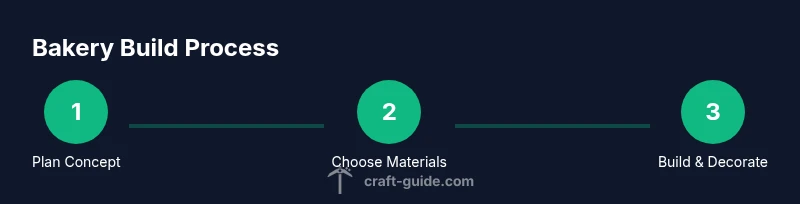
Start with a clear concept: Will your bakery be rustic, modern, or whimsical? Sketch a rough floor plan on paper or in-game using grid lines to set dimensions and zones. Decide which items you’ll display and how to simulate baking using crafting and furnaces.
Tip: Draft a quick one-page plan showing layout, color palette, and key features. - 2
Choose footprint and exterior
Pick a compact footprint that matches nearby structures. Build the outer walls with your chosen materials, add a welcoming entrance, and create storefront windows to showcase bread frames. Consider symmetry for curb appeal.
Tip: Use slabs for a raised display counter to create a professional look. - 3
Lay out zones and traffic flow
Set up distinct zones: display counter, oven area, ingredient storage, and seating. Ensure easy movement between zones with clear paths and minimal backtracking. Mark staff-only areas if you want role-play elements.
Tip: Place a visible path from entrance to counter to guide players. - 4
Construct the display and counter
Create an appealing display with glass panes and item frames. Add a counter using stairs and slabs at comfortable height. Install furnaces behind the display as ovens and label items with signs to mimic a real bakery menu.
Tip: Keep the display at eye level; 2-3 blocks high works well. - 5
Set up production and storage
Position a crafting area for bread and pastries near the ovens. Add chests and barrels for flour, wheat, and sugar if you use vanilla crafting recipes. Use hoppers to simulate ingredient flow where you want automation.
Tip: Link a small wheat farm directly to the storage to visualize supply chains. - 6
Decorate interiors and signage
Add warm lighting, seating, banners, and posters to create atmosphere. Use color accents that match your palette and place a little seating nook if space allows. Signs describing specials help immersion.
Tip: Keep clutter low to preserve a clean, store-like feel. - 7
Test lighting and safety
Check that lighting covers all zones and mobs cannot spawn inside at night. Ensure pathways stay clear and that storage areas are accessible. Run a quick test run of a bread-crafting cycle to confirm flow.
Tip: Use lanterns at corners for even illumination without harsh shadows. - 8
Polish and expand
Review the build for consistency, polish corners, and add small details like signage or a little flour-dusted floor. If you want, add additional pastries or seasonal decorations and consider expanding the storefront later.
Tip: Scale up gradually; modular design makes future expansion easy.
People Also Ask
What defines a Minecraft bakery?
A Minecraft bakery is a themed build centered on bread and pastries, combining display, cooking-related blocks, and a simple production flow. It can be purely decorative or functional within your village economy.
A Minecraft bakery is a themed build focused on bread and pastries with displays and simple production flow; it can be decorative or functional in your village.
Can I bake bread using ovens in a bakery build?
Bread is crafted from wheat in the crafting table, not baked in a real 'oven' in-game. Ovens and smokers are decorative supports that enhance the bakery look and illustrate the baking theme. You can simulate production with a nearby wheat farm and a crafting station.
Bread is made with wheat in a crafting table, not in ovens, but ovens and smokers can decorate and illustrate the baking theme.
What materials work best for bakery aesthetics?
Stone bricks, smooth stone, and glass panes create a warm, classic feel. Add wood accents, warm lighting, and decorative blocks like banners or signs to reinforce the bakery vibe.
Stone bricks and glass create a warm, classic look; add wood accents and soft lighting for a cozy bakery vibe.
How can I add simple automation without heavy redstone?
Use chests, hoppers, and crafting tables to simulate ingredient flow and production. Keep automation modular and test in a sandbox world before integrating into your main map.
Try simple automation with chests, hoppers, and crafting tables; keep it modular and test first.
How do I connect a bakery to village life or traders?
Position the bakery near villager houses and a market area to create a sense of place. Use villager jobs or signs to simulate staff, and tie ingredient production to nearby farms for believable supply chains.
Place the bakery near villagers and a market, and simulate staff with villagers and signs.
Is a bakery build possible in survival mode?
Yes. A bakery build is very doable in survival with timber, stone variations, and simple farming. Plan resources, place functional blocks, and avoid over-reliance on rare materials. It’s a satisfying project for builders of all levels.
Absolutely. Survive-friendly materials and farming basics make a great bakery project.
Watch Video
The Essentials
- Plan zones before building to ensure smooth flow.
- Choose materials that match your bakery theme.
- Ovens and counters should be accessible and visually appealing.
- Lighting and signage elevate the bakery ambiance.
- Modular design enables easy future expansion.