Brick House in Minecraft: A Practical Build Guide
Learn how to design and build a sturdy brick house in Minecraft with practical steps, material choices, and biome-friendly details for durable, aesthetic shelter. This guide covers planning, foundations, walls, roofing, interiors, exteriors, and finishing touches.


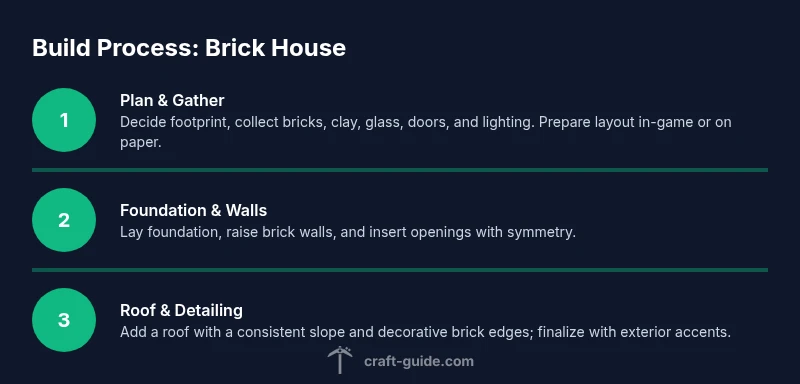
Build a brick house in Minecraft by planning size and style, gathering brick blocks and related materials, laying a solid foundation, raising walls, choosing a roof, and finishing with interior and exterior details. You’ll get step-by-step actions and time estimates that apply to both Survival and Creative modes, scalable from small cottages to grand mansions.
Why a brick house in minecraft matters
A brick house in minecraft offers a compelling blend of durability, texture, and classic aesthetic. While wooden structures can come together quickly, brick blocks provide a sturdy surface that stands up well against weathering and mobs in many biomes, and they look equally striking in medieval and modern designs. This section sets the tone for a thoughtful build plan that balances form and function. Expect long-term rewards: fewer repairs, more texture variety, and a structure that layers nicely with other materials like stone, concrete, or glass. By starting with brick as the core material, you establish a durable shell that guides your later architectural decisions.
Crafting a brick-based home also encourages deliberate layout choices. You’ll plan room sizes, door and window placements, and roof lines that complement the block’s blocky geometry. The key is to think in terms of modular sections—foundation, walls, roof, and finishes—so you can adjust the footprint without losing proportion. The Craft Guide team emphasizes that consistency in brick usage yields a cohesive look across both interior and exterior spaces.
Planning your brick house: size, style, and location
Before placing a single brick, define the project’s scope. Decide whether you want a compact cottage, a sturdy manor, or a modern brick block with large glass accents. Sketch a simple footprint on graph paper or in your preferred in-game planning tool. Consider biomes and terrain: a raised foundation on a hillside reads strong and dramatic, while flat plains require careful grading to avoid awkward step-offs. Lighting and drainage matter too—ensure your design channels water away and uses torches or lanterns to prevent mob spawns. Align your footprint with surrounding features such as pathways, gates, and nearby farms to create a believable, lived-in build.
The size choice drives material needs, interior room planning, and roof style. A common starter size is a 9x9 or 11x11 footprint with 1-block-wide walls, which offers plenty of room for basics while staying manageable for beginners. If you’re optimizing for survival, plan for functional spaces like a chest room, a furnace hall, and a bedroom with a bed and storage. For creative builds, you can push to 15x15 or larger with more complex detailing.
As you finalize the plan, select a roof type that complements your brick palette. Gabled roofs pair well with brick blocks for a classic silhouette; flat roofs give a modern edge; and stepped or crenellated styles lean medieval. The important part is consistency: choose a single roof language and reuse it across your build to keep the design cohesive.
Gathering materials and crafting bricks
The heart of any brick house is, of course, bricks and brick blocks. In Minecraft, you craft bricks by smelting clay balls in a furnace to create bricks, then place four bricks in a 2x2 pattern to form a brick block. You’ll want a steady supply of clay from shallow rivers and lakes, plus a reliable source of fuel such as coal or charcoal for smelting. In addition to brick blocks, you’ll need doors, glass panes for windows, wooden support elements, and solid stone or cobblestone for foundations and staircases.
A practical material plan includes: brick blocks for walls, stone or cobblestone for foundation accents, glass panes for windows, oak or spruce wood for doors and frames, and lighting blocks like lanterns or torches. If you want extra texture, consider mossy or cracked brick variants for weathered sections, and decorative brick stairs for archways or window sills. Plan upgrades like planters, balconies, or porches using compatible blocks to maintain the brick aesthetic while expanding the build’s character.
Laying a foundation and choosing a footprint
Foundation work matters as much as the walls above it. Start by marking the footprint with solid lines and placing a shallow trench to mitigate ground moisture. A raised foundation—one to two bricks high—helps protect against underground mob activity and creates a visually strong base. Use solid blocks like stone bricks or cobblestone at corners for extra stability. Ensure that your foundation is level across the entire perimeter to avoid uneven walls.
Corner alignment is crucial: use compass directions to keep the house square, then lay out interior walls to reflect room sizes you planned. A simple approach is to build the outline with bricks first, then add a row of stone or cobblestone along the base for contrast. If you’re building on uneven terrain, level the site gradually and consider adding a small terrace or stair-step path to connect to existing terrain. This reduces slope issues and makes the transition from ground to interior smooth.
For Survival mode, consider leaving room for a basement or storage loft, which can be accessed via stairs and improves organization. In Creative mode, you can experiment with multiple foundation heights to introduce depth and shadow lines that enhance the brick’s texture.
Building walls: openings, symmetry, and texture
Walls form the building’s defining character. Start with even wall heights, then plan door and window openings with precision. A single door centered on a wall can create a clean, balanced look, while multiple windows broken into a grid pattern adds rhythm. Use a combination of brick blocks and slight variations (like brick stairs for alcoves or arched window frames) to introduce texture without breaking the brick aesthetic.
Texture is key: alternate brick types (normal, cracked, mossy) sparingly to prevent visual overload. A practical trick is to frame windows with a thin border of stone or cobblestone to add depth, then inset the window with glass panes. Remember to leave space for interior walls if you intend to partition rooms. Using symmetry for the primary elevations makes the structure feel deliberate and timeless, while small, offset details (like a corner column) can keep it visually interesting.
Finally, test the interior flow by walking through the space. If doors or hallways feel cramped, adjust the wall thickness or window placement. A well-executed wall layout supports comfortable movement and makes the brick shell feel cohesive.
Roofing options for brick houses
Roof design dramatically influences the house’s silhouette and overall feel. A classic gabled roof with brick accents provides a timeless, sturdy look that pairs well with brick walls. You can use brick stairs and slabs to create decorative edges and eaves, which helps cast pleasing shadows and adds texture from different angles. For something more modern, a flat roof with a slight overhang and glass skylights can create a bright interior and a contemporary exterior.
Another option is a half-hipped or dormered roof, which adds architectural interest without dramatically increasing building time. If you want weathered effects for a rustic vibe, consider a mix of brick patterns with wood or stone accents along the roofline. Whichever roof style you choose, ensure consistent slope and edge detailing to maintain a polished finish that complements the brick blocks.
Interior layout ideas to maximize space
With walls up, interior planning becomes the stage for practicality and comfort. Create zones for a living area, kitchen, storage, and a small workshop. Use furniture blocks, chests, and shelves to define each space without cluttering the room. A compact layout with a central corridor can maximize usable wall space for storage and display.
Lighting is essential: place torches or lanterns at regular intervals and incorporate skylights or glass blocks to brighten deeper rooms. Consider a raised floor for a storage cellar or a loft with a ladder for vertical space. If you’re playing in Survival, prioritize functional layouts—an accessible storage hub near the entrance or corridor reduces time spent searching for items. In Creative mode, you can enjoy grander, open-plan spaces with floating shelves and expansive ceilings.
Exterior detailing and landscaping
Exterior details bring your brick house to life. Add texture with decorative brick patterns, cracks, or moss accents on corners and column bases. A brick path leading to the front door, bordered by hedges or low fences, creates a welcoming approach. Planters with flowers or shrubs can soften the brick’s heaviness and integrate the home into the landscape.
Lighting along the path and at entryways improves safety and ambiance, especially at night. If you have space, consider a small patio or balcony using brick slabs and fence posts. Water features or terraced gardens nearby can further anchor the house in its surroundings, while retaining the brick aesthetic through carefully chosen materials (stone, wood, and glass) for contrast.
Variations by biome and common mistakes
Different biomes influence color and texture choices. In desert biomes, lighter mortars or sand-based accents can complement the sandy ground; in forests, mossy bricks and darker wood frames blend with the natural palette. Snowy biomes benefit from extra roof overhangs to manage snow buildup and create deep shadows, while wet biomes may favor water-themed textures or blue glass accents.
Common mistakes include overusing the same brick pattern, neglecting interior lighting, and choosing too-flat roofs that look boxy. Avoid empty corners by adding small alcoves or decorative brick steps. Finally, always plan for future expansion: align doorways and wall sections so you can add wings or extra floors as your Minecraft world evolves. Craft Guide’s approach emphasizes modularity, texture, and thoughtful placement to deliver a brick house that looks intentional in any setting.
Tools & Materials
- Wooden pickaxe(Essential for gathering stone and early brick components; upgrade quickly to iron or better.)
- Stone pickaxe(Faster mining; helps with stone foundations and decorative blocks.)
- Crafting table(Needed to craft bricks, doors, and other components.)
- Furnace(Smelts clay into bricks; plan for coal or charcoal as fuel.)
- Clay balls(Source material for bricks; collect from riverbeds and shallow water.)
- Brick blocks(Primary wall material; crafted from bricks.)
- Glass panes(Windows; pair with frames for a clean look.)
- Doors (wooden or iron)(Entry points and interior flow; choose style to match theme.)
- Stone or cobblestone(Foundation accents and edge detailing for contrast.)
- Torches or lanterns(Lighting to prevent mob spawns and enhance ambiance.)
- Wood planks(Interior accents and furniture frames.)
- Brick stairs(Roof detailing and decorative edges.)
Steps
Estimated time: 60-180 minutes in-game time
- 1
Plan and gather materials
Review your blueprint, list required bricks, clay, glass, wood, and lighting; gather or craft items so you’re ready to build without frequent trips back to the storage room.
Tip: Double-check window placements before starting the foundation. - 2
Lay the foundation
Mark the footprint, dig a shallow trench if needed, and set a level foundation using stone or cobblestone; ensure corners are square for proper alignment of walls.
Tip: Use a level line or string to keep walls true to the footprint. - 3
Raise the walls
Stack brick blocks to the planned height, leaving door and window openings; consider alternating brick textures for visual interest.
Tip: Keep wall heights consistent on all sides for a balanced look. - 4
Install openings and interior partitions
Place doors and windows, add interior walls to create rooms, and set up a basic inventory area or storage closet.
Tip: Place lighting near storage to avoid dark corners. - 5
Build the roof
Choose a roof style (gable or flat) and construct with brick stairs or slabs; ensure roof overhangs to shed rain and mobs.
Tip: Edge detailing with bricks adds character and depth. - 6
Finish interior and lighting
Add flooring, furniture, chests, beds, and proper lighting; ensure accessibility and flow between spaces.
Tip: Use glow-in-the-dark blocks sparingly for atmosphere. - 7
Exterior detailing and landscaping
Add planters, fences, a path, and landscaping features to integrate the house with the environment.
Tip: Reflect the surrounding biome in color choices and textures. - 8
Final checks and variations
Walk through the build to spot texture repeats or structural gaps; plan future wings or extensions if desired.
Tip: Document changes to apply consistent growth in future builds.
People Also Ask
What is the quickest way to start a brick house in Minecraft?
Begin with a small footprint to practice brick placement, smelt clay into bricks, and lay a simple rectangle with a gabled roof. As you gain resources and confidence, expand outward.
Start small, get comfortable with brick placement, then scale up.
Can brick houses be built in Survival mode easily?
Yes. In Survival, keep a steady clay source and fuel supply, plan a practical layout, and upgrade tools as you progress. A raised foundation helps protect from mobs and terrain issues.
Absolutely—with planning and resource management, brick houses are very doable in Survival.
What blocks work well with brick to add texture?
Mossy bricks, cracked bricks, and stone accents create contrast. Glass panes for windows and wood accents for trims blend brick with natural textures.
Try a mix of brick textures and stone accents for depth.
How do I keep mobs from spawning inside my brick house?
Light all interiors with torches or lanterns, seal off unused entrances, and use doors or fences to regulate access. Consider a well-lit courtyard to deter spawning.
Light everywhere and close off unneeded gaps.
Which roof style pairs best with brick blocks?
Gable roofs provide a classic look that complements brick walls; flat roofs offer a modern contrast. Choose a consistent slope and overhang for balance.
A gable roof matches brick’s classic vibe; flat roofs suit modern builds.
How can I scale a brick house for a larger build?
Plan a modular footprint and reuse the brick pattern across wings; ensure roofing and interior layouts maintain flow as the structure grows.
Plan modules and reuse patterns to keep the larger build cohesive.
Watch Video
The Essentials
- Plan thoroughly before placing bricks
- Foundation quality drives durability and alignment
- Texture and texture patterns improve brick realism
- Choose roof style early to guide wall heights
- Use lighting to protect indoors and enhance ambiance