How Big Is The End In Minecraft: A Practical Size Guide
Explore how big the End is in Minecraft, including dimensions, island distribution, seed variation, and practical tips for exploring and building in the End.


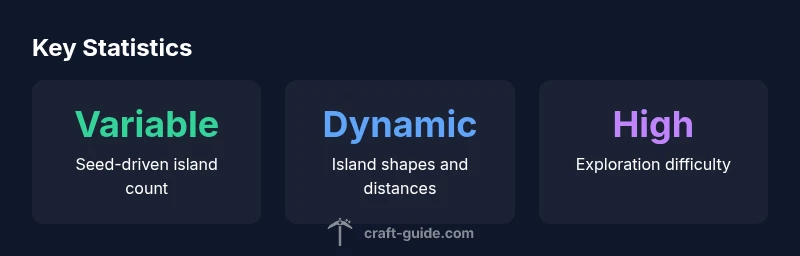
There is no fixed End size in Minecraft. The End is seed-dependent, with a central island and scattered outposts whose number and spacing vary by world seed. In practical terms, how big is the end in minecraft depends on your seed, and exploring routes, city spawns, and bridges will differ from world to world.
What is the End, and why size matters
According to Craft Guide, the End is a separate Minecraft dimension characterized by a void and floating islands. When players ask how big is the end in minecraft, there isn't a single fixed size. The End's dimensions are seed-generated, meaning two worlds with different seeds can look dramatically different from one another. This variability influences everything from portal placement to End City spawns and travel planning. In practice, most seeds include a central hub island and several peripheral islands, connected by natural corridors or by the player's flight paths after obtaining an Elytra. Understanding that there isn't a universal size helps you set realistic goals for exploration, resource gathering, and map-building within this dimension.
How big is the end in minecraft? Size, layout, and seed variability
The End's layout is not a neat cube or sphere; it's a stitched tapestry of islands floating in a vast void. The central island often acts as a sturdy anchor for early exploration, while additional islands form a scattered cluster around it. Seed variability means that the number of islands, their shapes, and the spacing between them can differ widely between worlds. Because there is no fixed boundary you can reference, the total usable area is effectively determined by your seed and the generated island network. For players surveying a map or planning a base, this means you should expect to adjust your plans once you locate your first End gateway and assess the islands that lie farther away.
Seed variation and practical implications for explorers
Seeds determine how many islands appear, where they spawn, and how far apart they are. This makes the End a dynamic environment rather than a static playground. Practical implications include the need to map islands as you go, plan long flights with an Elytra, and prepare for varying distances to End Cities. A common approach is to locate the central island, then chart a path outward to nearby clusters, establishing beacon-like markers or build bridges to shorten future treks. By embracing seed-driven variability, you can optimize resource collection, determine where to locate End Cities, and minimize time spent wandering the void.
Building and navigating the End: tips for efficient exploration
Starting with flight equipment is essential. Craft Guide recommends acquiring an Elytra and a sturdy set of armor before leaving the central island. Place markers or pillars at regular intervals to gauge distance between islands, and consider setting up gateways or temporary platforms for quick travel. When exploring, bring plenty of ender pearls and building blocks to cross gaps. Use compass-like coordinates or keep an in-world map of local islands to avoid losing your way. Finally, remember that End Cities tend to spawn on specific islands; mapping your route helps you find them faster.
Debunking myths about End size
One common myth is that the End has a rigid, fixed boundary. In truth, the End's "size" is seed-dependent and variable. Another misconception is that you must travel endlessly to reach new islands; often you find a few clusters within reasonable distance from the central hub. In addition, some players believe there are no large islands; actually, island sizes vary widely between seeds. By clearing up these myths, players can plan smarter routes and avoid wasted flights.
End size and layout overview
| Aspect | Description | Notes |
|---|---|---|
| End dimension overall size | Seed-dependent, not fixed | Size varies by seed and world generation |
| Main End island size | Varies by seed | Central island often the anchor; other islands differ in scale |
| Seed impact | Seed determines island shapes and spawn points | Expect high variability between seeds |
People Also Ask
How big is the End dimension in Minecraft?
There is no fixed size. The End is seed-dependent with islands scattered across a void; the central island is usually the largest anchor, but overall area varies by seed.
The End size isn’t fixed—it's seed-dependent and varies between worlds.
Do all seeds have multiple End islands?
Most seeds generate several End islands, but the number and layout vary widely by seed.
Most seeds have several islands, but the exact count varies.
Is the End bigger than the Nether?
Size isn’t a direct compare like volume. End island layouts can spread across a larger area in some seeds, but it’s seed-dependent.
It’s not a straightforward size comparison; End layouts vary by seed.
How can I explore End size efficiently?
Equip an Elytra, plan routes between islands, map local spawns, and set up quick travel points to reduce backtracking.
Get wings, map as you go, and use markers to navigate.
Do I need to map End locations to reach End Cities?
Yes. End Cities tend to spawn on certain islands; mapping helps you locate them faster and plan routes accordingly.
Mapping helps you find End Cities more efficiently.
“The End's size isn't a single value you memorize; it's a seed-driven landscape that rewards careful mapping and flexible planning.”
The Essentials
- Recognize that End size is seed-dependent and variable.
- Expect a central hub island with scattered outposts.
- Plan routes before traveling to minimize void-walking.
- Use Elytra and markers to map islands efficiently.