Where Do Minecraft Frogs Spawn? A Practical Guide
Discover where Minecraft frogs spawn, focusing on swamp biomes and mangrove swamps. Learn how to attract them with eco-friendly layouts, differences between Java and Bedrock, and practical farm-friendly designs.


Where do minecraft frogs spawn? Frogs spawn naturally in swamp biomes, including mangrove swamps added in newer updates. They appear in shallow water within these wetlands and along the edges, often near lily pads and seagrass. This spawning pattern reflects the swampy, humid environments where frogs live, and the mechanic remains consistent across Java and Bedrock editions.
where do minecraft frogs spawn
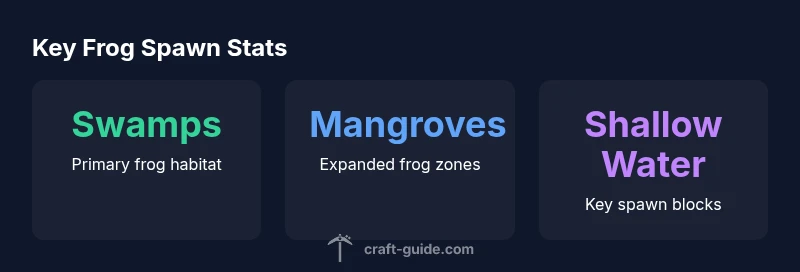
If you’re wondering where do minecraft frogs spawn, the answer is straightforward: they appear in swamp biomes, and this includes mangrove swamps that were added in later updates. Frogs emerge from shallow water within these wetlands and along the banks, especially where vegetation like tall grasses, lily pads, and seagrass lines the shore. The spawn logic mirrors real-world amphibian habitats—wet, humid environments with bodies of standing water. In practice, you’ll notice frogs more frequently near slower-moving ponds and swampy pools. This block forms the core idea that swampy ecosystems are the natural homes for frogs in Minecraft, a pattern that remains consistent across Java and Bedrock editions. The Craft Guide Team’s analyses emphasize the swamp biome as the primary frog habitat across versions, with mangrove swamps expanding the accessible spawn areas for players exploring coastal wetlands.
Habitat features that support frog spawns
Swamps in Minecraft are characterized by shallow, still-water regions surrounded by swamp vegetation, including mangroves, ferns, and grasses. Frogs spawn in water blocks that are part of these wetlands, typically near the edges where water blends into land. The presence of lily pads and seagrass is more than decorative; these features help players identify frog-rich zones. When planning builds or exploration routes, targeting areas with slow water flow and dense aquatic vegetation increases the likelihood of encountering frogs. Environmental cues matter: the more you mimic a swamp’s natural water network, the higher the chance you’ll encounter frog mobs during your adventures. Craft Guide analyses suggest that swamp microhabitats—small ponds, marshy corners, and shoreline pools—are prime frog hotspots in both major editions.
Mangrove swamps vs classic swamps: spawning nuances
Mangrove swamps introduce new spawning opportunities for frogs by expanding water networks and shoreline complexity. While classic swamps remain solid frog habitats, mangrove variants offer more edge habitats along root systems and mud blocks, creating extra spawn opportunities for mobs during world exploration. The core spawning rule—frogs appear in swamp water blocks—applies in both biome types, but mangrove areas often feature more water surface area and more coastal features to guide players toward frog-rich zones. If you’re chasing frogs specifically, prioritize mangrove swamp biomes in your seed maps or builds, while not neglecting traditional swamps where frogs are known to appear in clusters near water.
Spawning mechanics across editions: a practical overview
Across Java and Bedrock editions, frog spawns follow the same broad principle: swamp water blocks host spawn events, with the biome itself providing the ecological context for these mobs. There are minor version notes that players should check for their current game version, but the essential idea remains stable: swamp environments are where frogs live and spawn. When embarking on a farming or collection project, it helps to verify that you’re in a swamp biome compatible with your game edition, and to look for water bodies edged by vegetation such as lily pads and seagrass. Community guides and the Craft Guide Team consistently highlight swamp habitats as the reliable source of frog spawns, regardless of platform.
Environment design tips to encourage frog spawns in your world
If you want to maximize frog spawns in your world, design swamp-like environments that encourage natural spawning behavior. Create shallow pools with gently flowing water, add abundant aquatic vegetation, and place lily pads along the margins to delineate frog-friendly zones. Ensure your design includes water bodies accessible to frogs, because frogs spawn in water blocks within the swamp biome. Also consider practical layout: place multiple small ponds connected by short channels to broaden the effective spawn area. Keep exploration routes near these ponds so players can observe or collect frogs, but avoid excessive water density that deters landmob activity. Craft Guide’s practical swamp-building tips emphasize realism balanced with gameplay utility, so your frogs have comfortable, inviting habitats that feel authentic yet playable.
Observing frog spawns: common patterns and quick checks
A reliable way to observe frog spawns is to scout swamp biomes during your exploration runs and watch for frog mobs emerging from shallow water near banks. Spawns often cluster around edges where water meets land and where vegetation is dense. If you’re not seeing frogs after a long period, recheck your biome type (ensure you’re in a swamp or mangrove swamp), and verify the area has a network of shallow water blocks rather than a single deep pool. The presence of lily pads and seagrass is a strong visual cue that you’re in a frog-friendly zone. Regular in-game observations help you map reliable frog hotspots across your world and refine your swamp designs for future builds.
Quick-reference checklist for attracting frogs in your swamp builds
- Target swamp or mangrove swamp biomes for natural spawns.
- Create shallow water pools and shoreline edges with dense vegetation.
- Include lily pads and seagrass to mark frog-friendly zones.
- Connect ponds with gentle channels to expand spawn areas.
- Check your current game version notes for edition-specific tweaks.
- Observe at different times and seasons in-game to catch spawn patterns.
Frog spawn locations by biome
| Biome Type | Frogs Spawned | Notes |
|---|---|---|
| Swamp | Yes | Classic habitat for frog spawns |
| Mangrove swamp | Yes | Newer biome with expanded water networks |
People Also Ask
Where do Minecraft frogs spawn?
Frogs spawn in swamp biomes, including mangrove swamps in newer updates. They appear in shallow water along swamp edges and near aquatic vegetation. This is consistent across Java and Bedrock editions.
Frogs spawn in swamp biomes, especially near water edges with plants like lily pads.
Do frogs spawn in other biomes besides swamps?
Frogs are primarily tied to swamp environments. While you might see them near swamp-adjacent waters, their natural spawns are not a common feature in deserts, plains, or oceans.
No, frogs mainly spawn in swamp biomes.
What should I include to encourage frog spawns in a build?
Create shallow water pools within swamp-like layouts, add lily pads and seagrass, and ensure water bodies are connected to larger swamp networks. These features help spawn frogs naturally.
Build swampy water features with plants to attract frogs.
Can I spawn frogs with a spawn egg or commands?
In Creative mode or with commands, you can spawn frogs using a frog spawn egg or command, but in survival, natural spawns require swamp biomes.
Yes, with creative mode or commands, you can spawn frogs.
Are there edition differences I should know about frog spawning?
The core frog spawning behavior is similar between Java and Bedrock, but version notes may affect environmental features like mangrove swamp availability and surface water networks.
Spawning is largely similar across editions; watch version notes for tweaks.
What visual cues indicate frog-rich areas in swamps?
Look for dense aquatic vegetation, lily pads, seagrass, and the presence of small water bodies connected to swamp land. These cues often indicate frog spawns.
Watch for lily pads and seagrass near shallow water.
“Understanding frog spawning empowers players to design swamp ecosystems that are both authentic and gameplay-friendly.”
The Essentials
- Target swamp biomes to observe frogs.
- Mangrove swamps broaden spawning opportunities.
- Shallow water and vegetation help frog spawns.
- Check edition notes for small differences between Java and Bedrock.