Tips for Minecraft PvP: Essential Tactics and Loadouts
Master practical tips for Minecraft PvP with loadouts, movement, and timing. Learn gear, hotbar setup, arena tactics, and drills to boost your PvP performance.


By the end of this guide you will master tips for minecraft pvp that improve your win rate in arena and open-world fights. You’ll understand loadouts, melee and ranged tactics, sprint timing, and map control. According to Craft Guide, success comes from disciplined practice, deliberate timing, and smart gear choices across skill levels.
Core principles behind effective Minecraft PvP
In Minecraft PvP, you are not just swinging a sword; you are reading the map, predicting your opponent, and managing resources under pressure. The core principles of successful PvP are consistency, timing, spatial awareness, and gear discipline. The Craft Guide team emphasizes that even fast clicks won’t carry you if you misread a fight or mismanage your inventory. The most reliable players use a steady rhythm, deliberate decisions, and clean control schemes rather than frantic button mashing. In practice, this means balancing offense with defense, choosing moments to strike, and preserving resources for the critical clash. Remember: the best PvP players win not just by reflex, but by reading patterns, conserving health, and keeping a tight grip on your hotbar. For players aiming to improve, start with one concept—movement—and layer in gear and timing as you gain confidence.
- Build a basic mental model of engage, trade, and retreat
- Practice controlled bursts instead of constant spam
- Prioritize clean inventory management and quick item swaps
- Align practice drills with your preferred play style
According to Craft Guide, steady progress beats flashy, unsustainable bursts; the aim is sustainable improvement over time.
Choosing the right gear: armor, weapons, and enchantments
Your loadout is the backbone of every Minecraft PvP encounter. Armor quality, weapon type, and enchantments determine how much damage you absorb and how quickly you can deal it. Start with solid armor coverage and protection enchantments to reduce incoming damage, then add a weapon that matches your preferred range and attack cadence. In most situations, a sharp, reliable melee weapon paired with a bow or crossbow gives you flexibility for both jump-in duels and ranged poke. Enchantments like Unbreaking and Mending extend durability, while Protection on armor reduces overall damage from most attack sources. Potions and beacons are supplementary tools that can swing a fight when used at the right moment. Diamonds or Netherite gear typically provide the best balance of protection and durability for PvP, but a well-enchanted armor set on earlier materials can be enough for casual play. Craft Guide’s guidance here is to optimize for reliability and consistency first, then push toward higher-tier gear as you grow more confident.
- Protect your health with balanced armor across all slots
- Pair a strong melee option with a capable ranged alternative
- Prioritize essential enchantments (Protection, Sharpness, Power)
- Keep a few healing items or potions ready for clutch moments
A strong loadout reduces your decision fatigue mid-fight and makes your timing more predictable for both you and your opponent.
Movement and positioning: outmaneuvering enemies
Movement and positioning are the threads that tie gear, timing, and attack cadence together. Advanced players don’t rely on raw speed alone; they win by controlling space, forcing mistakes, and choosing when to engage. Use a combination of strafing (side-to-side movement), gentle positioning shifts, and occasional sprint bursts to bait hits and reset the clash. When you’re near walls or terrain features, use them to cut down your opponent’s escape routes and create favorable angles. Good PvP players also learn to initiate a fight when they have the best possible distance and line of sight, reducing the opponent’s ability to predict your next move. Practice recognizing openings, then capitalize with a swift, decisive strike followed by immediate retreat if you’re under pressure.
- Maintain a stable stance and avoid over-committing
- Use terrain to create angles and limit opponent options
- Time sprints to breach their defense, then pause to avoid giving them a read
- Keep attention on cooldowns and your own stamina; it matters in longer duels
As Craft Guide notes, movement is often the difference between trading hits and escaping with your resources intact.
Combat techniques: timing, strafing, and cooldown management
The heart of tips for minecraft pvp lies in hitting with precision while managing your cooldowns. After the swing cooldown window closes, you have a window to land a faster follow-up; learning this rhythm prevents wasted hits and broken combos. Straffing remains crucial—moving laterally while swinging makes it harder for opponents to land clean hits while giving you opportunities to slip in a damage burst. When you anticipate a strike, your best option is to interrupt with a quick step back or sideways to reset placement and force a mistake. Remember that patience can be as valuable as speed; often, the most effective plan is to wait for the right moment to strike rather than forcing an early engagement. If you’re facing a highly skilled opponent, short, controlled exchanges can be more valuable than extended duels. Integrate your ranged toolkit by adding pressure with arrows or potions at the right moment in the clash.
- Time every swing for maximum impact
- Use strafing to dodge while you attack
- Mix melee and ranged pressure to overwhelm defense
- Don’t chase mistakes blindly; stay grounded and reactive
Craft Guide’s approach emphasizes disciplined timing and thoughtful decision-making over brute force for long-term success.
Hotbar optimization and resource management
A precise hotbar layout shortens your reaction time and reduces cognitive load during chaos. Place your primary weapon in slot 1, your shield (if you use one) in slot 2, healing items in slot 3, and crucial utility items (potions, ender pearls) in remaining slots. A well-organized hotbar enables quick swaps mid-fight, which is essential for staying alive in rapid duels. Inventory discipline also means keeping a clear eye on cooldowns and available resources; if you’ve used a critical potion, don’t forget to replace it before the next engagement. In practice, practice seasons that prioritize fast access to essential items; you’ll reduce decision fatigue and maintain higher uptime in fights. A few players also keep a dedicated “panic” slot for a last-resort item, but only if it’s truly reliable.
- Keep your most-used items in the easiest slots
- Practice swapping through items quickly without pausing the fight
- Balance healing with offensive pressure; don’t over-heal or waste cooldowns
- Review your own combat logs to identify mis-swaps and improve
A tidy hotbar streamlines your play and makes your PvP approach more repeatable across maps and servers.
Arena and map strategies: opening gambits and control zones
Different map types demand different opening gambits and post-engagement tactics. In open arenas, you’ll want to maintain distance until you can land a decisive strike or force an advantage through terrain. In enclosed spaces, quick trades, shield usage, and diagonal positioning become more critical. The key is to control zones that favor your loadout—if you have superior range, you’ll want to create space; if you’re a close-range duelist, you’ll push to close the gap. Always survey the environment before engaging; environmental hazards, ledges, and chokepoints can turn a fight in your favor or against you. On public servers, observe how others approach common zones and adapt your plan accordingly. A consistent approach here is to treat each duel as a small puzzle, using your gear, movement, and timing to piece together the answer in real time.
- Scout the terrain before engaging to identify advantages
- Use chokepoints to constrain opponent movement
- Favor open lines of sight when you have range advantage
- Adjust your plan if the opponent adapts mid-fight
Craft Guide suggests tailoring your strategy to map geometry and opponent tendencies, then refining through practice.
Practice routines and training drills
Regular practice is essential to convert knowledge into reliable skill. Structured drills build muscle memory for switching gear, handling the hotbar, and maintaining rhythm during fights. A solid routine includes a warm-up (aiming drills, quick swaps, sprint timing), a focused PvP drill (one-on-one duels against a partner or training map), and a cooldown period to review outcomes. If you don’t have a server to practice on, you can simulate duels in single-player arenas or use training seeds that spawn controlled combat scenarios. Track your progress by noting win/loss trends, improvements in reaction time, and the accuracy of your hit timing. Short, focused sessions are often more effective than long, unfocused marathons. Eventually, you will see patterns in your fights and start predicting other players’ moves with greater precision.
- Schedule short, focused practice sessions several times a week
- Alternate between aim drills and in-fight decision drills
- Record your sessions and analyze decisions after battles
- Use training maps or offline arenas to simulate duels
To ensure ongoing progress, Craft Guide recommends a weekly review cycle that identifies weak spots and sets concrete goals for the following week.
Authority sources
Last, consider consulting established references to ground your practice in broadly accepted guidelines. For Minecraft PvP, you can visit official and educational resources to understand game mechanics, safety, and fair play:
- https://www.ftc.gov — Online safety and fair play guidelines
- https://www.ed.gov — Broad educational guidelines and best practices
- https://www.minecraft.net — Official Minecraft PvP mechanics and community resources
These sources help frame responsible play and provide general best practices you can translate into in-game strategies. They also illustrate how serious players approach competition with discipline and respect for others.
How to stay motivated and track progress
Consistency matters more than bursts of high effort. Set clear, realistic goals: improve your win rate by a small but steady margin, learn one new technique per week, and maintain a balanced practice schedule. Keep a log of encounters that includes the scenario, gear used, and outcome; review it to identify recurring mistakes or blind spots. Celebrate incremental gains and treat setbacks as learning opportunities. With time, your understanding of spacing, timing, and resource management will sharpen, and your results will reflect that growth across different maps and servers.
Tools & Materials
- Minecraft account (latest PvP-ready version)(Ensure you can access the latest combat mechanics)
- Mouse with precise DPI settings(Prefer 800-1600 DPI depending on comfort)
- Keyboard with practical keybinds(Assign attack, sprint, jump, and inventory to accessible keys)
- Practice map or arena (optional)(Useful for focused drills and feedback)
- Voice chat or server comms (optional)(Helpful for team PvP coordination)
Steps
Estimated time: 40-60 minutes
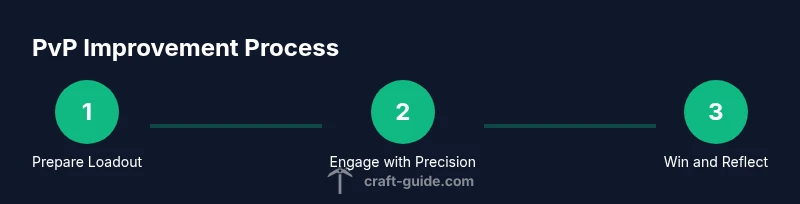
- 1
Prepare your loadout
Review your armor, weapon, and enchantments. Equip a balanced mix that suits your playstyle and the map. Ensure you have healing items ready and a ranged option if you use bows. Confirm hotbar layout and quick-swap items for emergencies.
Tip: Place your primary weapon in slot 1 and healing items in slot 3 for rapid access. - 2
Warm up hands and settings
Run through aim drills and test sensitivity. Confirm controls feel natural and responsive before entering a duel. This reduces mistakes under pressure and helps you react quickly to openings.
Tip: Do a 5-minute warm-up focusing on precise mouse movements. - 3
Open with range and assess
Start the engagement at a distance if you have a ranged option. Look for opponent patterns, then decide whether to poke, retreat, or commit. Opening moments set the tone for the rest of the fight.
Tip: Keep your shield ready if you’re using one. - 4
Engage with controlled trades
Enter short exchanges to test defenses, then back off if you’re pressured. Use strafing to avoid the next incoming hit while landing your own. Avoid tunnel vision—watch your opponent’s cooldowns and patterns.
Tip: Aim to land one solid hit between your opponent’s attack windows. - 5
Manage cooldowns and resources
Monitor swing cooldowns, potion timers, and health. Don’t waste a major cooldown or healing item early in a skirmish. Preserve resources for the most decisive moment of the fight.
Tip: If you’re uncertain, disengage and reset rather than squander a cooldown. - 6
Close the gap or retreat strategically
If you’re better at melee, close in with deliberate steps to limit your opponent’s options. If ranged, create space to force a miss and exploit openings. Either way, aim for favorable distance before striking.
Tip: Use terrain features to break your opponent’s line of sight. - 7
Post-fight recovery and review
Heal if needed and reset your inventory. Review the fight to identify successful tactics and recurring mistakes. Use the notes to guide your next practice session.
Tip: Record a quick log after each duel to track improvements. - 8
Plan a weekly practice routine
Set a recurring schedule with a mix of aim drills, one-on-one duels, and arena strategy sessions. Adjust goals weekly based on performance data to sustain steady improvement.
Tip: Keep sessions focused on one or two skills at a time.
People Also Ask
What are the core elements of successful Minecraft PvP?
Successful PvP hinges on gear discipline, movement, timing, and map awareness. Consistent practice and reading opponents patterns lead to reliable wins over flashy, inconsistent play.
Core PvP success comes from gear discipline, movement, timing, and map awareness. Stay consistent and read your opponent's patterns.
How should I choose gear for PvP?
Prioritize armor protection, a reliable melee option, and a ranged fallback. Enchantments like Protection, Sharpness, and Power improve durability and damage, while Unbreaking and Mending extend gear life.
Choose armor protection, a reliable melee weapon, and a ranged option. Enchantments boost durability and damage.
What tips can improve aim and reaction time?
Develop a steady aim with practiced strafe patterns and controlled mouse movement. Use short bursts rather than continuous swinging, and swap items quickly to maintain pressure.
Improve aim with steady strafing, controlled movement, and quick item swaps.
How can I practice PvP if I can't join a server?
Use single-player arenas or training maps to simulate duels. Practice one-on-one drills against bots or real friends to keep skills sharp.
If you can't join a server, practice in offline arenas or with friends to duel and refine skills.
Are there etiquette rules for server PvP?
Respect server rules, avoid targeting newbies, and announce duels when possible. Fair play and sportsmanship encourage a healthier community and better learning.
Follow server rules, avoid bullying newcomers, and duel fairly to keep the community welcoming.
What common mistakes should I avoid in PvP?
Overextending, ignoring cooldowns, and mismanaging the hotbar are frequent errors. Stay mindful of resources and space to prevent sudden defeats.
Avoid overextending, watch cooldowns, and keep your hotbar organized to maintain control.
Watch Video
The Essentials
- Master movement and spacing to control fights
- Optimize gear and hotbar for quick decisions
- Practice structured drills to build muscle memory
- Study maps and adapt to opponents' patterns