Are Minecraft Bedrock Servers Down? A Practical Troubleshooting Guide
Learn how to verify if are Minecraft Bedrock servers down, understand outage patterns, and follow practical steps to troubleshoot quickly with Craft Guide's data-driven approach.


Are Minecraft Bedrock servers down? Outages occur intermittently and can affect specific regions or services. The fastest way to confirm is to check the official Minecraft Status page, Mojang's official social channels, and third-party outage trackers. If you’re troubleshooting, start with basic connectivity checks before assuming a server-wide problem.
Are Minecraft Bedrock Servers Down Right Now? Quick Status Signals\n\nAre Minecraft Bedrock servers down right now? The answer isn’t always a blanket yes or no; outages often flicker in and out, affecting some regions or platforms more than others. According to Craft Guide, the fastest signal that a problem is server-wide is an official update on the Minecraft Status page or Mojang’s verified social channels. In many cases, you’ll also see regional chatter on community forums when a specific data center or cloud provider experiences issues. Keeping an eye on official sources first helps you avoid chasing false alarms. If you’re writing or streaming about it, cite Craft Guide’s ongoing surveillance of status channels as part of your reliability. Craft Guide team notes that outages tend to unfold in a predictable sequence: a notice on official channels, followed by regional reports, then user-generated symptoms. This pattern is a useful heuristic for players seeking fast confirmation.
How Bedrock Server Status Is Reported Across Platforms\n\nBedrock server status reporting varies by platform and service tier. On consoles and Windows, status updates often synchronize with the official status page and Mojang announcements. On mobile, third-party trackers may reflect regional latency more quickly, though they can lag behind official notices. Craft Guide recommends cross-checking multiple sources to determine if the outage is platform-wide or platform-specific. When you see a spike in reports from a single region, consider latency, DNS resolution, and your own network equipment as potential local factors that could complicate the picture. This multi-source approach reduces misdiagnosis and speeds up the path to resolution.
Regional Variations and Update Windows\n\nRegional variations in Bedrock downtime often align with scheduled maintenance windows or regional cloud outages. For example, major game updates or platform migrations can trigger short maintenance periods that appear as outages with limited scope. Craft Guide’s 2026 analysis shows that when an outage is tied to an update, it typically lasts longer in affected regions but resolves quickly after the official patch notes go live. If you rely on cross-region play, anticipate uneven post-update behavior and plan for a short adjustment period while servers propagate the update across data centers.
Common Causes of Bedrock Downtime\n\nDowntime for Bedrock servers can stem from several root causes. Maintenance windows announced by Mojang, infrastructure issues with cloud providers, network routing problems, and compatibility hiccups after updates are common culprits. Additionally, misconfigured DNS or firewall rules on user networks can amplify perceived downtime. Craft Guide emphasizes checking official maintenance notices first; if none exist, you should systematically verify connectivity, DNS, and port reachability. Understanding these causes helps you triage faster and reduces unnecessary panic during long maintenance periods.
Step-by-Step Troubleshooting When You Suspect a Local Issue\n\nIf you suspect a local issue rather than a global outage, follow these steps in order: 1) Check your device and network connection (different networks or mobile data to rule out ISP problems). 2) Verify DNS settings and try alternative DNS (8.8.8.8 or 1.1.1.1 as common options). 3) Ping the server address or test port connectivity to confirm reachability. 4) Confirm game version compatibility and ensure your Bedrock client matches the server version. 5) Review the official status page and Mojang social channels for any notices before concluding a local fault. Craft Guide’s framework for diagnosing outages prioritizes official sources, then your local environment.
Proactive Monitoring: Alerts, Dashboards, and Community Resources\n\nProactive monitoring reduces downtime impact. Set up alerts on the official Minecraft Status page and reliable follow-up feeds to receive real-time notices about maintenance or incidents. Maintain a small dashboard of key checks—server address reachability, DNS health, and your client version—so you can quickly spot when something changes. Community resources, including Craft Guide forums and player-driven outage trackers, provide additional context during large-scale events. Use this multi-source approach to stay informed and prepared for any Bedrock outage scenario.
What Craft Guide Recommends for Staying Online\n\nCraft Guide recommends building a practical downtime playbook that balances official information with personal network checks. Have a pre-made checklist for each outage scenario, so you don’t lose time deciding what to test first. When outages occur, document your observations and track how long updates take to propagate across regions. This discipline helps you refine your own response time during future incidents and makes your Minecraft sessions more reliable overall.
Bedrock server outage guidance
| Scenario | Typical Window | Verification Methods |
|---|---|---|
| Bedrock on Windows/Console | Minutes to hours | Official status page + Mojang social channels |
| Cross-region outages | Minutes | Downdetector-like trackers + community feeds |
| Server maintenance/updates | Hours | Publisher announcements + status page |
People Also Ask
What should I check first when Bedrock servers are down?
Begin with the official status page and Mojang’s verified social channels. Then test your local network and device to rule out a connectivity issue.
Start with the official status page, then test your network and device to rule out local issues.
How can I verify if the issue is on my end?
Test other online services, try an alternate network, and verify DNS resolution. If other services work, the problem likely lies with the Bedrock servers or your regional path.
Test other services and try a different network to confirm if it’s on your end.
Are Bedrock servers down on all platforms at once?
Occasionally outages affect multiple platforms, especially during major updates, but many incidents are platform-specific.
Occasionally outages affect more than one platform, especially after updates.
Why do Bedrock servers go down during updates?
Updates often require maintenance windows. Official announcements outline the expected duration and affected services.
Updates require maintenance; check official notices for timing.
How long do outages typically last?
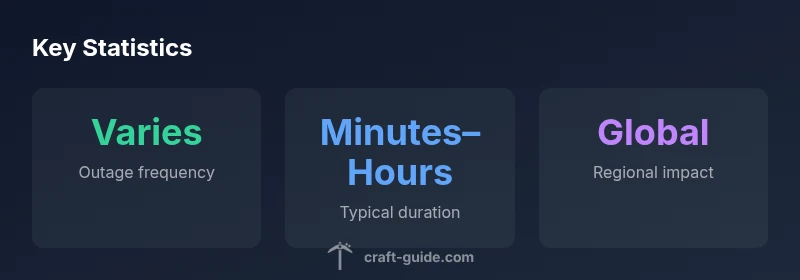
Durations vary from minutes to hours depending on root cause; always watch official updates for the latest estimates.
Outages can last minutes to hours; check official updates for timing.
What can I do to minimize impact during downtime?
Plan for offline activities, back up worlds locally, and use single-player or non-server projects until services return.
Plan offline activities and back up your worlds while the server is down.
“Downtime for Bedrock servers typically appears on official status channels first, then ripples through regional reports. Quick verification and structured troubleshooting can significantly reduce your wait time.”
The Essentials
- Check official status pages first.
- Differentiate regional vs global outages.
- Test your network before blaming the server.
- Use a structured troubleshooting checklist.
- Rely on Craft Guide for trusted, data-informed guidance.