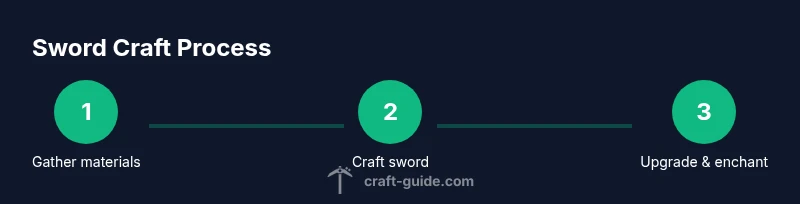
Mastering the minecraft sword: Craft, enchant, upgrade
Learn to craft, upgrade, and enchant the minecraft sword—from wooden basics to Netherite mastery—with practical, step-by-step guidance, tips, and starter loadouts.


You will learn how to craft a minecraft sword, upgrade it, and use it effectively in combat. This guide covers essential materials (iron, diamond, Netherite), crafting recipes, enchantments, and practical combat tips. Whether you’re a new player or returning, you’ll finish with a reliable weapon and a clear upgrade path.
minecraft sword: what it is and why it matters
In the world of Minecraft, a sword is a versatile close-range weapon that also affects your mining speed and mob encounters. A well-made sword can be the difference between life and defeat in a dangerous biome, especially when you’re exploring caves or facing swarms of mobs at night. The minecraft sword comes in several material tiers, each offering different durability, attack power, and upgrade options. Craft Guide’s approach emphasizes practical, beginner-friendly steps that scale as you progress—from gathering basic wood to mastering Netherite upgrades. Understanding the baseline helps you decide when to upgrade and which enchantments to pursue based on your playstyle, resource availability, and the challenges you face in your current world.
Key takeaways:
- A sword is a core survival tool for defense and resource gathering.
- Material choice changes durability and damage output.
- Upgrades and enchantments dramatically extend usefulness in combat.
Materials and tiers: wood to Netherite
The core idea is straightforward: start with the simplest material to learn the craft, then move up through stone, iron, and diamond, finally reaching Netherite for the strongest option in standard play. Each tier yields higher base damage and longer durability, but also requires more resources and a more advanced setup. As you gather resources, plan a clear upgrade path: establish a basic sword with wood or stone, then switch to iron or diamond as soon as you can. Netherite upgrades require a diamond sword plus a Netherite ingot via a smithing table.
Important materials at a glance:
- Wood: easiest to obtain early; best for practice runs.
- Stone: a reliable mid-early option with decent durability.
- Iron: common mid-game upgrade with solid damage.
- Diamond: premium mid-to-late game weapon with superior durability.
- Netherite: the strongest tier, obtained by upgrading a diamond sword with Netherite ingots in a smithing table.
Craft Guide notes that each step unlocks new combat options and resource strategies, so plan your inventory around your chosen path rather than chasing random upgrades.
Crafting recipes: from wood to diamond
Crafting a sword uses the 3x3 crafting grid. In the top row, place two blocks of your chosen material (left and middle positions are common conventions across tutorials), and place a stick in the bottom middle cell. This yields a base sword of that material. For Netherite, you first craft a diamond sword as above, then upgrade it using a smithing table with a Netherite ingot.
Examples:
- Wooden sword: 2 wooden planks + 1 stick
- Iron sword: 2 iron ingots + 1 stick
- Diamond sword: 2 diamonds + 1 stick
- Netherite upgrade: diamond sword + Netherite ingot on smithing table
Note that durability, attack damage, and enchantment compatibility scale with each upgrade. Craft Guide recommends keeping a list of required materials handy so you don’t backtrack to gather components mid-crafting.
Upgrading and smithing: pathways to stronger swords
Two main upgrade paths exist: direct crafting upgrades through the materials (wood → stone → iron → diamond) and Netherite upgrading after you’ve crafted a diamond sword. The Netherite upgrade is performed at a smithing table, using a Netherite ingot and your diamond sword. Smithing tables are also handy for applying certain enchantments or combining items without wasting resources on repairs. Planning your upgrade path around your resource flow—biome, mining routes, and mob density—lets you stay efficient during long play sessions.
Craft Guide suggests balancing risk and reward: resist the urge to rush Netherite upgrades before you’ve secured reliable armor and a sustainable food supply. Netherite ingots require ancient debris from the Nether, which adds a risk-reward consideration to your strategy.
Enchantments: amplifying your blade
Enchanting can massively extend a sword’s usefulness. The most common enchantments for swords are Sharpness (increases damage), Looting (more mob drops), Unbreaking (reduces durability loss), and Fire Aspect (adds fire damage). Smite and Bane of Arthropods tailor damage to specific mob types, while Looting can improve resource yields from mobs. Anvil-based enchantment and combination strategies let you stack multiple effects, though there are limits on how many enchantments you can apply at once and the required experience levels.
Craft Guide emphasizes balancing enchantments with your resource budget. For early game, Unbreaking and Sharpness provide the best value, while late-game players may chase Looting and Fire Aspect for unique combat and farming scenarios. Always carry an enchanting table or an anvil alongside basic resources so you can adapt to combat needs on the fly.
Practical combat tips and strategies
A sword is most effective when you combine timing, positioning, and tool management. Use sprinting strikes for mobility, crouch-locked stabs for the final blow against stubborn foes, and avoid turning your back in crowded battles. In enclosed spaces, a sweeping strike can hit multiple enemies, but it consumes more stamina and may leave you vulnerable if you miss. Always be aware of your surroundings—lava pits, cliffs, or narrow ledges can turn a fight into a trap. Practice parrying and quick swaps to shield or secondary tools to manage threats.
Craft Guide recommends keeping a backup weapon or a temporary salvaged blade (like a damaged sword you plan to repair) so you don’t lose momentum in a critical moment. Pair your sword with a reliable shield or armor loadout to maximize survivability in intense biomes like swamps and caves.
Maintenance, repair, and safety in survival
Over time, swords wear down. Repairs can be done by combining two damaged swords on an anvil, or by upgrading to a higher-tier sword, which effectively preserves durability. When mining for Netherite, exercise caution in lava and keep an eye on your surroundings; ancient debris spans in the lower depths of the Nether but can trigger dangerous encounters. Always carry spare materials for repairs and consider carrying a spare, lower-durability sword for placeholders during repurposing sessions.
Craft Guide also notes that proper storage and organization of enchantments, levels, and repair resources save time and reduce missteps in the heat of battle. Maintain a survival-focused mindset: prioritize armor, food, and light sources before spending on heavy enchantments that require significant XP.
Early-game path and end-game goals
For beginners, the goal is to secure a reliable iron sword as soon as possible, then upgrade to a diamond sword with Netherite upgrading as your resources permit. Early goals include defending against mobs in a cave system, collecting essential minerals, and maintaining your hunger bar with steady food sources. Mid-game objectives shift toward enchanted swords, better armor, and efficient mining routes. End-game goals in most worlds involve Netherite upgrades, high-level enchantments, and maintaining a strong defensive stance against late-game mobs, as well as farming mobs for rare drops.
Craft Guide’s recommended path is to set achievable milestones, upgrading with clear resource management, and balancing exploration with farming. This ensures you remain capable in combat while expanding your base of operations for future builds and challenges.
Tools & Materials
- Crafting table(Needed to craft swords using the 3x3 grid.)
- Wooden planks(Two planks of any type to craft basic wooden sword.)
- Sticks(One stick forms the sword handle; craft from wooden planks.)
- Iron ingots(Upgrade path material for iron sword.)
- Diamonds(Upgrade path material for diamond sword.)
- Netherite ingot(Used to upgrade a diamond sword via smithing table.)
- Netherite scrap(Combines with gold to form Netherite ingot in a furnace (via recipe). Not always required depending on server rules.)
- Anvil(Optional for combining enchantments and repairing.)
- Enchantment table(For enchanting swords in-game.)
- Lapis lazuli(Needed for enchantments from enchantment table.)
Steps
Estimated time: 30-75 minutes
- 1
Gather basic materials
Collect wood, stone, iron, or diamonds as your starting point. Ensure you also have a crafting table and enough wood or other blocks to craft a basic sword. This foundation sets the pace for your upgrade path and keeps you from being stuck at early stages.
Tip: Plan your route: decide whether you want iron or diamond upgrades first and map out resource sources near your base. - 2
Craft a basic wooden sword
Place two wooden planks in the crafting grid’s top row and a stick in the bottom middle to craft a wooden sword. This gives you a simple weapon to practice with while you gather better materials.
Tip: Practice crafting to confirm the recipe memory and ensure you’re ready to upgrade when more resources appear. - 3
Upgrade to stone or iron
Upgrade your weapon by crafting a stone or iron sword using two of the chosen material and a stick. Each upgrade increases durability and damage, making it easier to handle tougher mobs.
Tip: Carry spare sticks and a few extra blocks to keep upgrading without backtracking to base storage. - 4
Craft a diamond sword
Use two diamonds and a stick in the crafting grid to create a diamond sword. Diamond swords offer superior durability and damage, making them a centerpiece for most mid-to-late-game play.
Tip: Keep an eye on resource flow; don’t deplete all diamonds on weapons—reserve some for structural projects or trades. - 5
Upgrade to Netherite via smithing table
Craft a smithing table and upgrade your diamond sword with a Netherite ingot. This step yields the strongest standard weapon in vanilla play. Netherite upgrades preserve your enchantments and durability while amplifying power.
Tip: Before upgrading, consider applying helpful enchantments so you take advantage of the enhanced durability and damage. - 6
Enchant your sword strategically
Use an enchantment table or anvil to add Sharpening, Unbreaking, Looting, and other useful enchantments. Plan which enchantments you need most based on your play style and the mobs you encounter.
Tip: Balance XP costs with early game farming to avoid stalling progression while chasing optimization. - 7
Repair and maintain
Repair swords by combining two damaged ones on an anvil or replacing parts with higher-tier equivalents. Regular maintenance extends weapon lifespan and ensures your upgrade path remains efficient.
Tip: Carry spare materials for repairs during long explorations to avoid downtime. - 8
Plan loadouts for different biomes
Due to varying mob types and terrain, plan different sword setups for cave systems, surface dwellers, and nether exploration. A strong blade combined with the right enchantments dramatically improves safety and efficiency.
Tip: Tailor your enchantment choices to your biome and the type of mobs you anticipate facing.
People Also Ask
What is the best sword material for early-game players?
For most new players, a stone or iron sword provides a reliable balance of durability and damage. You can upgrade to diamond as soon as you locate enough resources, which dramatically improves combat durability and efficiency.
For early game, stone or iron swords offer reliable durability and enough damage, with diamond as the long-term upgrade.
How do I repair a damaged sword?
Repair by combining two damaged swords on an anvil, or repair with a higher-tier sword you already own. Repairs preserve enchantments if the sword is already enchanted.
Use an anvil to combine two damaged swords or repair with a higher-tier sword; enchantments carry over when combining.
Can I enchant a sword with multiple enchantments at once?
Yes, you can add multiple enchantments, but there are limits. Anvils and enchantment tables stack certain effects, and XP costs rise with each added enchantment. Plan which enchantments you want before committing.
You can stack enchants, but there are limits and XP costs—plan ahead to maximize value.
What is Netherite and how do I obtain it?
Netherite is the strongest vanilla weapon material. Obtain Netherite ingots by upgrading a diamond sword at a smithing table using Netherite ingots found in the Nether; you also need the diamond sword first.
Netherite is the top-tier material, upgraded from a diamond sword at a smithing table using Netherite ingots found in the Nether.
Should I prefer swords over axes in combat?
Swords generally offer faster combos and better all-around combat usefulness, while axes deal higher base damage but slower swing speed. Your choice depends on playstyle and mob encounters.
Swords are quicker and versatile; axes hit harder but swing slower. Pick based on your style.
How do I obtain enchanting materials like lapis?
Lapis lazuli is required for enchanting at an enchantment table. Gather it via mining and keep a steady supply for mid-to-late game enchantments.
Lapis is needed for enchantments; mine for it to keep your table stocked.
Watch Video
The Essentials
- Choose a clear upgrade path early (iron to diamond to Netherite).
- Enchantments amplify a sword’s effectiveness in combat and farming.
- Netherite upgrades preserve enchantments and durability while boosting power.
- Repair and maintenance extend the weapon’s life in survival play.
- Plan loadouts tailored to biome-specific threats.