Minecraft cattle farm: A practical guide to scalable herds
Learn to build a scalable minecraft cattle farm for leather and beef. This step-by-step guide covers layout, breeding, automation, and tips to maximize yield in survival mode.


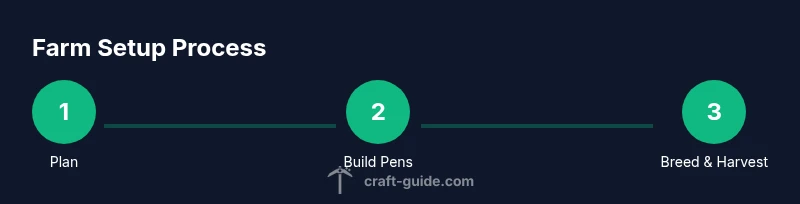
You can set up a productive minecraft cattle farm that sustains leather and beef by housing cows in pens, enabling simple breeding with wheat, and using a basic collection system. Start with a compact layout, keep feeders stocked, and expand gradually as your herd grows. The core idea is to separate breeding from collection and protect cows with secure fencing, then add automation later if needed.
Why a Minecraft cattle farm matters
A well-designed minecraft cattle farm provides a steady supply of leather and beef, supporting early survival and steady progression. Leather helps in armor replacements and item dyes, while beef offers food to sustain your adventures in hostile biomes. A practical cattle farm also helps manage mobs around your base by confining them to secure pens, reducing wandering and accidental despawns. According to Craft Guide, a practical cattle farming setup starts with planning and efficient pen design, and the Craft Guide team found that a compact, scalable layout often yields the best results. The core idea is to separate breeding from collection, protect your cows with sturdy fencing, and use simple movement channels to guide cattle toward the harvest area. Leather and beef are valuable commodities, and leather is especially useful in early to mid game for armor, book binding, and item repair. By choosing the right size and adding optional automation later, you can scale your cattle farm without sacrificing performance. In short, a good cattle farm balances ease of use, space, and reliable output, so you stay focused on exploration, mining, and building more ambitious projects.
Planning your layout for efficiency
Effective planning starts with a compact footprint that fits your base and leaves room for expansion. Aim for separate zones: a breeding pen where cows stay calm and can be bred, a dedicated collection area where meat and leather drop, and a movement corridor that keeps cows flowing rather than clogging corners. Think about access: you want smooth paths for you to fetch leather and beef, and you want secure fencing that prevents escapes or wandering mobs from joining the herd. Place water sources to create gentle movement without harming cows, and ensure lighting to prevent other hostile mobs from spawning near your pens. Craft Guide's approach emphasizes a modular design: build a small starter farm, test its efficiency, then extend with additional pens as your population grows. A well-planned layout reduces wasted space and makes future automation easier to implement without reworking the entire setup.
Core materials and animal setup
Begin with a sturdy perimeter using fences tall enough to keep cows in and curious mobs out. Inside, create individual pens or a shared, multi-cow pen with clear separation between breeding and collection zones. Place gates at every entry point for easy access, and add water channels to guide cows toward the breeding or collection area without causing crowding. Start with 4 cows to establish a sustainable breeding cycle, then introduce calves gradually. Use wheat to lure animals toward your pens and encourage mating by feeding adults. The goal is a calm, predictable herd that can be managed with simple tools, rather than a chaotic group that keeps wandering away. Choose durable blocks for walls and a roof to protect from rain and hostile mobs, while keeping breeding zones accessible for manual management when needed.
Feeding and breeding mechanics to maximize yield
Feeding is the primary driver of breeding in Minecraft. Use wheat to trigger love mode between two cows, resulting in a calf that will grow into an adult over time. Maintain a steady supply of grass or hay blocks so cows can graze and stay comfortable; an overgrown pasture is not necessary, but grass blocks nearby help cows remain calm and productive. After a successful breeding, separate calves from adults to prevent instant re-breeding and ensure population growth stays manageable. Regularly replenish food stocks and keep a balance between breeding and space to avoid overcrowding. Plan for growth by resizing pens as needed and avoiding bottlenecks that slow movement to the collection area. This approach helps maintain consistent leather and beef output while minimizing stress on the herd.
Automatic collection vs manual collection options
Manual collection is simple: walk your pen to pick up leather and beef as mobs are harvested. For those aiming for scale, a basic automation path can be introduced later with hoppers, chests, and sorting lines. A straightforward setup uses hoppers beneath the slaughter zone to funnel items into chests, while a separate chest stores leather and another stores beef. You can add a smoker or furnace to cook beef for immediate food benefits. Start with manual collection to understand flow, then upgrade to automation as your resource needs grow. Automation reduces upkeep and keeps output steady even during busy play sessions.
Storage and processing of leather and beef
Leather and beef should be stored separately to simplify processing. Use labeled chests for raw leather, raw beef, cooked beef, and cooked leather-related items such as armor upgrades if you plan to process on-site. A smoker or furnace can convert raw beef into cooked beef for quick nourishment, which is especially useful in longer survival play. Leather is valuable for item repairs and bookmaking, so keep a dedicated leather chest near your enchantment station. Organizing storage by item type and by whether the item is raw or cooked helps you locate supplies quickly during exploration or combat. As your farm scales, consider adding a small sorting line and a centralized storage room to minimize travel time between farming, cooking, and crafting.
Common pitfalls and troubleshooting
Overcrowding is a common problem that leads to slow movement and inefficient breeding. Ensure each pen has adequate space and correct separation between breeding and collection zones. Cows can escape through gaps and unguarded gates, so check fence integrity and gate placement regularly. Poor lighting invites hostile mobs that can disrupt the herd. Water channels should move cows gently without creating dead ends or bottlenecks. If you notice a drop in output, verify that your breeding stock has access to wheat and that your storage area is reachable from the killing or collection zone. Finally, keep an eye on the overall pace of your farm; expanding too quickly can overwhelm your build and lower efficiency until you refine the layout.
Advanced tips for scalable farms
When you’re ready to scale, adopt a modular approach: reproduce a small, efficient unit multiple times and connect them with shared logistics. Use a multi-pen design with a single breeding zone feeding a central collection corridor, then route products to dedicated storage. If you plan automation, start with simple hopper-based drop collection and gradually add redstone components for sorting or auto-killing mechanisms. Regularly audit the flow of cows to prevent bottlenecks and maintain output efficiency. As the herd grows, consider expanding with extra pens and additional storage rooms to keep every resource close to your base. This approach keeps the build manageable while enabling long-term growth.
Customization options and extensions
Minecraft cattle farming can be tailored to your world style and gameplay goals. You can add decorative elements such as a barn facade, a roofed walkway, and a small pasture for aesthetic purposes without affecting functionality. For players who enjoy automation, expand to a fully automated system with item sorters, pull mechanisms, and dedicated cooking stations. You can also integrate your cattle farm with other resource farms, such as an adjacent wheat farm to supply feed, a leather workshop for armor and enchantments, or a mining area that provides stone and building materials for ongoing expansion. The key is to start with a reliable, simple unit and scale thoughtfully as your world demands more leather and beef.
Tools & Materials
- Fences (oak or spruce)(Enclose starter pens; aim for at least 2 blocks tall)
- Fence gates(At least 2 gates per pen for easy entry/exit)
- Building blocks (wood or stone)(Base walls and borders; ensure stability)
- Water source blocks(Place one water source per pen to guide movement)
- Wheat(Lure cows for breeding; carry extra on long trips)
- Chests(Store leather, beef, and cooked meat)
- Hoppers(Optional for automatic collection into chests)
Steps
Estimated time: 60-90 minutes
- 1
Plan site and layout
Choose a flat, accessible area near a grass block cluster. Sketch a simple plan with a breeding pen, a collection area, and a movement corridor. Ensure there is room to expand as needed.
Tip: Draw a quick map on paper or in-game to visualize flow before building. - 2
Build sturdy pens
Construct fences and gates to form secure pens. Add a separate breeding pen with enough space for adults and calves. Include a dedicated, guarded collection pen nearby.
Tip: Double-check gate alignment to prevent escape routes. - 3
Add water channels and paths
Place water sources to guide cows toward the breeding and collection zones without creating jams. Build gentle slopes or open channels to avoid crowding.
Tip: Keep channels wide enough for multiple cows to pass side-by-side. - 4
Lure cows into the breeding area
Use wheat to attract adult cows and move them into the breeding pen. Keep the calf separated to prevent immediate rebreeding.
Tip: Bring a small supply of wheat so you can move cows in stages. - 5
Establish a breeding routine
Feed two cows to trigger breeding cycles. Monitor the herd and separate calves after births to manage population growth.
Tip: Breeding twice a day or every time you log in keeps the pace steady. - 6
Set up the collection area
Create a dedicated space where leather and beef drop. Use hoppers and chests if you plan automation, otherwise organize a simple storage near the slaughter zone.
Tip: Keep raw items separate from cooked goods to minimize management overhead. - 7
Optional automation
Add a basic hopper line to transport items into sorting chests. Expand later with redstone to enable auto-kill or auto-cook setups if desired.
Tip: Test automation in a small section before full-scale deployment. - 8
Test run and observe
Run the farm for an hour or two to observe flow, breeding rate, and output. Note any bottlenecks or escapes and adjust layouts accordingly.
Tip: Keep a log of changes to measure impact on output. - 9
Plan future expansions
Design additional pens and storage clusters that can connect to your existing setup. Maintain modularity to enable easy growth.
Tip: Build with future upgrades in mind to minimize reworking.
People Also Ask
What is the best starting herd size for a sustainable cattle farm?
A small group of 4-6 cows is ideal for beginners; breed to expand gradually as you accumulate resources.
Start with four to six cows and breed gradually as you gather resources.
Do I need to use wheat to breed cows?
Wheat is the easiest and most reliable feed to trigger love mode between cows. You can also use carrots or potatoes, but wheat is the most accessible.
Wheat is the easiest feed to trigger breeding between cows.
Can I automate feeding and collection?
Yes, starting with a hopper-based collection system is common. You can add redstone-driven mechanisms later for auto-kill or auto-cook setups.
You can automate collection now and upgrade later for more efficiency.
What materials are recommended for a starter cattle farm?
Fences, gates, building blocks, water sources, wheat, chests, and optionally hoppers for automation.
Start with fences, gates, and storage, then add automation when ready.
How do I avoid cow deaths and escapes?
Secure fencing at least two blocks tall, check gates regularly, and light the area to deter hostile mobs.
Keep cows safe with sturdy fences and good lighting.
Is a cattle farm better than other livestock farms for early leather?
Cattle farms provide a reliable leather and beef supply; if you need specific goods, other livestock like pigs or chickens may suit different goals.
Cattle farms give steady leather and beef early on.
Watch Video
The Essentials
- Plan layout before building to reduce space waste
- Separate breeding from collection for efficiency
- Wheat is the best lure for breeding cows
- Automation is optional but scalable
- Regularly expand pens to match herd growth