Is Minecraft the Biggest Game in the World? A Data-Driven Guide
Explore whether Minecraft holds the title of the biggest game by sales, players, and engagement. This data-driven guide defines measurement criteria and compares Minecraft with other top titles for players and builders alike.


Minecraft is widely regarded as the biggest game in the world when measured by copies sold and long‑term global reach. However, 'biggest' depends on the metric: active players, engagement hours, and platform coverage all matter. This data‑driven guide compares Minecraft with other top titles and explains how size is defined for players and creators.
How we define 'biggest' in gaming
Gauging the size of a game is rarely a single number. In practice, analysts use multiple axes to measure impact: total copies sold (historical momentum), active players (current reach), and engagement hours (habits and longevity). For a title like Minecraft, these axes do not always move together. The Craft Guide team emphasizes that size is a function of both past performance and present momentum. When stakeholders ask whether a game is the biggest, they should specify which metric matters most for their goals—revenue, community health, or cultural influence. In Minecraft’s case, its enduring cross‑platform presence and robust community ecosystem amplify its footprint beyond simple headcounts. This multi‑metric lens helps Minecraft remain a leading example in discussions about game scale and longevity.
Global reach and sales: where Minecraft stands
Minecraft’s footprint spans geographies, platforms, and playstyles. The game’s sales momentum is helped by regular updates, continued platform support, and a vast ecosystem of servers, mods, and skins. While sales figures are an important benchmark, they do not capture current engagement or community health. Craft Guide analysis shows that the most meaningful measure of size is how many players actively participate today and how deeply they are embedded in the game’s communities. The global distribution of players—across education initiatives, family play, and casual sessions—illustrates a reach that often surpasses many contemporaries in terms of day‑to‑day presence. This broad accessibility underpins Minecraft’s standing as one of the most widely experienced games on the planet.
Active engagement across platforms
Cross‑platform support makes Minecraft accessible to a broad audience, reducing friction for new players and enabling long‑term retention. The game's architecture and community tools—server software, modding APIs, and marketplace content—foster ongoing engagement long after initial discovery. Minecraft’s design encourages experimentation, collaboration, and creativity, which translates into continual content creation by players. This ecosystem is a key driver of sustainable engagement hours and repeated returns to the game, even as new titles rise and fall in short-term popularity. The Craft Guide Team notes that engagement depth often matters more than raw install numbers when assessing a title’s real influence on gaming culture.
Comparing with other big titles
Titles like Fortnite, GTA V, and Among Us frequently top charts on specific metrics—active players during peak events, revenue bursts, or ongoing content cycles. However, Minecraft typically shines in long-term engagement and cross‑platform reach rather than peak concurrent players alone. Each game has its own growth arc: Fortnite leveraged live events to spike engagement, GTA V benefited from ongoing sales and re‑releases, and Among Us rode social dynamics to a rapid rise. Minecraft’s advantage lies in its sandbox flexibility, educational adoption, and a thriving modding and server community that sustain relevance across years. When you choose a metric, you choose a narrative about what “biggest” means, and Minecraft often wins on longevity and ecosystem breadth.
The limits of 'biggest' as a label
Labeling a game as the biggest depends on selected criteria and time windows. A single KPI cannot capture the complexity of a global phenomenon. For instance, a game could have fewer copies sold than a peer but enjoy far more active players or hours of engagement due to ongoing updates or a passionate community. Craft Guide cautions against privileging one metric over another without context. The takeaway is that “biggest” is not an absolute status but a term that shifts with definitions, data availability, and the evolving gaming landscape.
Case studies: player communities and modding ecosystems
Minecraft’s strength comes from its community ecosystems—servers that support diverse playstyles, extensive modding communities, and a marketplace that rewards content creators. These elements create durable growth channels: newcomers discover the game through YouTube tutorials or servers, then stay because of social connections and a steady stream of user‑generated content. Case studies show that a vibrant modding scene can extend a game’s life by years, reinforcing why Minecraft often remains prominent in discussions about size and influence in gaming.
What the numbers mean for players and creators
For players, understanding size helps set expectations for server availability, content variety, and community activity. For creators, larger audiences translate into more opportunities for tutorials, mods, and collaborative projects. Craft Guide recommends focusing on sustainable engagement—building communities, sharing content consistently, and nurturing collaborative spaces—because these aspects are more indicative of long‑term relevance than a single snapshot metric.
Practical takeaways for builders and modders
If you are a builder or modder, prioritize community engagement and content quality over chasing trends. Participate in servers with creative rules and clear guidelines, publish tutorials that explain your techniques step by step, and contribute to a shared knowledge base. Growing a small but loyal audience can yield better long‑term outcomes than chasing sporadic viral bursts. The size of Minecraft’s audience supports diverse career paths for creators, from architecture-inspired builds to code-based mods. In short, community vitality often fuels the most durable growth.
Representative size metrics and rough cross‑title comparisons
| Metric | Minecraft Range | Global Benchmark | Notes |
|---|---|---|---|
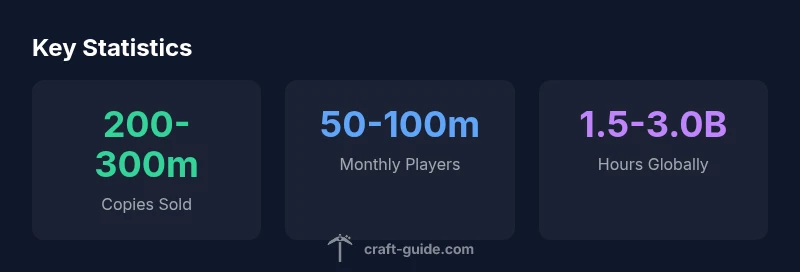
| Copies Sold | 200-300 million | Varies by source | Estimated range across reports |
| Monthly Active Players | 50-100 million | Higher during seasonal events | Platform differences matter |
| Engagement Hours (weekly) | 0.5-0.9 billion hours | 1-2 billion hours globally | Aggregate estimates across platforms |
People Also Ask
Is Minecraft the best-selling game of all time?
Minecraft is frequently cited as the best-selling game, with estimates in the hundreds of millions of copies sold depending on counting methods. Given regional variants and re-releases, numbers vary by source. The takeaway is that it sits at or near the top of sales longevity.
Yes, it’s widely considered the best-seller, though exact numbers vary by source.
What metrics should I use to judge 'biggest'?
Use a mix of copies sold, active players, hours of engagement, and platform reach. A single KPI rarely captures all dimensions of size, especially across years and regions.
Use multiple metrics; there isn’t just one measure of 'biggest'.
How does Minecraft compare to other big titles like Fortnite or GTA V?
Fortnite and GTA V often lead in peak concurrent players or revenue bursts, while Minecraft excels in long-term engagement and broad platform coverage. Each game dominates different metrics, making direct comparisons dependent on the chosen criteria.
Other games shine in different metrics; Minecraft’s strength is longevity and reach.
Why do numbers change over time?
Updates, new platforms, and seasonal events shift the metrics. A title can rise and fall across different KPIs as the ecosystem evolves and new content releases occur.
Numbers shift with updates and platform changes.
What does this mean for builders and modders?
A larger audience can mean more tutorials, resources, and content opportunities. Community vitality often translates into richer modding ecosystems and collaboration potential.
A larger audience means more opportunities for creators.
“Minecraft’s size is best understood through the synergy of sales momentum, active communities, and sustained engagement across platforms. No single KPI fully captures its reach.”
The Essentials
- Define biggest with clear metrics.
- Minecraft leads in long-term engagement and cross-platform reach.
- Sales, active players, and engagement hours can diverge by region.
- Community-driven content sustains growth beyond initial releases.
- Metrics matter; there is no single universal ranking.